Category: Travel

  • Rain at Sea, Rainbows Underground: One Day in Stockholm

    Rain at Sea, Rainbows Underground: One Day in Stockholm

    At 10 a.m. on a Tuesday, I boarded a two-hour archipelago cruise from Stockholm’s Old Town.

    It seemed like the obvious thing to do. Stockholm is a city stitched together from waterways, islands and bridges, and I had spent the previous two days seeing it from dry land: the Old Town, a sunset, and the Vasa, a warship that sat at the bottom of the harbor for more than 300 years. Leaving without getting on a boat at least once felt wrong.

    I booked the cruise on GetYourGuide, and the itinerary was gorgeous on paper. Fotografiska, the Djurgården Canal, Fjäderholmarna, Stora Höggarn, Tegelön, and even a run toward Vaxholm.

    When I boarded, the sky was only gray. Overcast skies make for flat photos, I knew that. But surely the sea would have a moody charm of its own. Besides, I had already paid, and you don’t run away from a tour just because the sky looks unenthusiastic.

    The boat pulled away from the dock, and it started to rain.

    Then it rained harder.

    Morning: the archipelago, in theory
    Cruise View of Fotografiska
    Cruise View of Fotografiska

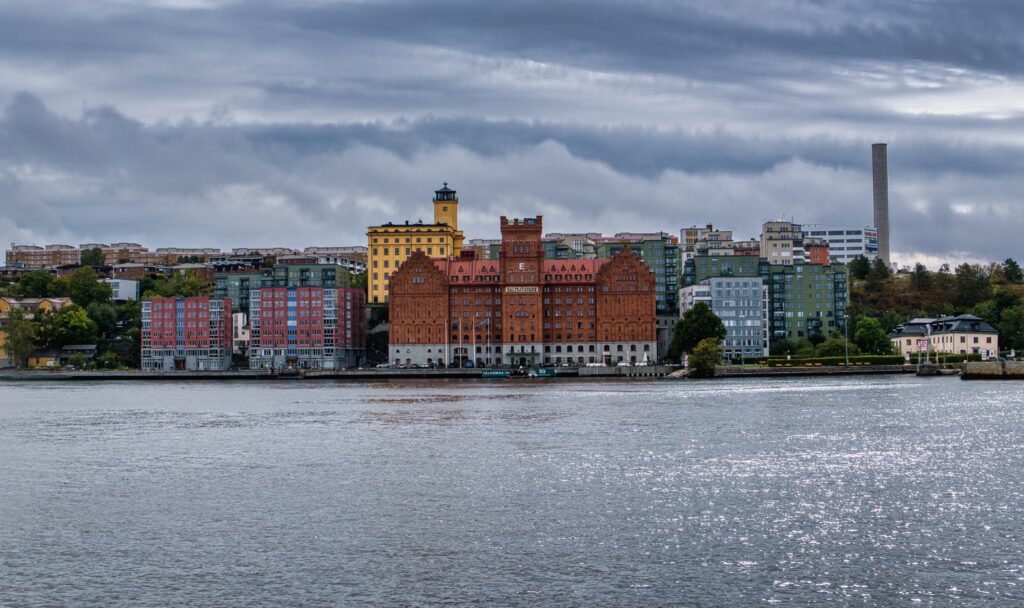
    The best part of the cruise turned out to be the beginning, while we were still close to town and could make out the buildings, the docks, and the islands behind them. When Fotografiska came into view, I had a sudden thought: maybe I should visit this famous photography museum after all.

    We also passed the spot where the Vasa went down.

    The day before, I had stood in the Vasa Museum staring up at this enormous warship, wondering how it managed to capsize on its maiden voyage. From the cruise, I could finally answer a different question: how far did it get?

    Not far.

    The Vasa set off near the Royal Palace, sailed about 1,300 meters, and sank inside Stockholm’s harbor after roughly twenty minutes. It’s hard not to picture the crowd in 1628, standing on the shore close by, watching a brand-new warship fire its cannons to show off its power, then tip over in a gust of wind and vanish. The Vasa never met a storm on the open sea. It proved it couldn’t sail before it had technically left town, in full view of everyone.

    The weather was bad, but the commentary was good. Our guide was a live human, not a looped recording, and she talked about whatever the cruise passed.
    View of Stockholm from the Sea
    View of Stockholm from the Sea

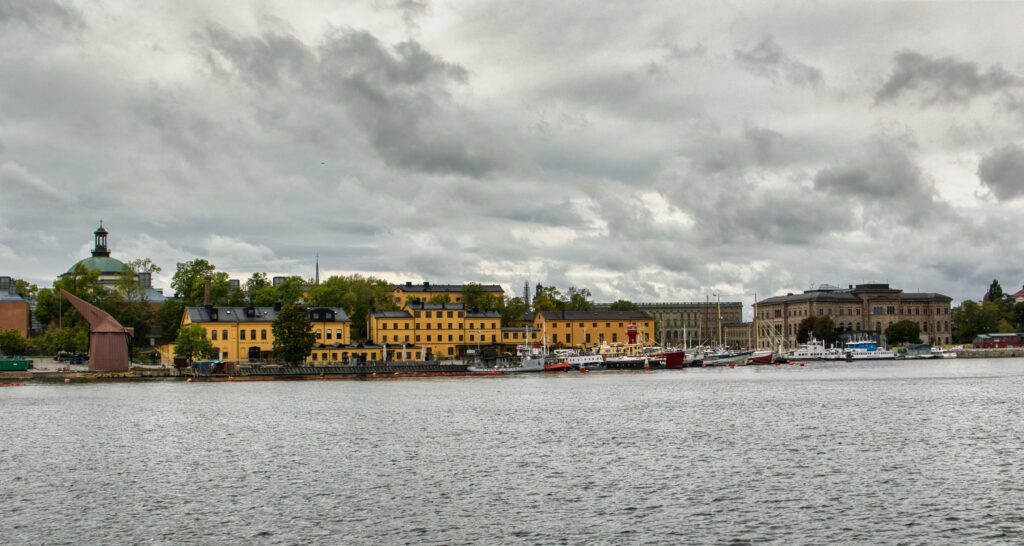
    Further out, houses began to appear on islands that clearly had no road to the city. For the people living there, a boat is not a toy for a weekend spin. It’s how you leave home, come back, visit the next island over, and go on vacation. The archipelago is commonly said to have about 30,000 islands, skerries and rocks, and ferries are one of the most common ways to get around. What was “a boat ride to look at the sea” for me is, for locals, just how life works.

    Many of those houses were painted the same deep, brownish red. I think I’d heard about the color at the Nordic Museum the day before, but it only clicked when I saw row after row of it from the boat. It’s called Falu red, a byproduct of the copper mine in Falun: iron-rich mine residue turned into pigment, then mixed with rye flour and linseed oil into a paint that helps wooden walls survive Nordic wind and rain. I had filed it under “very Scandinavian color.” It turns out to be mining waste with a second career in weatherproofing.
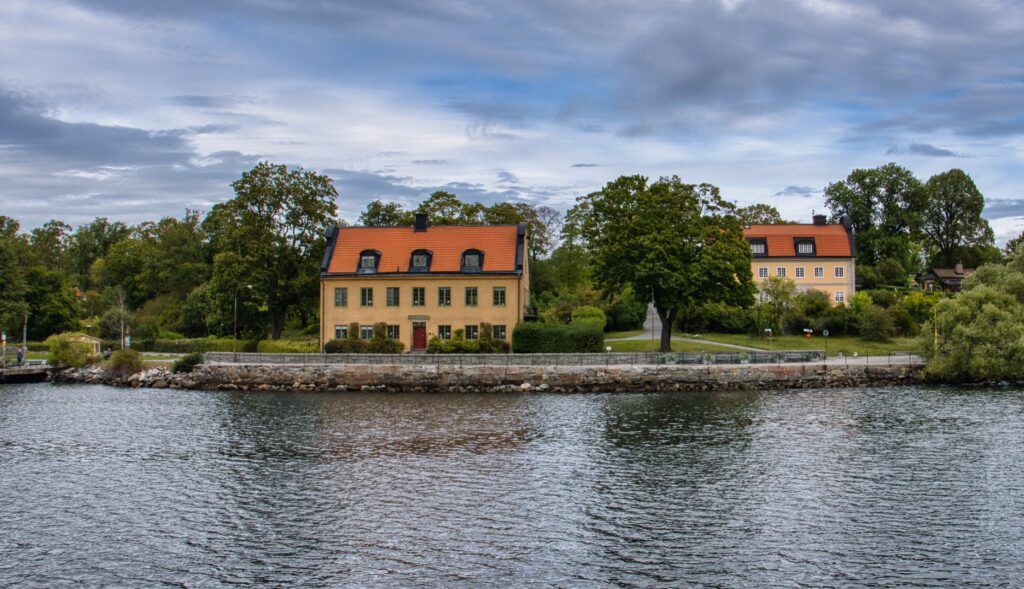
    Red House on an Island
    Red House on an Island

    Before I could get any good shots of it, the rain got heavier.

    It was only early September, but between the rain and the wind off the sea, this was well beyond “Nordic summers are a bit cool.” The other tourists were committed, though. Even in the worst of the downpour, plenty of people stayed on the open top deck. I stuck it out with them for a while, as if sitting outside long enough would make the clouds part on cue.

    Reality was not that inspirational.

    Eventually I went downstairs. I still wanted to see everything. I just realized that “taking a cruise” did not have to mean “catching a cold on purpose.”

    We turned back before reaching Vaxholm, probably because of the weather. That string of island names on the itinerary became a wish list for a sunnier day. The rain did teach me one thing: Swedish summer really is June through August, and by early September you get cold wind and rain.

    My phone photos were close to useless, one gray-white smear of lens, window, water and distant islands. Luckily, I had brought my Leica D-LUX 8, which can shoot five frames in a row, each 1 EV apart. At home I merged them with HDR Merge in Luminar Neo and rescued a few. They are not the blue-sky archipelago shots I had imagined, but they kept some of the red houses, the water and the clouds.

    Some travel photos are worth keeping because they take you straight back to a moment: sitting on the top deck in the sea wind, knowing full well it’s raining, and refusing to go inside just yet.

    Afternoon: an art gallery that happens to run trains
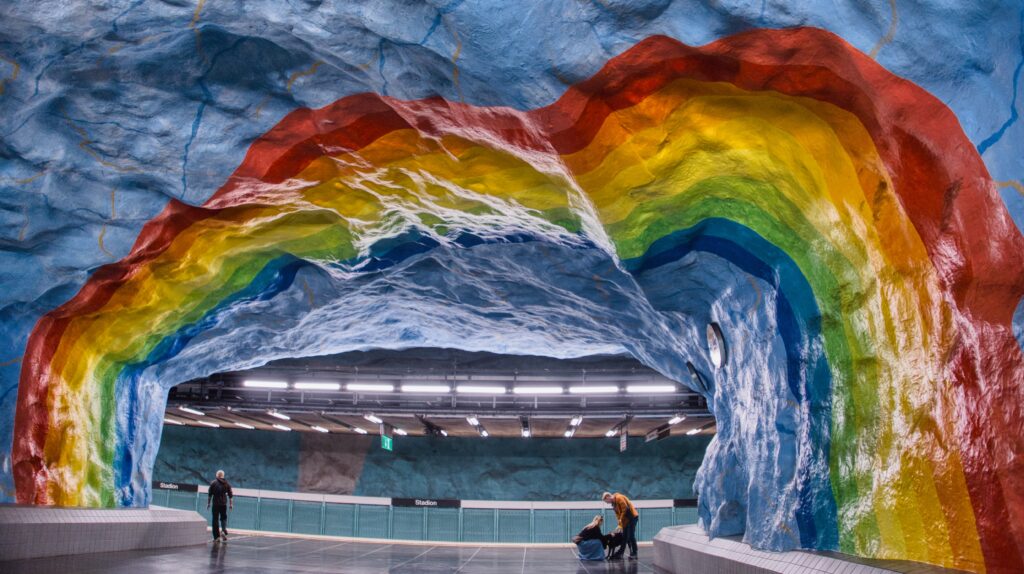
    Rainbow Underground
    Rainbow Underground

    At 3:30 p.m., I joined a Stockholm subway art tour.

    The morning cruise had been a standardized itinerary: a few islands, a few place names, two hours on the water. The afternoon felt more like someone leading a group of strangers underground and teaching them to look again at a city they would normally just commute through.

    Kungsträdgården
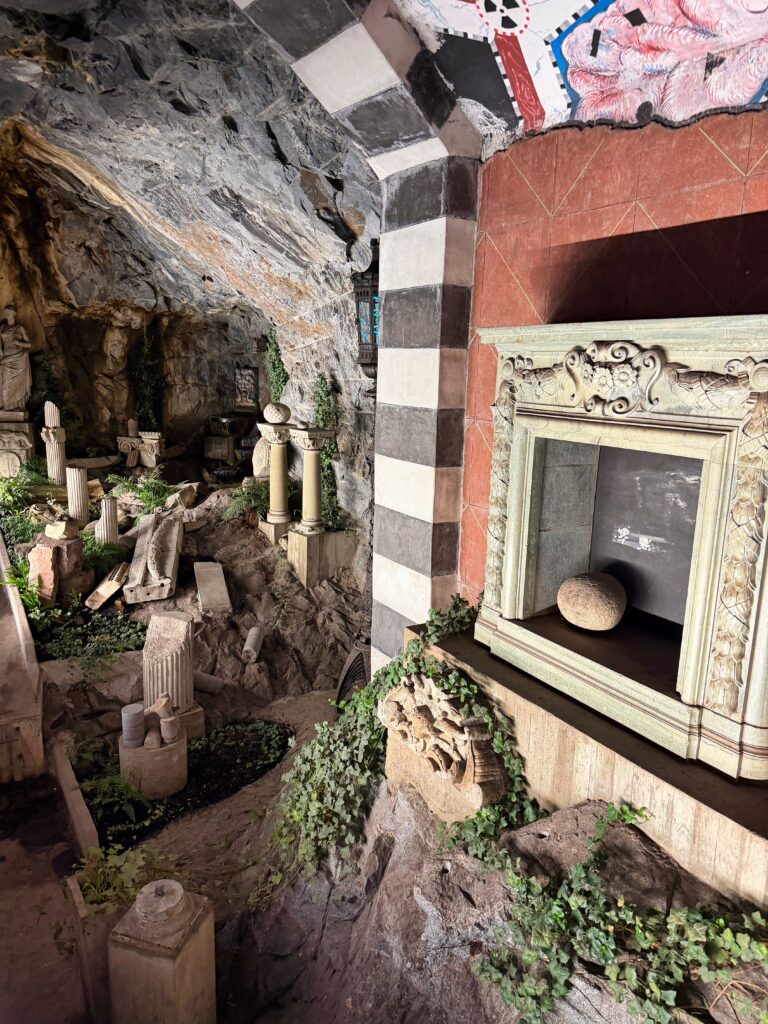
    Kungsträdgården Underground Statues
    Kungsträdgården Underground Statues

    I had been through this station before without noticing any art. To me it was a place to get off, follow Google Maps to an exit, and hurry to the next sight.

    This time, the first thing I noticed was a row of piano keys above the escalator. No explanation needed. You look up and an ordinary escalator has turned into an instrument hanging underground.

    Before you reach the platform, statues stand guard along the way. You won’t notice them if you are in a hurry though, as they are below the passageway and you will have to look down on the sides to see. The originals are from the 1600s and sit on the roof of the House of Nobility, about 30 meters above the ground. The artist brought copies down about 30 meters below it. They look a little chubby and squashed, which seems fair when you’re holding up that much rock.

    The best story belonged to an unremarkable-looking tree stump.

    In 1971, the city planned to cut down 13 old elms in the park above to build a new station exit. People climbed into the trees or stood beside them to stop the felling, crowds gathered, and the police eventually withdrew. The exit went somewhere else. The stone stump, saw marks and all, remembers what became known as the “Battle of the Elms.”

    So an underground station keeps the stump of a tree that never existed, in honor of the real trees above that never got cut. I love this. There’s no solemn plaque. You’re on your way to catch a train and you run into the time the city refused to build what it had planned.

    The funniest detail was the electronic dripping-water sound at both ends of the platform. The guide said it’s there to remind you that the line runs below sea level.

    My first reaction was not “how poetic.” It was “New York.” When it rains, the New York subway leaks for real. No sound effects required.

    Stockholm turns dripping water into public art. New York lets passengers confirm in person, by getting dripped on, that the ceiling is leaking. Both subways have a relationship with water. They just handle it very differently.

    T-Centralen
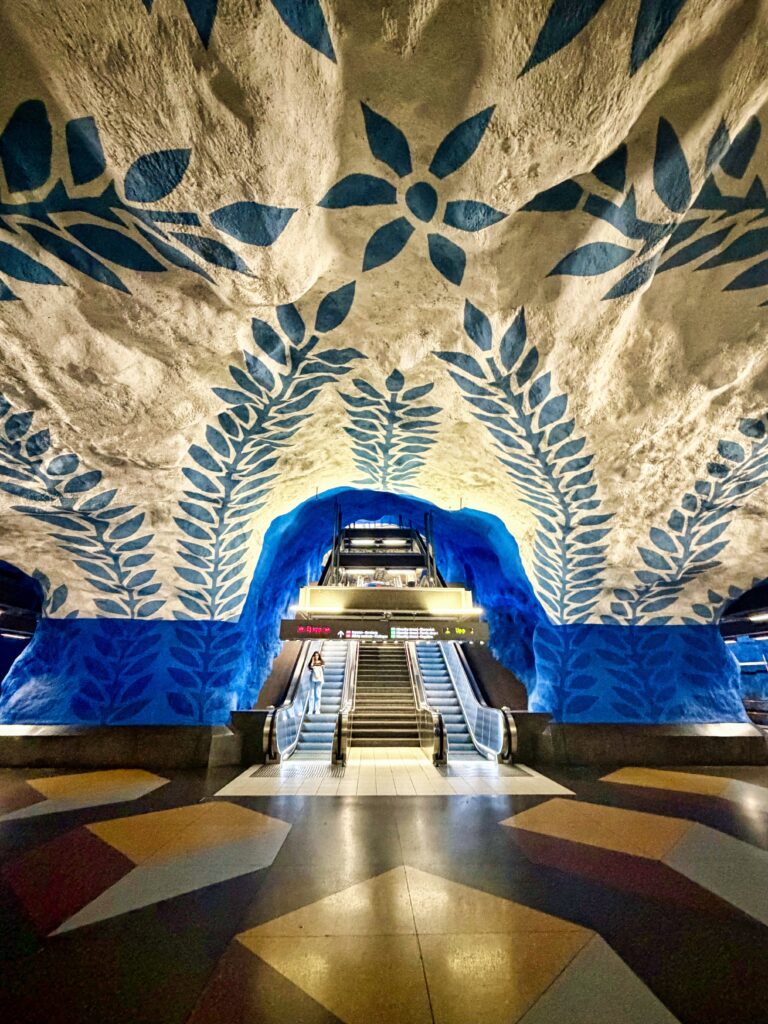
    T-Centralen
    T-Centralen

    The central station ought to be the easiest place in the system to ignore. It’s the city’s main transfer hub, full of people dragging luggage, switching lines and checking when the next train comes.

    The blue line platform barely gives you the option.

    The cave-like walls and vaulted ceiling are painted white, with huge blue vines, leaves and flowers creeping across the rock. It feels like walking inside an upside-down porcelain bowl, or an ice cave someone relocated underground. Even with trains pulling in and escalators hauling passengers up and down, it photographs beautifully.

    The guide said the artist, Per Olof Ultvedt, chose blue partly to calm people down in a busy, stressful station. That feels very Nordic. Another city would make its busiest station brighter, plaster it with ads and turn it into a machine that hurries you along. Stockholm painted it with blue-and-white plants and asked you to take a breath first.

    Whether that works depends on your day. If you’ve just missed a train, you’re dragging a suitcase and you still have three lines to change, no number of blue vines will put you in a meditative state.

    As a tourist, I had no train to catch. So I stood on the platform taking photos, pretending this was a gallery that trains are allowed to pass through.

    Rådhuset
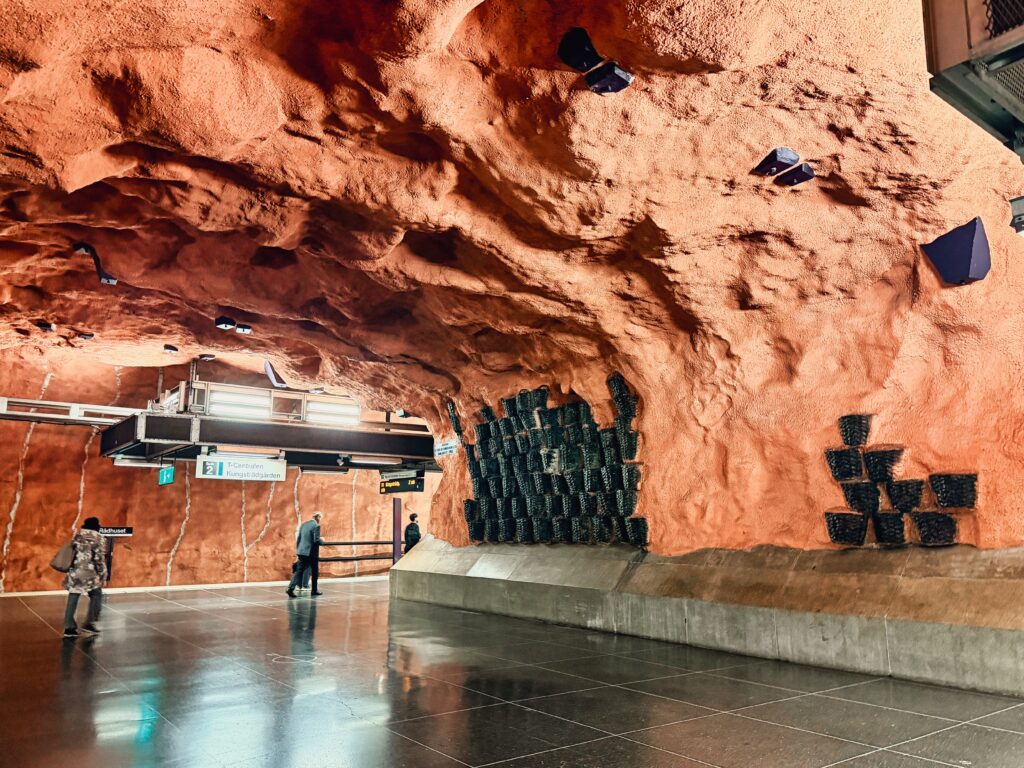
    Rådhuset
    Rådhuset

    I had seen this one on YouTube. In the videos, the red-brown rock walls and cave-like vaults look like a movie set: perfect light, nobody around, every screenshot a tourism ad.

    My photos never came out like that.

    Some stations have tons of atmosphere in person but don’t hand everyone the same YouTube-perfect shot. The red walls are striking, but light, angles, trains and crowds all crowd the frame.

    What Rådhuset gave me instead was its odd little pieces of old Kungsholmen life, tucked into the rock like a local history museum. Set into the platform wall is a huge black wooden box. I took it for a crate of market goods. It’s a parm, a wooden measure once used for hay. There are baskets too, a nod to the markets that once filled the neighborhood, when baskets were the standard shopping bag.

    The strangest detail is overhead: two boots hanging from the ceiling. I assumed they honored workers, since a pair of upside-down boots in a cave looks a lot like a labor history installation.

    Wrong. The little sign next to them reads “Lyckans galoscher från Hantverkargatan,” the lucky galoshes from Hantverkargatan, the old craftsmen’s street right above the station. Both boots are left feet. Lucky, maybe. Not the street’s finest shoemaker.

    Tekniska högskolan
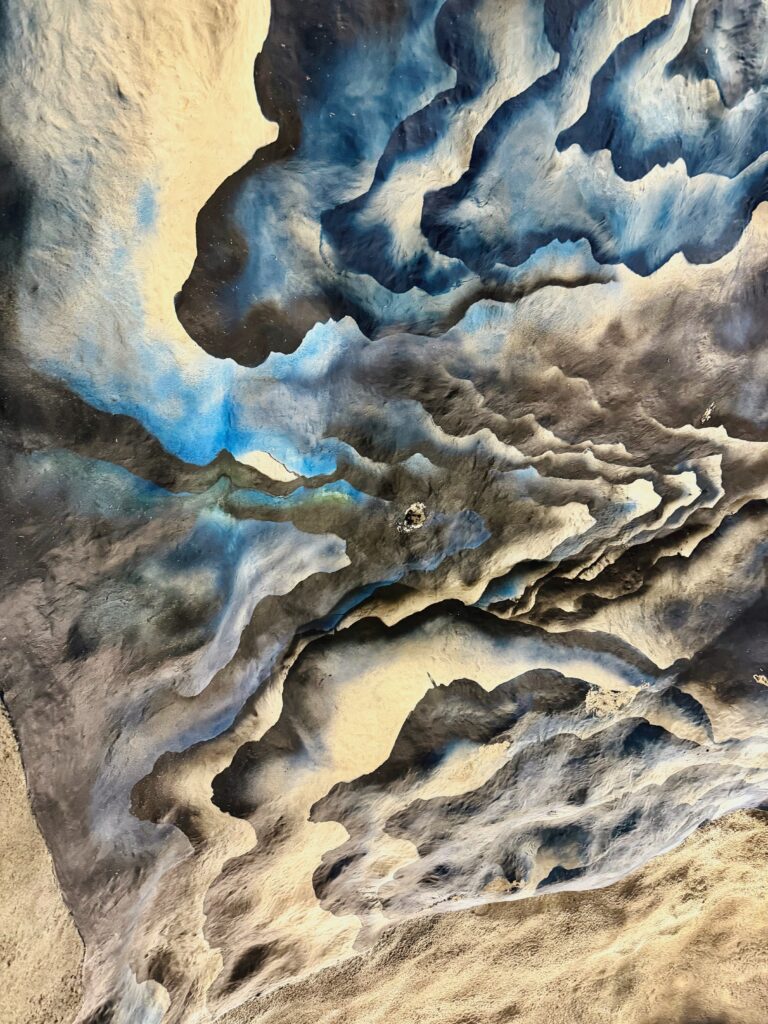
    Water Element at Tekniska Högskolan
    Water Element at Tekniska Högskolan

    The station sits next to KTH Royal Institute of Technology, and the art is suitably nerdy: fire, water, air and earth, plus technology, the universe and the laws of nature.

    Each element is obvious at a glance. Fire gets warm colors and bold shapes, water gets blues, and those two are the most photogenic, red and orange clashing with blue across the rock. For a station named after an engineering school, it feels a bit like elemental magic.

    The artist, Lennart Mörk, also hung a dodecahedron for the ether, the ancients’ fifth element that was supposed to fill the universe. I won’t claim I caught every scientific metaphor, but the theme fits the neighborhood perfectly.

    Stadion
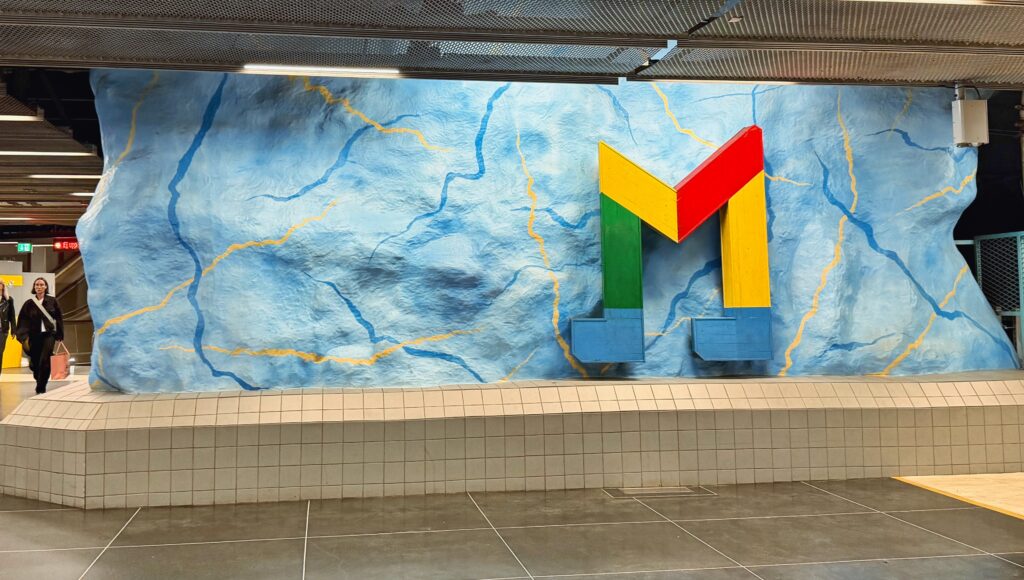
    M at Stadion
    M at Stadion

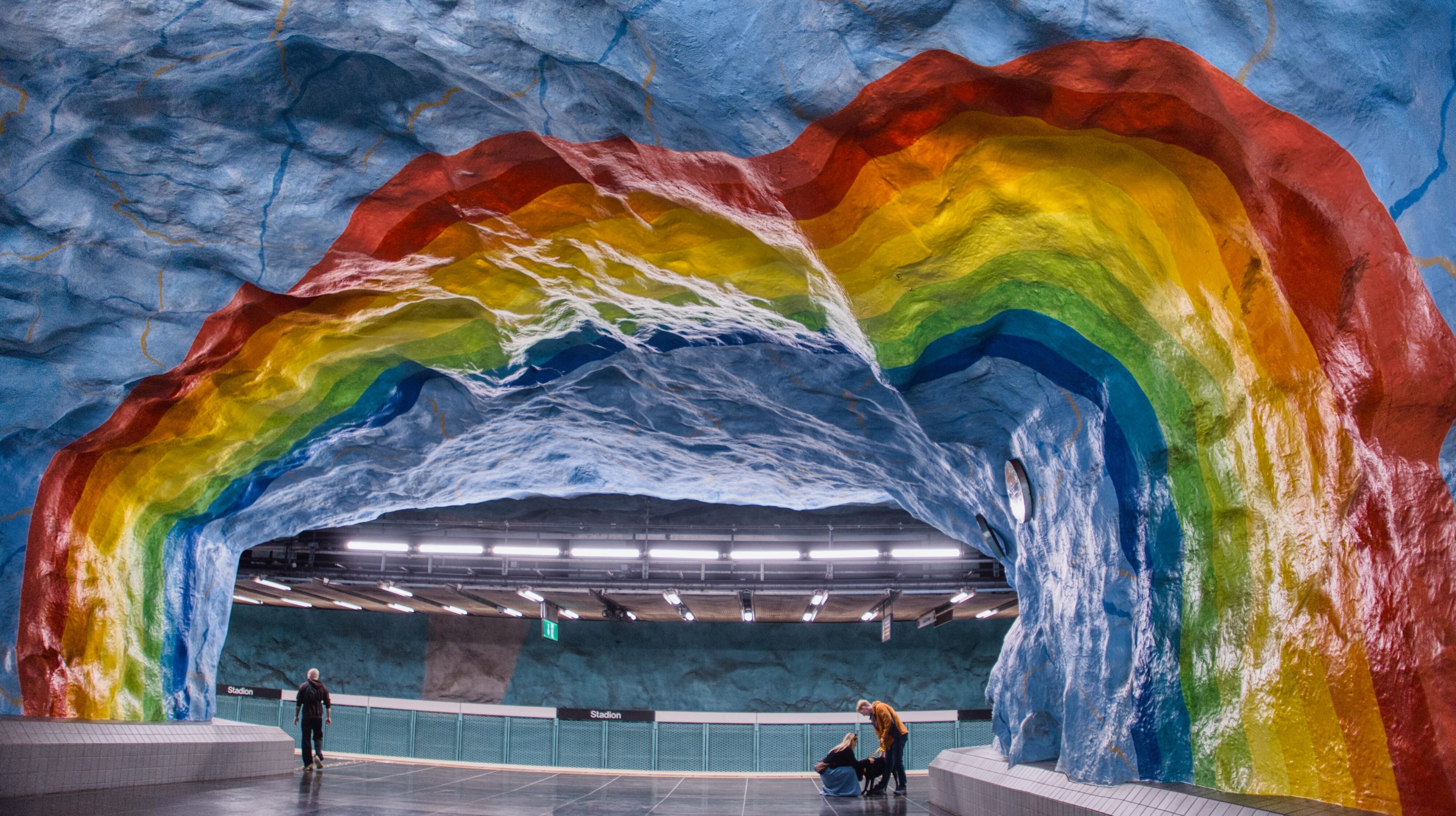
    Stadion is famous for its rainbow, but the first thing I fell for was the blue.

    It’s not a cold, industrial blue. The rock walls and ceiling are painted like an open sky. When the station opened in 1973, it was one of Stockholm’s first cave stations, and people worried that riding through bare rock would feel like descending into the underworld. So the artists brought the sky down with them. The guide added the obvious problem: most of the time, Stockholm’s sky is gray.

    I understand the artists completely.

    Two days earlier, on Sunday, I had seen Stockholm under real sunshine: clean, saturated blue, beautiful enough to make you take the long way around. Days like that don’t come often. This cave pins one in place, so even on a rainy commute you can look up at a sky that won’t disappear.

    The rainbow arches over the passage between the two platforms, and naturally my first thought was Pride. The rainbow was originally a nod to the 1912 Stockholm Olympics, held at the stadium next door. But the main Pride festival grounds are right nearby, so these days it greets festival-goers every summer, which seems like a very happy accident.

    Then I noticed a giant M on the wall.

    My first thought: how did Google get an ad into the Stockholm subway?

    It looked so much like the Gmail logo that for a moment I suspected some very rich advertiser had muscled in where it clearly didn’t belong. It turns out the M points toward the music academy nearby, and an S on the other side points to the stadium’s south entrance. Directions, basically. And they were up on that wall a quarter century before Google existed.

    That was when it hit me that Google hasn’t been around nearly as long as it feels. Google is everywhere, like air, so when I saw an M that looked like Gmail, I assumed it belonged to Google. We’re just so used to Google that we got the resemblance backwards.

    Above and below
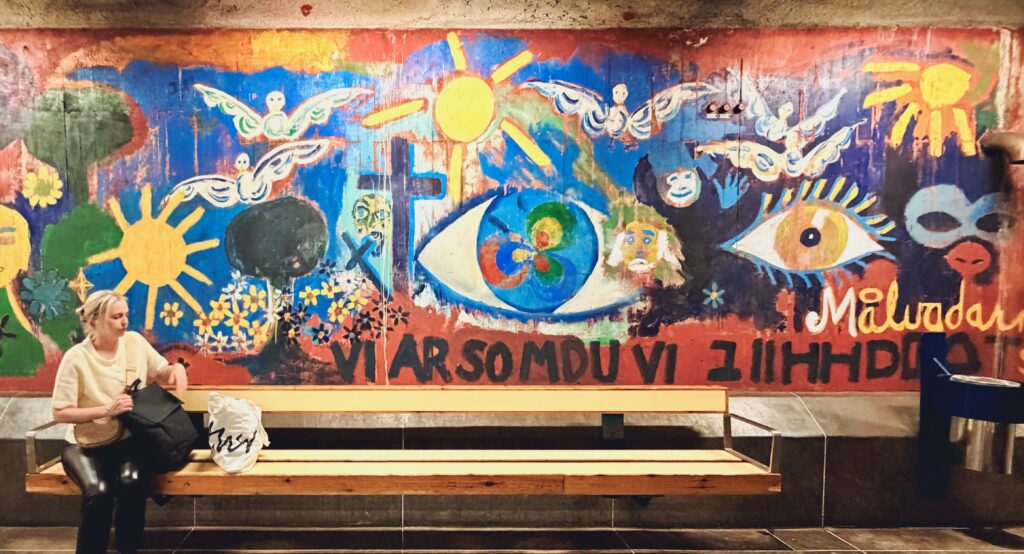
    Stockholm Underground
    Stockholm underground, waiting for a train

    Out at sea, the morning was a washout. The islands, the red houses, Fotografiska and the Vasa wreck site were all still there, just pressed flat and gray by the rain.

    Underground, the weather can’t get in. The rock walls, the rainbow, the two left boots, the tree stump, the dripping water and an M older than Gmail are all kept there on purpose.

    In a city made of water, islands and unreliable weather, the view above ground depends on the sky’s cooperation. The rainbow underground is always on.
  • The Correct Use of a Gray Day in Stockholm: A Sunken Warship, a Shrimp Waffle, and a Few Hundred Years of Sweden

    The Correct Use of a Gray Day in Stockholm: A Sunken Warship, a Shrimp Waffle, and a Few Hundred Years of Sweden

    In 1628, Sweden sent off a brand-new warship built to scare the whole Baltic. With crowds watching from the shore, it sailed about 1,300 meters, leaned over in a breeze, and sank. Almost four hundred years later, it’s the one thing everyone who has been to Stockholm tells you not to miss. So on a Monday when the sky had nothing better to offer, I went to meet it.

    It was not the strangest thing I saw that day.

    The warship that made it 1,300 meters

    Vasa
    Vasa the ship

    Monday in Stockholm was gray.

    The day before, I had peeled myself out of bed after an overnight flight to catch a sunset, so I felt I’d done my duty to scenery. A gray day, I decided, has one correct use: give up on pretty photos and take the subway to a museum.

    So I headed to Djurgården for a stop every guidebook rates highly: the Vasa Museum.

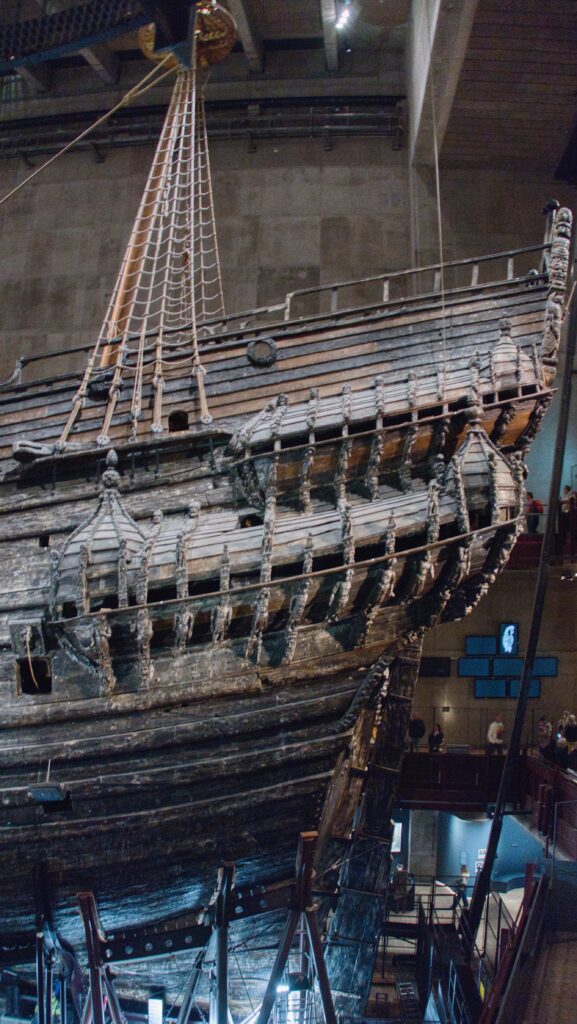
    When I asked friends who had been to Stockholm what stuck with them most, a surprising number named this museum. Its star is the Vasa, a Swedish warship that left on its maiden voyage in 1628, made it a short way into Stockholm’s harbor, and sank. It stayed on the bottom for 333 years until it was raised in 1961. The cold, low-salt water of the Baltic doesn’t suit the shipworms that devour wooden wrecks elsewhere, which is the only reason there was anything left to pull up. Today it is the only surviving 17th-century ship in the world.

    Sinking on your first day at work is absurd enough on its own.

    Inside, the Vasa really is big. It rises several stories, mostly thanks to the masts, and the dark wooden hull is crowded with carvings, gun ports, and decks. It looks like someone moved a wooden building indoors and forgot to tell it.

    Honestly, as a modern person, I wasn’t floored by the size. Bigger ships aren’t hard to find today, and the largest reconstructed Viking ship I saw in Norway had plenty of presence too. They are different animals, of course. Viking ships were built to sail fast and raid. The Vasa was a floating gun platform built to show off royal power.

    Put it back in the 1600s, parked in the harbor, and I believe it made jaws drop.

    But every time I remembered it sank on its first outing, the reverence drained right out of me. This is no battle-scarred legend that came home in triumph. It is a giant engineering project that tried too hard and failed before its first shift. Standing in front of it, you’re looking at the ambition of an era and the physical evidence of that ambition tipping over.

    I didn’t study every panel. What turned the Vasa from a big failed warship into a ship people had lived on was a private English-language tour I latched onto. The guide wasn’t mine, but he wasn’t whispering either, so I drifted nearby and listened in.

    That’s how I learned that archaeologists worked out how the crew lived from the skeletons found on board. One belonged to a short man with clear signs of osteoporosis. His teeth were wrong too, something like a second row growing in (I was eavesdropping, so don’t quote me on the dental details). A modern dentist could sort that out. In 1628 it meant chewing hurt, so he lived on porridge.

    The guide also pointed out the class divide. One roomy cabin had benches along the walls that pulled out into something close to a king-size bed. That space was for senior officers, and for the king himself if he ever came aboard. The gun crews got no such luxury. They worked and rested in shifts, and when it was their turn to sleep, they lay down next to the cannons.

    So at one end of the ship you had something like a palace bedroom, and at the other a crowded deck where men took turns napping beside the guns. The Vasa never fired a shot in battle, but it had already packed the entire 17th-century class system into its hull.

    At full strength, it was designed to carry 133 sailors and 300 soldiers. Senior officers lived in the stern cabins, with more space, windows, and furniture. Everyone else ate, slept, and rotated between the guns.

    The museum also has a small cinema that tells the Vasa’s story in several languages. I’d missed the English showing and was about to give up when I saw the next one was in Chinese.

    It turned out to be the part of the museum I paid the most attention to.

    On the day of the maiden voyage, every gun port was open, partly to fire a salute and partly to show off the new ship’s firepower. Not long after leaving, a gust pushed the ship over to one side, and water poured in through the open lower gun ports. It had sailed about 1,300 meters, for roughly twenty minutes, before it went down.

    My first thought when the film ended: this is obviously a design problem.

    The Swedish crown did hold an inquiry. They questioned the captain, the officers, and the builders, checked the ballast, and asked whether the guns had been properly secured. In the end, nobody was punished. The official explanation is that the ship’s center of gravity was too high and its hull too narrow, so a breeze was enough to tip it. The open gun ports let the water in, but they weren’t the reason it tipped so easily.

    My favorite detail, and one I wish I’d invented: before the voyage, the ship had a stability test. Thirty sailors ran back and forth across the deck. After three laps the Vasa was rolling so badly that the admiral called it off. Then they sent it out anyway.

    I had wondered who signed off on a design that tips over in a breeze. Did the designer have such powerful connections that the king didn’t dare go after him?

    The answer is less dramatic. The master shipwright, Henrik Hybertsson, had died more than a year before the Vasa sank. During the inquiry, the builders insisted they had built the ship to dimensions the king approved. The official timeline points to Hybertsson’s poor proportions, but he was in no position to defend himself, or to be punished.

    Convenient.

    None of this makes the ship any more sensible. The Vasa still looks like a mega-project driven by royal ambition that outran the technology of its day. Everyone wanted a taller hull, more cannons, and a scarier silhouette, and nobody gave it a body stable enough to carry all of that.

    In software terms, this wasn’t a drunk operator pressing the wrong button. Requirements kept piling up, nobody admitted the system had limits, and the original architect was no longer around to take the blame. I have sat in that sprint planning.
    I went in a little before eleven, circled the ship and the galleries, collected a lot of shipboard gossip from a tour that wasn’t mine, and at 12:20 caught the Chinese film and, unusually for me, listened to the whole sinking story from start to finish. When it ended, it was lunchtime.

    Shrimp on a waffle

    The shrimp waffle
    Lusknappen Skagen Waffle

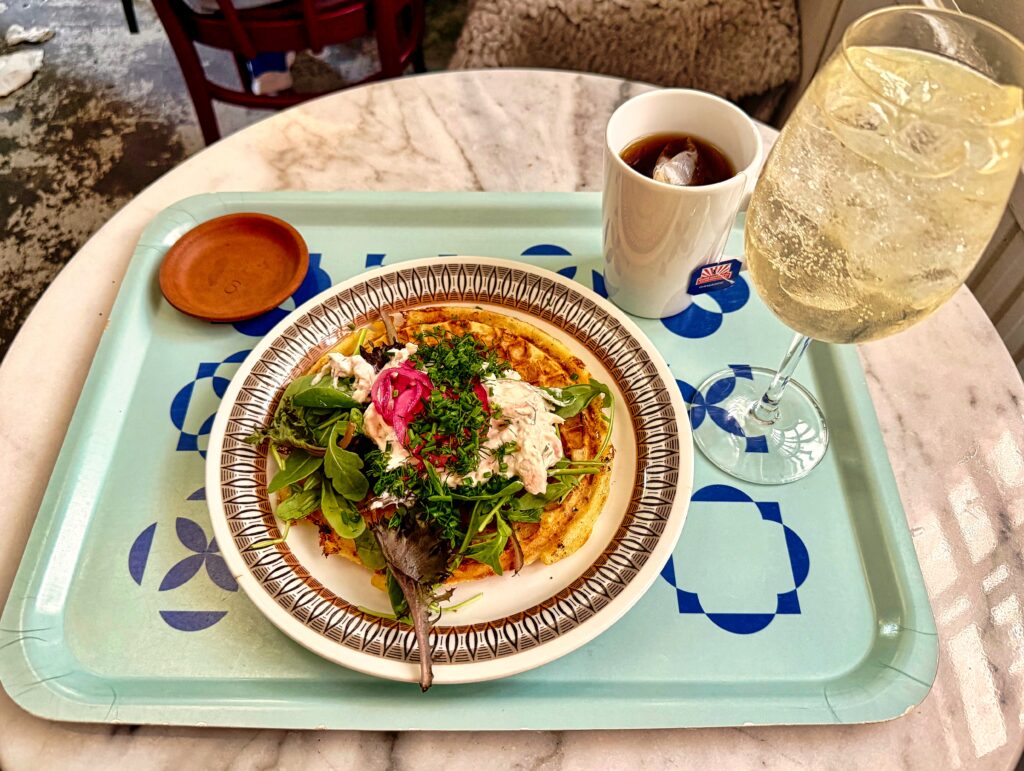
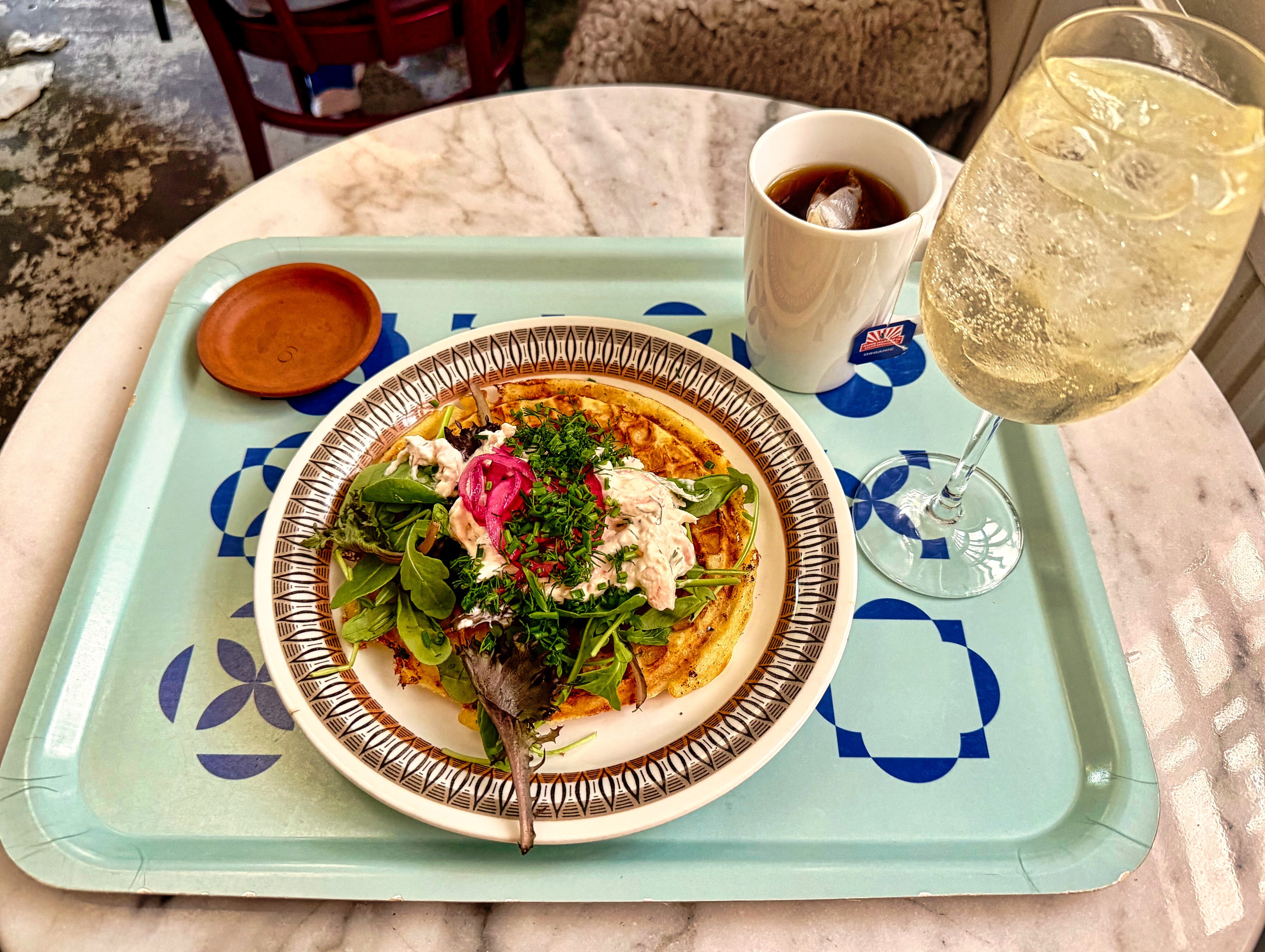
    Instead of going back for more panels, I walked next door to the café outside the Nordic Museum and ordered the Lusknappen Skagen Waffle. That is a waffle with shrimp on it.

    Ordering it, I was mostly confused. In my head, a waffle is sweet. It comes with cream, syrup, or fruit. Who looked at that and thought, shrimp?

    I braced myself for a culinary disaster.

    It was delicious. The waffle itself isn’t sweet at all, and with the shrimp and Skagen sauce on top it made complete sense. Skagen is a Swedish classic of shrimp, mayonnaise, and dill, dreamed up in the 1950s by the restaurateur Tore Wretman and named after a fishing town in Denmark. The crisp waffle and the cold, briny shrimp got along perfectly, with none of the weirdness I’d prepared for.

    So on day two in Stockholm I saw a giant warship that sank on its maiden voyage, then ate a shrimp waffle. The first taught me that 17th-century engineering projects should not be so sure of themselves. The second taught me not to be so sure of myself about unfamiliar food.

    The museum next door ate my afternoon

    Gustav Vasa the Statue
    Gustav Vasa the Statue

    After lunch it was still gray. The Nordic Museum is right next door, and it had made it into my plans for one reason: it was close.

    I assumed it would be a quick lap through Swedish folk life and history. That “quick stop” swallowed my entire afternoon.
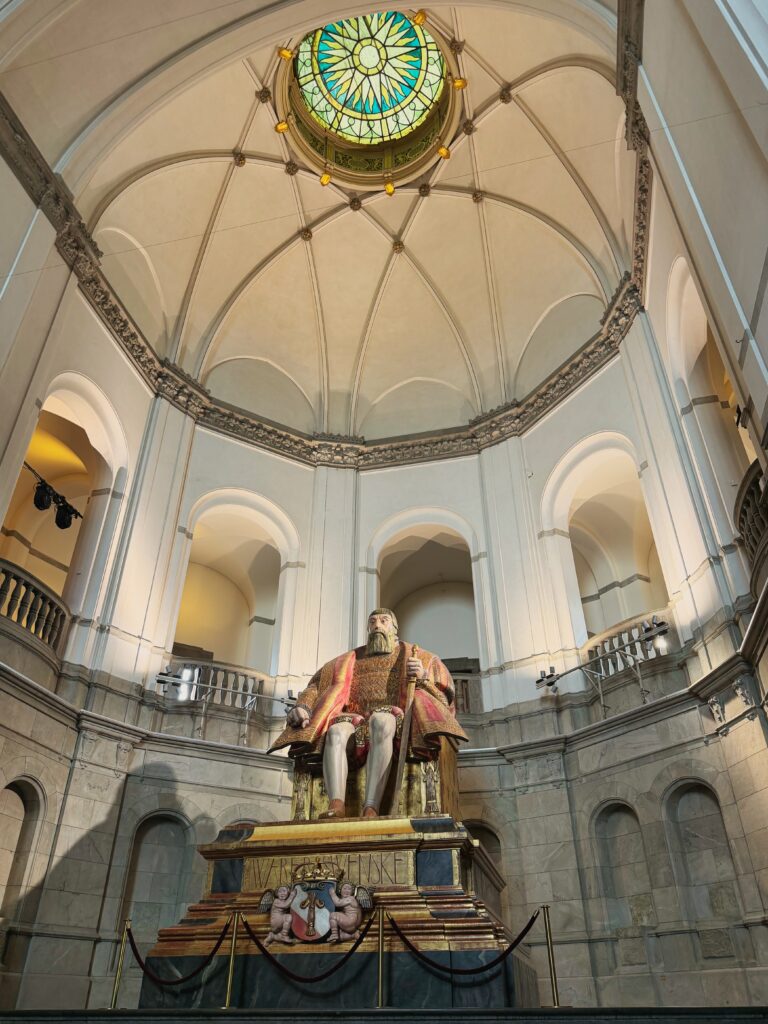
    The building alone should have warned me. From the outside it looks like a Renaissance castle, and inside it opens into an enormous, mostly empty great hall with one giant statue in the middle. (It’s Gustav Vasa, the 16th-century king who founded modern Sweden, whose family name ended up on the unlucky warship next door.) The scale was far bigger than I expected, and for a moment I had no idea where to start. On one side of the hall was an exhibition about melting glaciers, and I almost walked straight in. But the arrows on the floor were very firm about it: take the elevator to the top floor and start there.
    So I did what the arrows said.

    Looking back, this was the Nordic Museum’s first trap. It starts you at the top and lets you work your way down, floor by floor, until your legs stop cooperating and you realize you still aren’t done.

    The permanent exhibition isn’t divided by theme (clothing, food, holidays, furniture). It runs in chronological order. Starting from the earliest period, it walks you through daily life century by century: what people wore, where they lived, what they kept at home, what tools they used, how they ate, and how all that ordinary stuff ended up in glass cases.

    At first this feels very friendly. You don’t need to understand the whole sweep of Swedish cultural history. You just follow the timeline.

    The problem is that once you’re on it, it’s very hard to get off.

    Finish one century and you want the next. When did the clothes change? When did furniture stop weighing as much as a small car? When did an ordinary household start owning things I’d recognize?

    I had come in to “learn a little Swedish history.” Soon the timeline was dragging me down one floor and one century at a time.

    The museum has been collecting Swedes’ belongings and stories since 1873, covering the 16th century to today. It doesn’t only keep the history of royals and famous people. It also holds a huge amount about how ordinary people lived. So when the exhibits are laid out as a timeline across several hundred years, you see more than date labels. You see daily life being slowly rewritten, generation by generation.

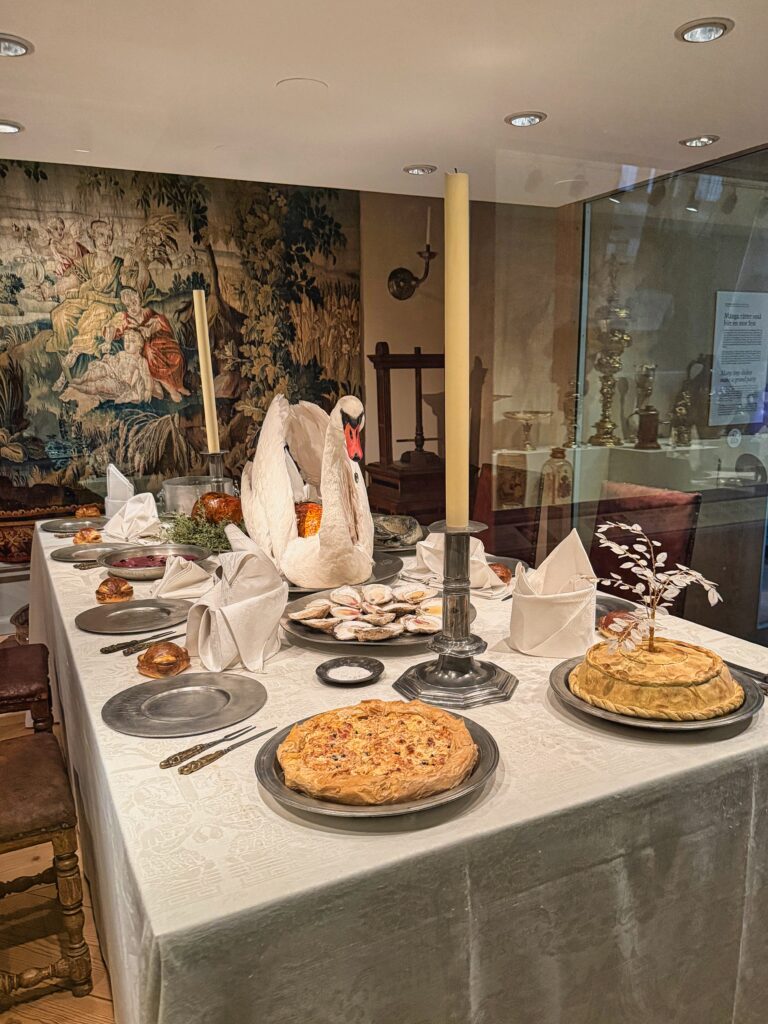
    One series of displays shows dining tables from different eras. These aren’t little family tables. They are long banquet tables set for aristocratic dinners, crammed with silver, cutlery, plates, glasses, and ornaments, as if the host might walk in with a crowd of guests at any moment.

    The one I remember best is the earliest.

    There was a swan on it.

    Sweden Dinning Table
    Sweden Dinning Table with a Swan

    I assumed it was decoration. Then the audio guide explained that people used to serve meat inside the swan. The point clearly wasn’t the food. The point was to tell every guest: we can afford meat, and we also have an entire swan to serve it in.

    The audio guide then added, with admirable restraint, that this was not very hygienic.

    No kidding. If that swan was being refilled, carried out, and shown off over and over, hygiene was not on the menu.

    As the tables move forward in time, the food slowly becomes normal. The early tables seem to be about one thing: making sure everyone can see how rich you are. Long tables, meat, silver, and a swan you can stuff meat into. Closer to the present, the silver gives way to porcelain, and the food stops looking like a spectacle and starts looking like something I’d recognize and want to eat.

    By the end, the scene isn’t a formal dinner anymore. It’s more like a tea party spread with little snacks. It’s still social, with hosts and guests and rules and a bit of showing off, but the mood has gone from “behold, I can serve you an entire bird” to “come sit down, have something to eat.”

    At least judging by the galleries, it took the Swedish dinner table several centuries to get from an aristocratic stage set to something like the living rooms we know.

    Following the timeline down, the picture of Swedish history I came away with was surprisingly simple.

    The earliest Nordic people were busy surviving the cold with limited resources. As their numbers, trade, seafaring skills, and contact with the outside world grew, they started heading out. The exhibition mentioned their trips south and west, and one wonderfully human detail stuck with me: when they reached England, they were impressed by how nice the weather in London was.

    Standing in Stockholm, I completely understand. If you come from somewhere cold enough to make you sail off and explore, a place with mild weather is going to look very tempting. Think about that for a second: London, praised for its weather.

    The “they” here shouldn’t be confused with the later Swedish state, of course. Vikings came from what is now Denmark, Norway, and Sweden, and their raids and settlements in England don’t add up to “Sweden once took London.”

    Still, the impression the exhibition left was vivid. The Nordic countries haven’t always been quiet, neutral places that design furniture and take fika breaks. They have a long history of heading out and fighting over land and influence. Vikings invaded England in the 9th century, and in the 17th century Sweden became a European great power controlling much of the Baltic. That second chapter is the era of the Vasa, which is to say the empire was building warships to match its ambitions, and at least one of them didn’t make it out of the harbor.

    In the modern section, the exhibition gets to the current royal family. The bit I remember most is about Crown Princess Victoria, who married her former personal trainer, Daniel Westling.

    I have no idea how much royal protocol went into that decision, but “the princess married her gym trainer” is a lot more down-to-earth than what I imagined European royal life to be. He became Prince Daniel, rather than arriving as one of those fairy-tale nobles whose pedigree matched perfectly from the start.

    When I finally made it from the top floor back to the ground floor, I was back where I started, at the glacier exhibition by the entrance.

    As far as I could tell, it was about how retreating glaciers affect ecosystems and the dangers of global warming. These things matter, and in theory they deserve my full attention.

    In theory.

    By then I had seen a sunken warship, eaten a shrimp waffle, and walked through several hundred years of Swedish daily life, one century per room. My legs were close to going on strike.

    So my takeaway from the glacier exhibition is correct but very general: melting glaciers are bad for ecosystems, and global warming is dangerous. The finer details I leave to people with more energy, or at least to people who didn’t do two big museums in one day.

    I only added the Nordic Museum because it was next to the Vasa. I walked in expecting a museum you pop into on the way past and walked out of a giant time machine that lays several hundred years of Swedish everyday life out for you to walk through.

    I didn’t memorize every era, and I couldn’t explain Swedish history if you paid me. But I did learn one thing: if anyone tells you the Nordic Museum is just the place next to the Vasa that you “might as well see,” don’t believe them.

    Give it a whole afternoon.

    Just check with your legs first.

    Dinner, courtesy of a credit card

    Herring Boquerones and Vistakulles cider
    Herring Boquerones and Vistakulles cider

    After the Nordic Museum, I went back to Hotel At Six for a rest. Two big museums in one day, and even I couldn’t keep pretending a little more walking would be fine. My legs needed some time not moving.

    At six, I had dinner downstairs at Brasserie At Six.

    The reason I picked it was purely practical. Booking the hotel through Amex Platinum came with a $100 dining credit.

    Free money is free money.

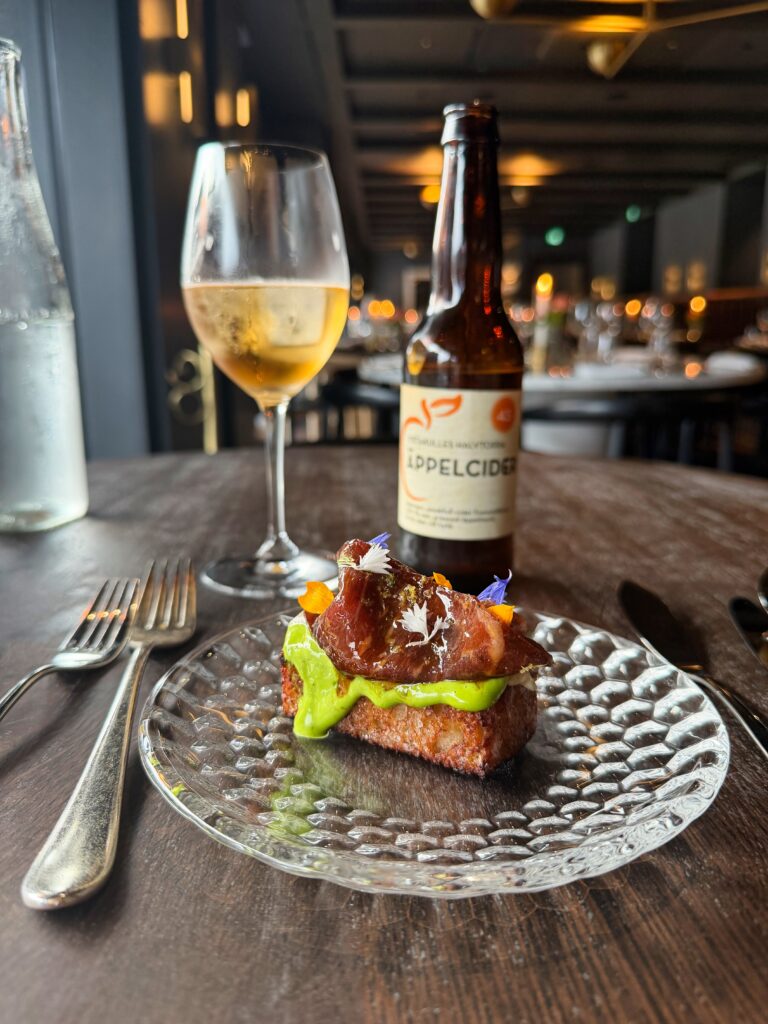
    I ordered the Herring Boquerones, the Dry-aged Raw Beef, and the Seabass Grilled on Skin, with a glass of Vistakulles cider. For dessert I had the Raspberry: almond cake, meadowsweet mousse, raspberry sorbet, and meringue.

    Swedish herring lives up to its reputation. It was excellent. After an afternoon of staring at historic dinner tables, eating pickled herring at a real one felt like walking out of the museum and back into the present.

    The dry-aged raw beef tasted good, but the “raw beef” part still made me a little nervous, so I didn’t finish it. Thinking about it rationally, I had already eaten most of it, so leaving the last bite didn’t accomplish anything.

    The sea bass was solid, and the raspberry dessert was lovely. The plating and the flavors were good across the board, and after a sunken ship, centuries of Swedish domestic life, and a melting glacier, my final feeling was very simple:

    I was stuffed.

    That morning I had seen where the Vasa’s gun crews slept, right next to the cannons. That night I ate a four-course dinner on a credit card perk and went upstairs to an actual bed.

    History did not teach me how to use an Amex Platinum. But when you’ve walked until your legs nearly give out, sitting down to a good meal without wincing at the bill is its own kind of modern civilization.

  • Sixteen Hours in Stockholm, One Questionable Nap

    Sixteen Hours in Stockholm, One Questionable Nap

    Somewhere over the Atlantic, around hour five of a flight where I slept for zero of them, I made myself one promise: the moment I landed, I’d find a bed and become one with it.

    Bridge connecting Gamla Stan
    Bridge connecting Gamla Stan

    Stockholm had other plans. We touched down at 8:30 AM local time, which my body, still on New York hours, insisted was 2:30 AM. Check-in wasn’t until the afternoon. So: no room, no bed, and a full day I hadn’t asked for, to be survived on airplane coffee and spite.

    The hotel that didn’t exist

    Hotel at Six

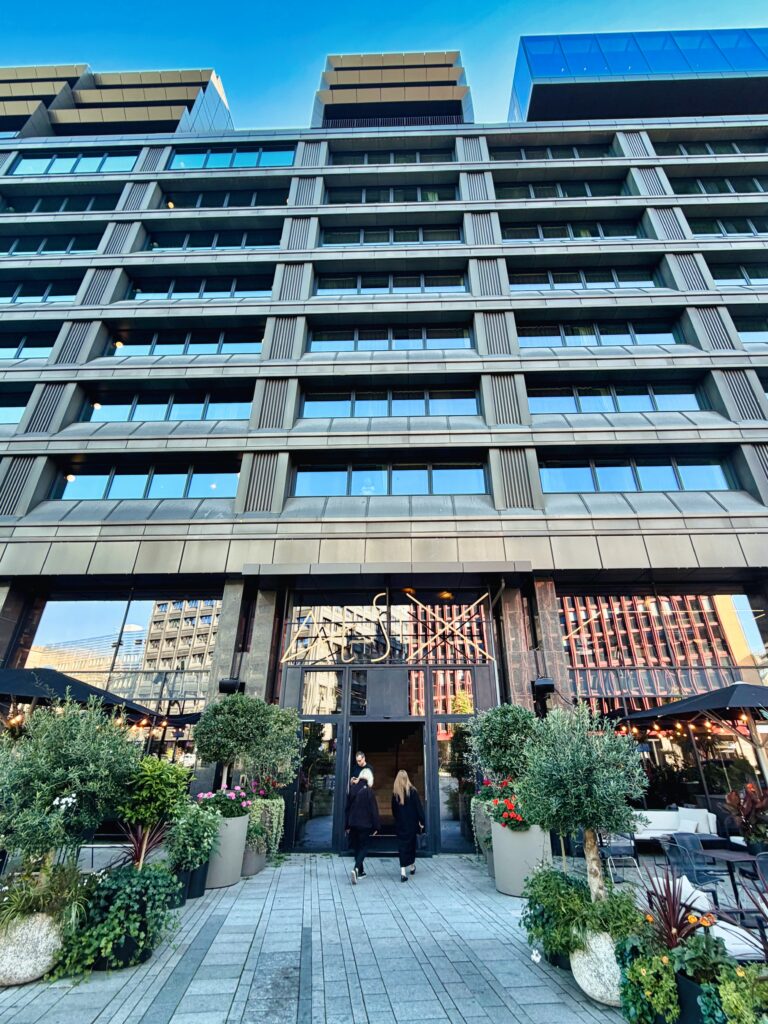
    The plan was simple. Drop the bags at Hotel At Six, then go sightseeing. Instead I got the trip’s first real challenge. Google Maps guided me to the address and announced, with great conviction, you have arrived.

    I had arrived inside a shopping mall.

    No hotel entrance. No front desk. Nothing resembling a lobby. Just me and my suitcase, standing between a clothing store and a juice bar, questioning my life choices. I circled the block twice before I cracked the code: this part of the city is built on two levels. The hotel lobby sits on the mall’s fourth floor, which is also the ground floor of the street above. The map wasn’t wrong. I was wrong for assuming a city only has one floor plan. Rookie mistake.

    Gamla Stan, briefly and under protest

    Gamla Stan street view
    On the street of Gamla Stan

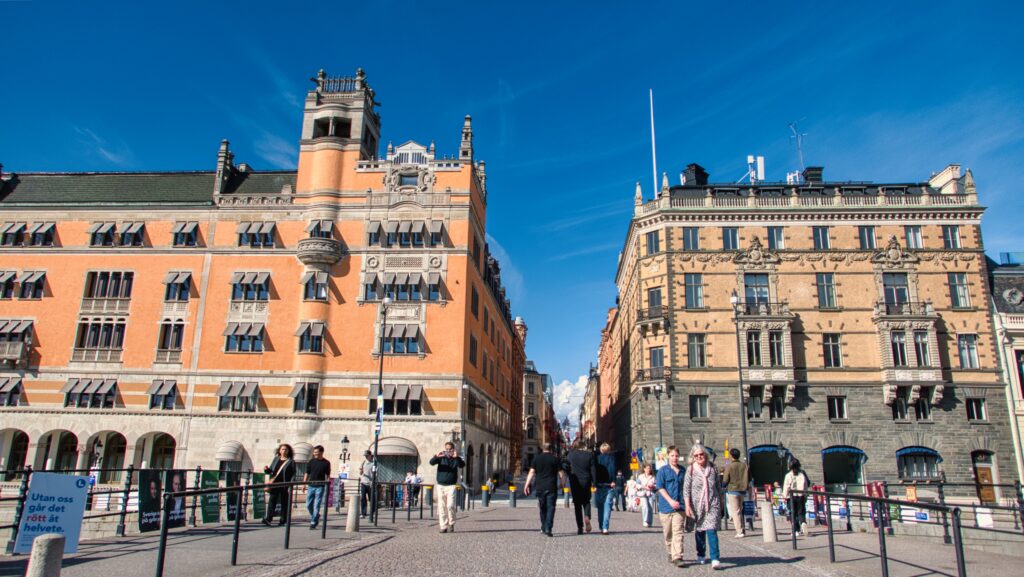
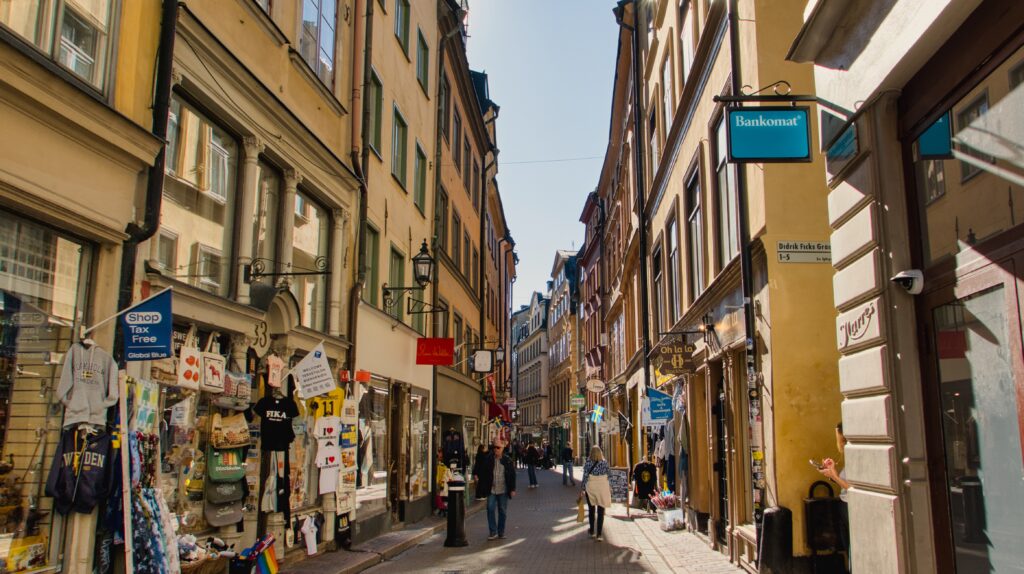
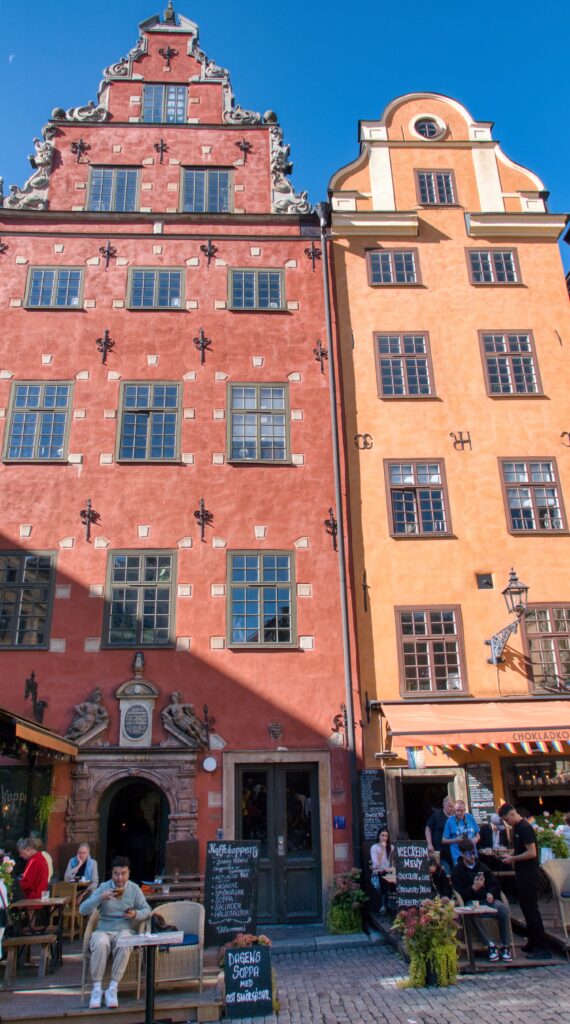
    The old town was a ten-minute walk away: cobblestones, narrow alleys, and the row of red-and-yellow houses on Stortorget that is legally required to appear in every YouTube video about Stockholm. I photographed them. I was there. It would have been dishonest not to.

    The square looks like a gingerbread postcard now, but in 1520 it hosted the Stockholm Bloodbath, when the Danish king Christian II had dozens of Swedish nobles executed on the spot. It has lightened up considerably since.

    Red and Yellow Houses
    The red and yellow houses show up in many YouTube videos

    My body had already vetoed any leisurely exploring. When the Nobel Prize Museum came into view, my first thought was not “Alfred Nobel.” It was “that building has a café.”

    A museum, but mostly a chair

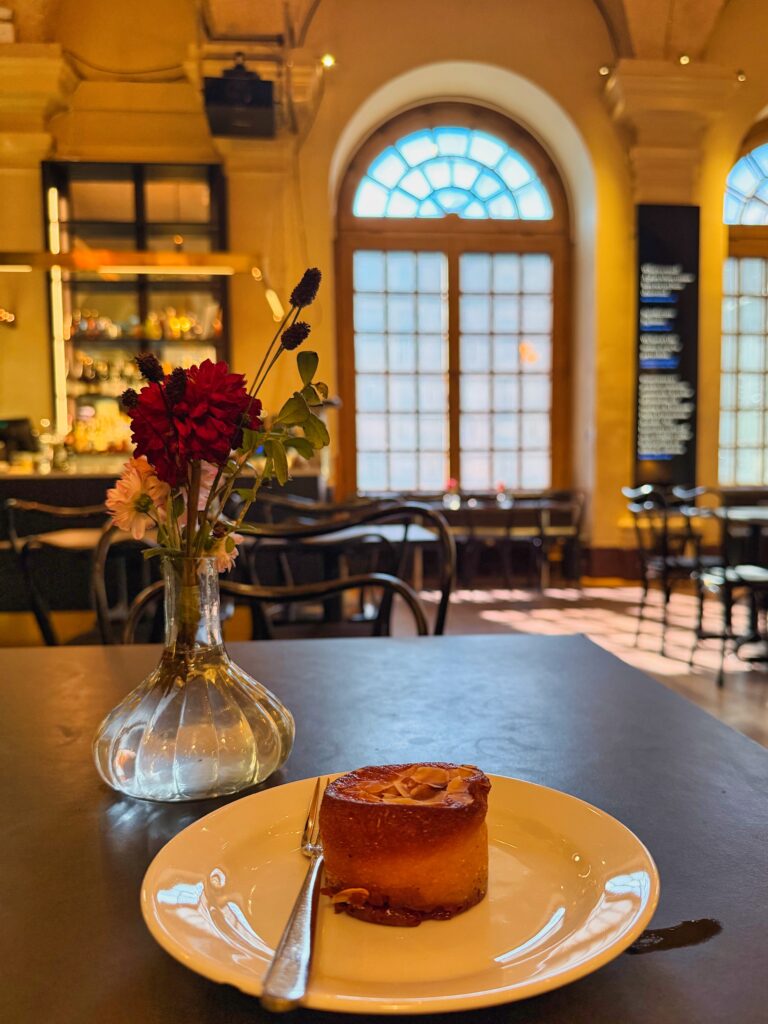
    Nobel Price Museum cafe
    Nobel Price Museum cafe

    Travel guides rate the Nobel Museum poorly, and I’d be lying if I said the café wasn’t the deciding factor. I ordered a cappuccino and a pastry topped with crushed almonds. To this day I cannot tell you whether it was a cake or a bread. After a red-eye, a lost-hotel incident, and mandatory tourist photography, it did its most important job, which was to sit me down. The Swedes have a word for this, fika, the coffee-and-something-sweet break they treat as close to sacred. I was doing fika out of necessity rather than culture, but I’m counting it.

    Tip for your visit: laureates who come through sign the underside of the café chairs, so flip yours over before you sit. (Discreetly. It’s still a museum.)

    The museum itself is… informative. Room after room of laureates and their world-changing achievements, which puts your own morning (getting lost inside a mall) into perspective. I retained two facts. The “Nobel Prize in Economics” isn’t one of the original prizes. It’s a 1968 add-on from Sweden’s central bank. And the Peace Prize is awarded in Oslo, not Stockholm, which explains why my memory of Oslo contains so much Nobel.

    Before leaving, I ordered the Nobel ice cream. Let me manage your expectations: it’s regular ice cream next to a chocolate shaped like a Nobel medal. It did not deepen my understanding of human civilization. It did let me pretend, for one afternoon, that I too am a laureate. My prize was in the category of Not Napping.

    The impossible choice: nap or ceremony

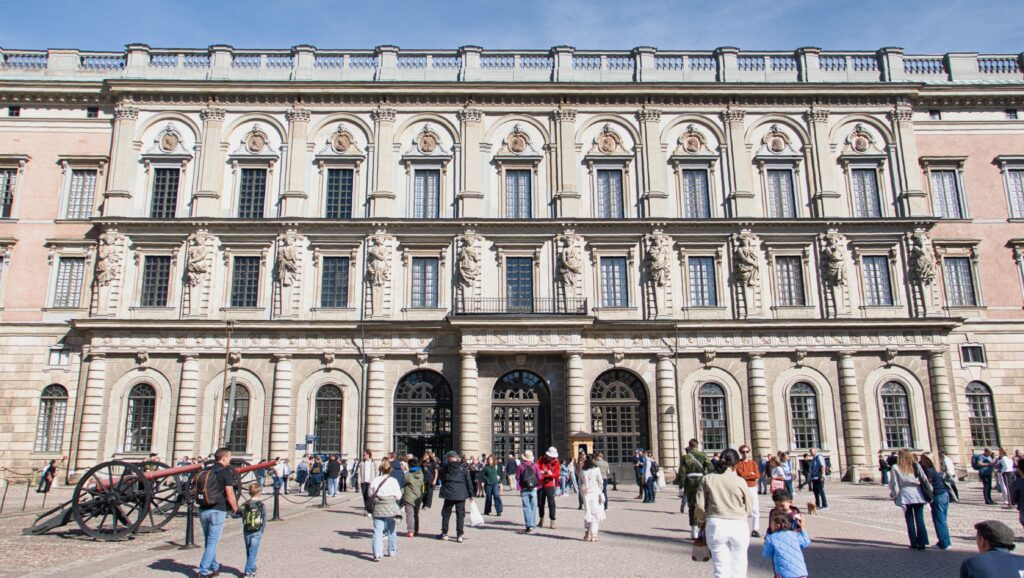
    Royal Palace
    Royal Palace

    Just as I left the museum, the hotel messaged me. My room was ready early.

    This is a dangerous text to receive on zero sleep. Every cell in my body voted to go horizontal. But I’d timed the changing of the guard at the Royal Palace, and it was about to start. So I did what any rational person would do. I bought sugar and used it as an anesthetic.

    I’d assumed it wasn’t peak season and showed up fifteen minutes early. The square was already packed wall to wall with people who’d had the same idea. I squeezed into a passable photo spot just as the guards marched in.

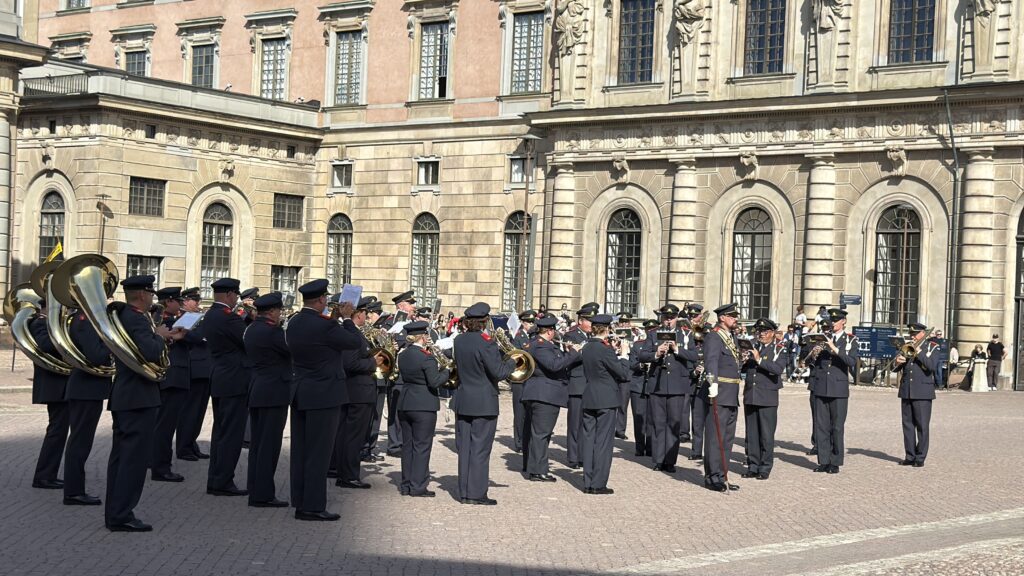
    Marching band at change of guard

    I expected the ceremony to be underwhelming. If you’ve grown up watching Chinese military parades, other countries’ marching formations tend to register as “pleasantly casual.” The marching band surprised me. They played well, really well. I know this because a bilingual announcer introduced each piece in Swedish and English, and I retained absolutely none of the titles or composers.

    What mesmerized me was the sheet music. These musicians were marching, playing, and turning pages at the same time. How does thin paper stay attached to an instrument in a Baltic wind? I watched for thirty minutes and never solved it. (For anyone else losing sleep over this: a small clamp called a lyre holds a flip folder of music cards. Mystery solved, magic only slightly ruined.)

    I left having attended, essentially, a free outdoor military concert. Worth it. My legs disagreed.

    The sunset that made it all worthwhile

    By 2:30 PM I was finally horizontal, for a nap that restored only the minimum functions required for personhood. The day wasn’t over, though. I’d checked the forecast before the trip, and today was the only guaranteed sunny day. Museums can wait for rain. Sunsets can’t.

    Stockholm at Sunset
    Stockholm at Sunset

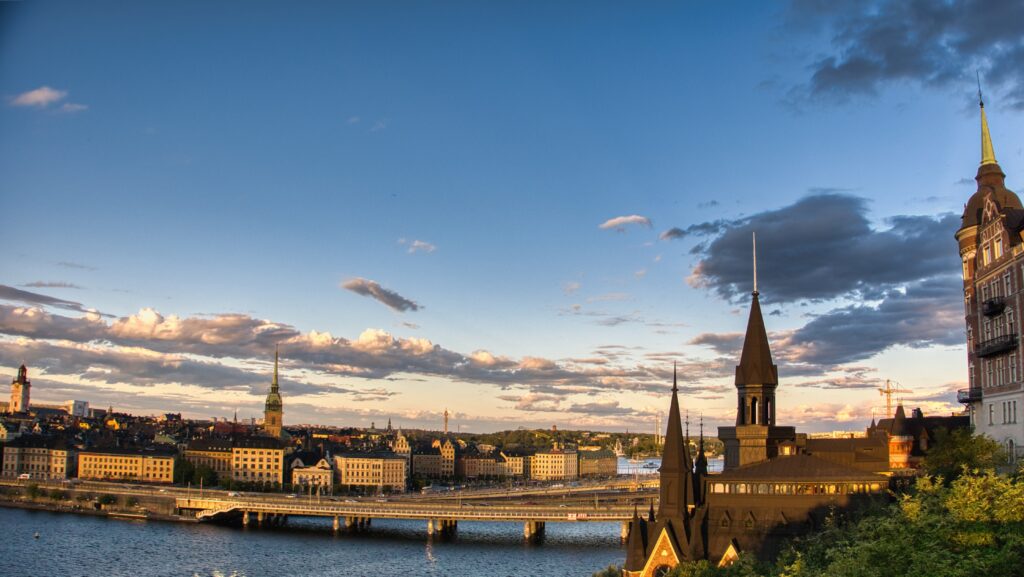
    So out I went again: one metro stop and a climb up to Monteliusvägen, a cliffside path on Södermalm. Coming out of the station, I saw golden light on the water and thought, this is it. It wasn’t. It was the trailer. The real viewpoint was higher up, and when the path opened onto the cliff edge I understood immediately why people put this city on postcards.

    I arrived around 7 PM, half an hour before the posted 7:30 sunset, and that timing was the best decision I made all day.

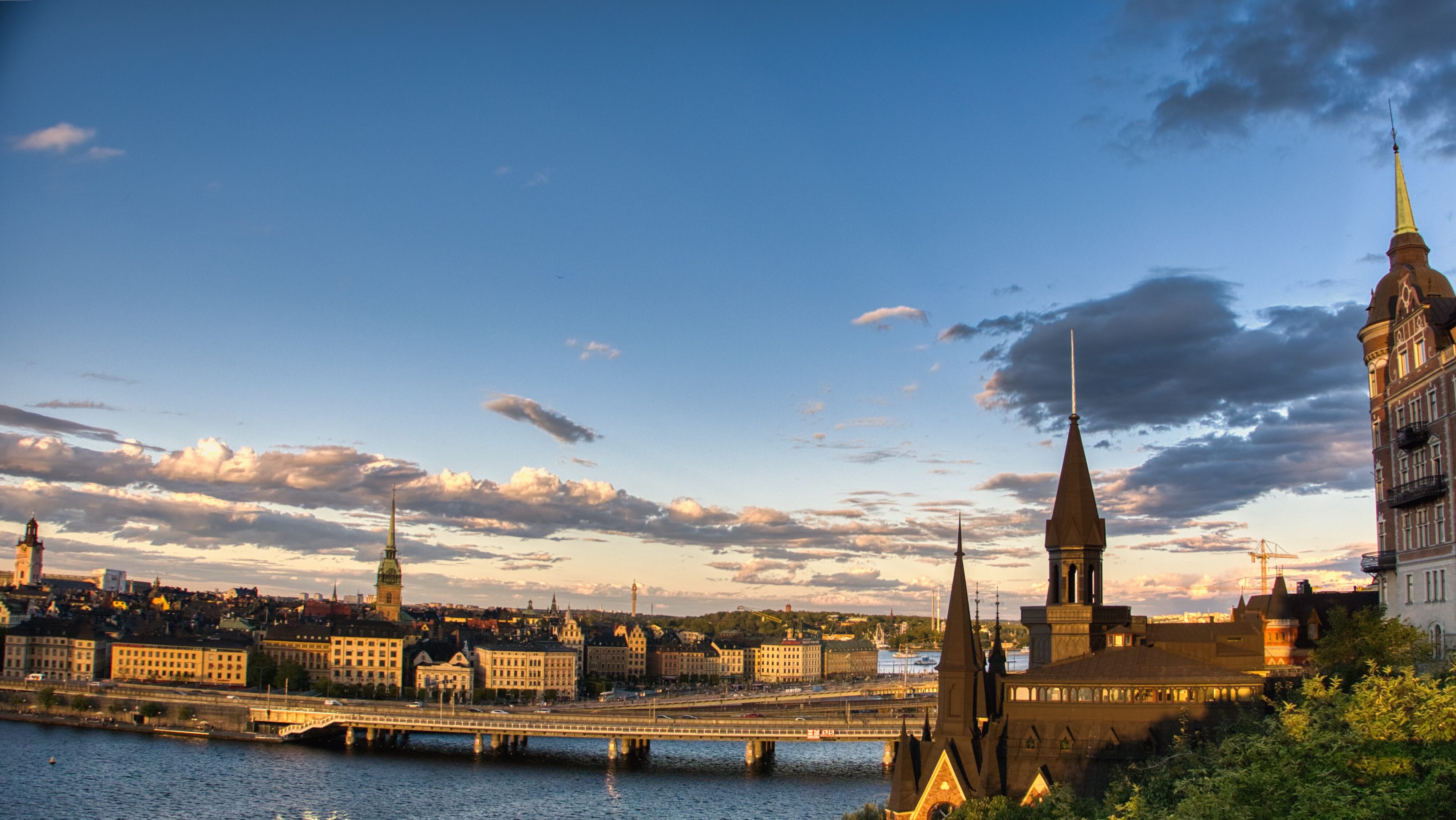
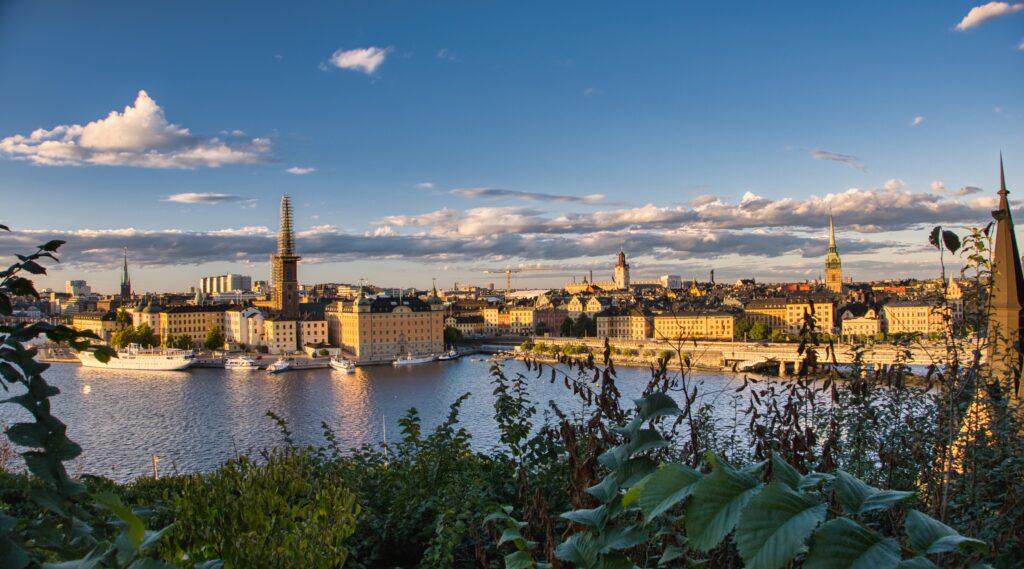
    The whole city went orange-gold. Rooftops, church spires, the islands, the water threading between them, and the bridges stitching everything back together. Layered clouds stacked up in cold blues with lit edges. Stockholm is built on fourteen islands, and from up there you can finally see it: a capital pieced together from islands, waterways, and bridges, all dipped in honey-colored light.

    By 7:30 the sun had technically set, and the gold was already gone. Lesson learned, handed to you free of charge: show up thirty minutes before sunset. The golden half hour is the show. The sunset itself is the encore.

    Stockholm at 7:30pm
    Stockholm at 7:30pm

    The verdict

    One day in Stockholm: one red-eye survived, one hotel found through spatial reasoning, one Nobel Prize (chocolate, self-awarded), one free military concert, and one sunset I earned the hard way.

    I was completely, comprehensively exhausted.

    Worth it.

    If you go

    • Hotel At Six: if Maps drops you in a mall, don’t panic. The lobby is up on the street level above, so either ride up to the mall’s fourth floor or approach from the square on top.
    • Changing of the guard: fifteen minutes early wasn’t enough for me even off-season. Aim for thirty, and check the Royal Palace’s schedule, since it changes by season.
    • Nobel Prize Museum: go for the café, stay for the chairs.
    • Monteliusvägen: Slussen and Mariatorget metro stations are both a short walk away. Get there half an hour before sunset, and save it for your clearest day.
  • Summer of 2023: Lake Lucerne, Mount Rigi

    Summer of 2023: Lake Lucerne, Mount Rigi

    Mount Rigi, a stone’s throw away from the scenic Lake Lucerne in Switzerland, became my destination of choice under the influence of Mark Twain—or so a friend suggested. My knowledge of Twain was largely confined to dusty school textbooks, but the chance to shadow a literary giant promised to sprinkle some fancy glitter on my Instagram travel diaries. To prep for this cultural expedition, I pledged to consume Twain’s travel tales like a fine Swiss chocolate.

    But how naive I was to think Twain penned just a single travelogue. After devouring two chapters of “The Innocent Abroad” and flipping through the table of contents thrice, I realized on the plane—much to my dismay—that I might have been reading the wrong book. Needless to say, my cultural refinement didn’t quite get the pre-trip lift-off intended.

    Lo and behold, post-journey, I uncovered the holy grail: “A Tramp Abroad,” and dutifully soaked up the chapters concerning Mount Rigi. Now, like Twain, I can chest-thump and boastfully affirm that I too have indulged in his travel insights and conquered Rigi’s majestic heights.

    Pier at Lucerne
    Lake Lucerne

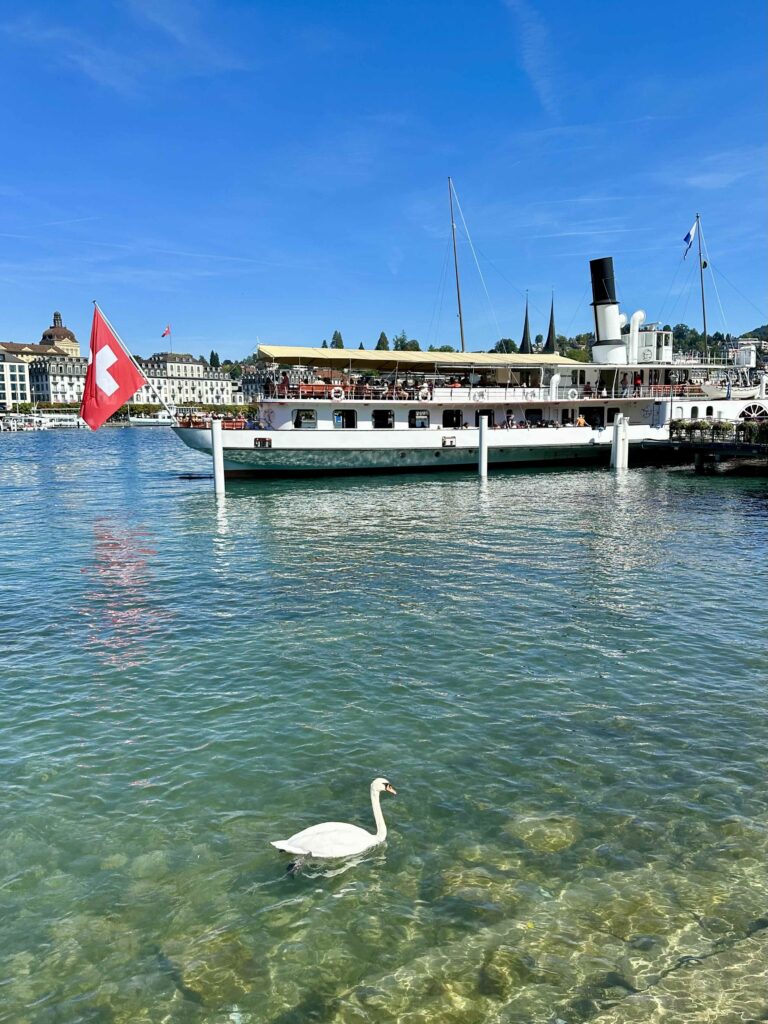
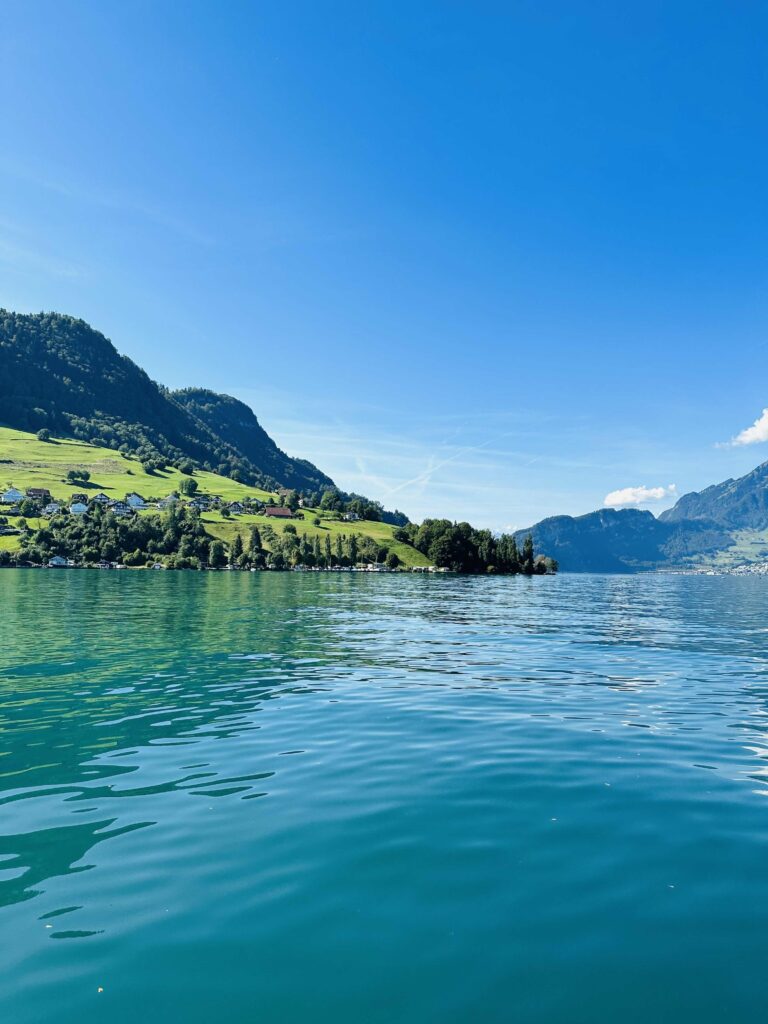
    From Zurich, direct trains whisk you to Lucerne. Exiting the station, you’ll face the ferry piers where tickets to traverse Lake Lucerne are sold. These ferries double as sightseeing vessels, docking at quaint towns along the lake, including Twain’s point of ascent, Weggis, and my starting post, Vitznau.

    While Twain hoofed it up Rigi from Weggis then rode the train down, I flexed my modern laziness, opting to chug up by train from Vitznau and descend on foot because—let’s face it—fighting gravity is for apples and Sir Isaac Newton.

    Restaurant Sens View
    Restaurant Sens Main Dish

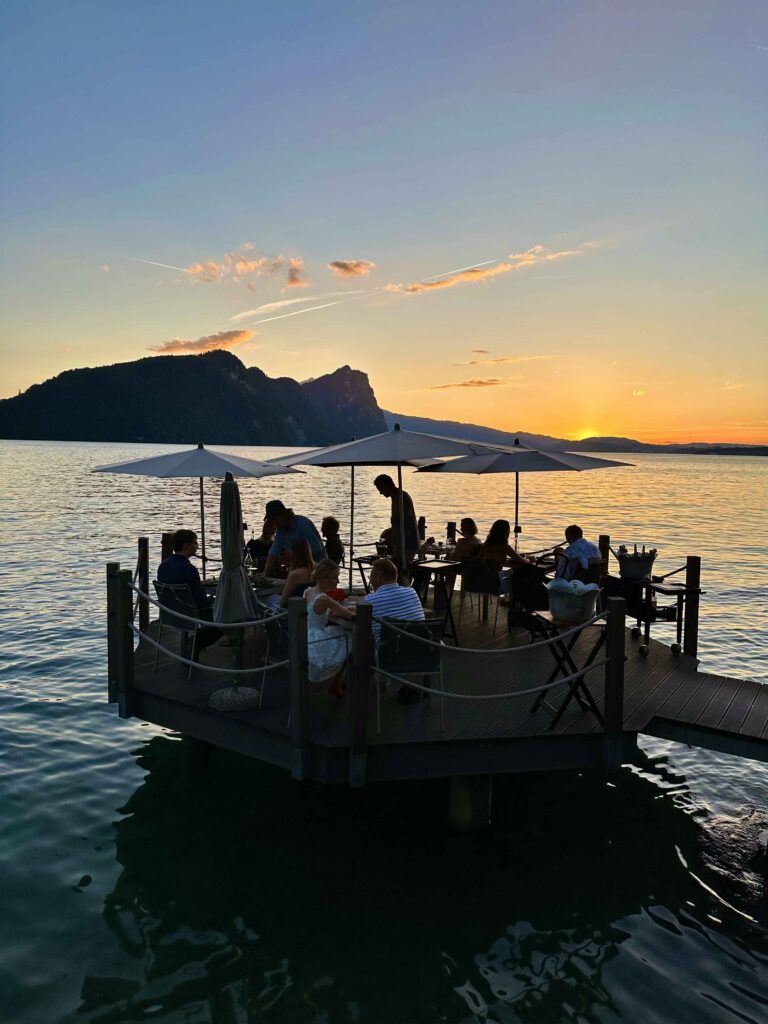
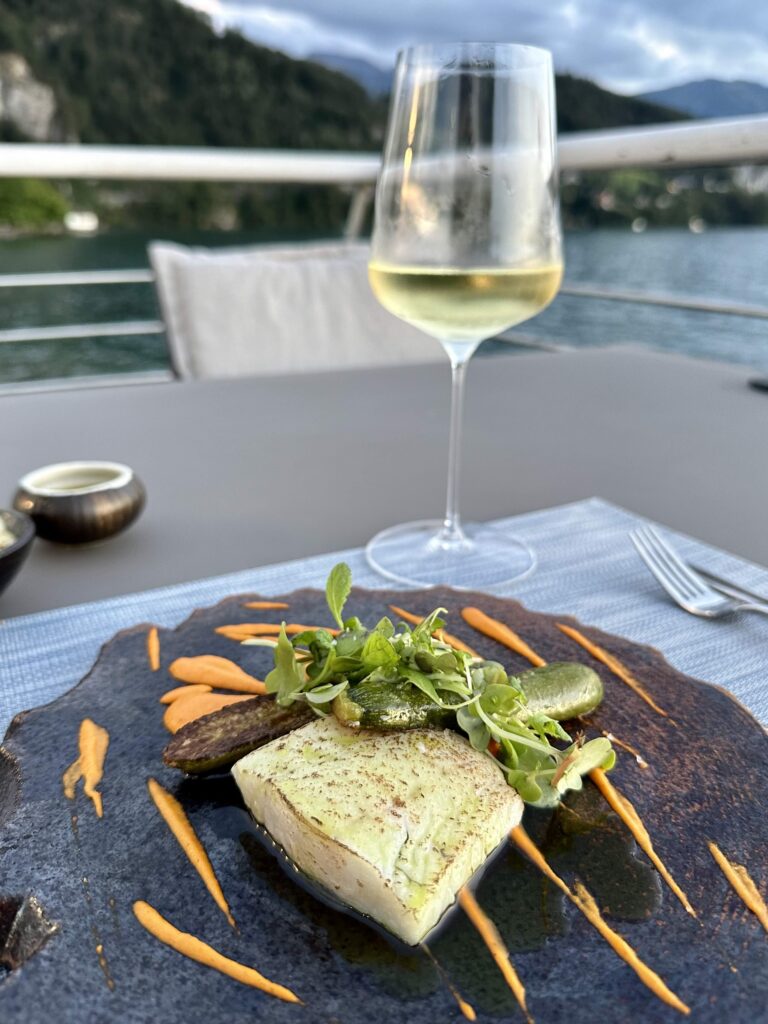
    Vitznau, charming and equipped, flaunted inns, eateries, and a haven for the snack starved—a supermarket. Dining lakeside at [Restaurant Sens](https://maps.app.goo.gl/BrmaeZDZmQiuPucf9) as the sun bid adieu was an Instagrammer’s dream. The view was cheaper and the service more delightful than the Big Apple’s—plus, without the hefty side dish of New York’s tipping guilt.

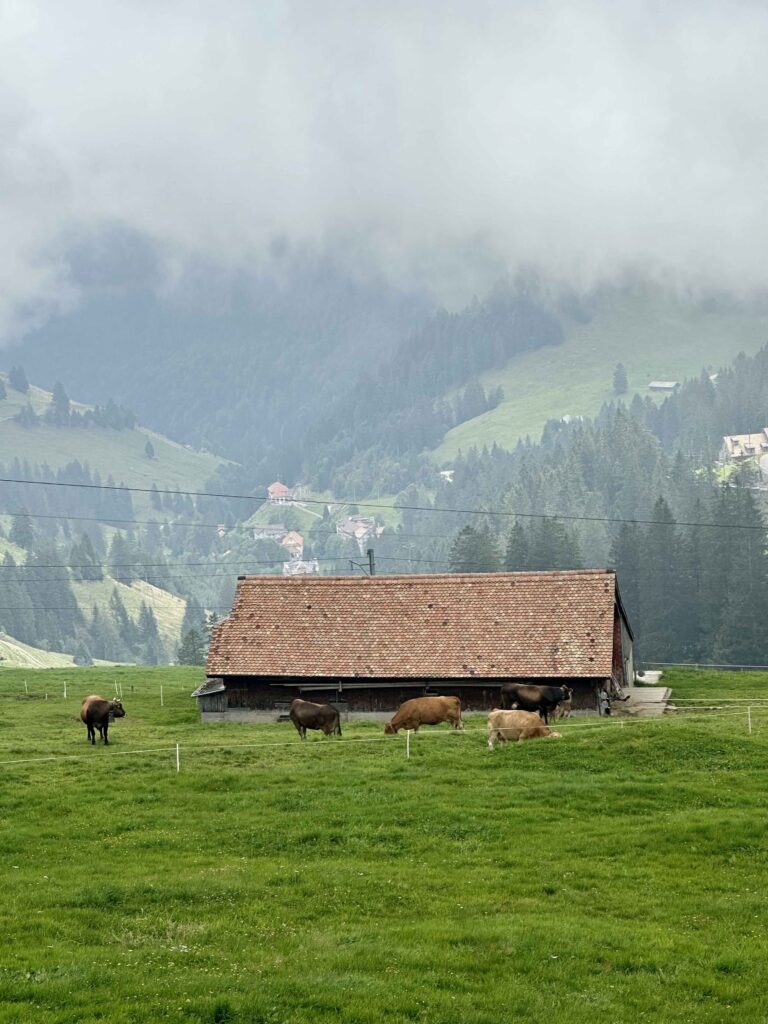
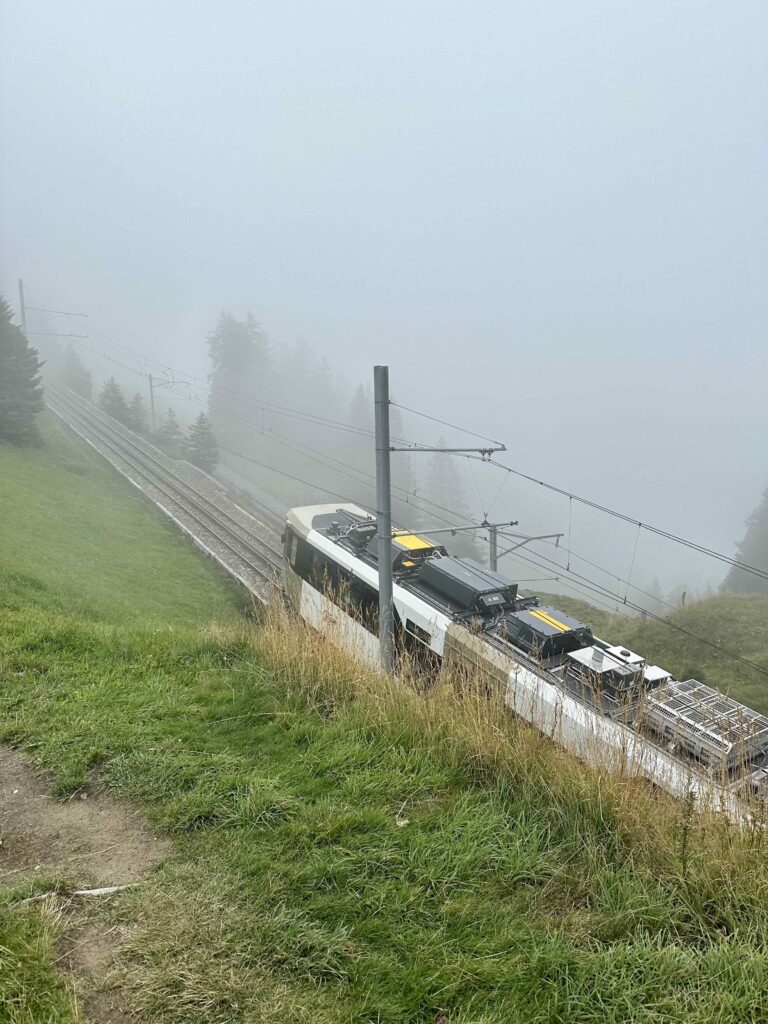
    During tourist high season, you can catch a mountain-bound train from Vitznau about as often as a bear yodels in the woods—or once every hour, if we’re being factual. Jet lag made me choose the 10:30 ride to scale the mountain, and what a feast for the eyes! Swiss vistas never bore, offering mountains, abodes, and cows that seemed to have their lives more figured out than most humans.

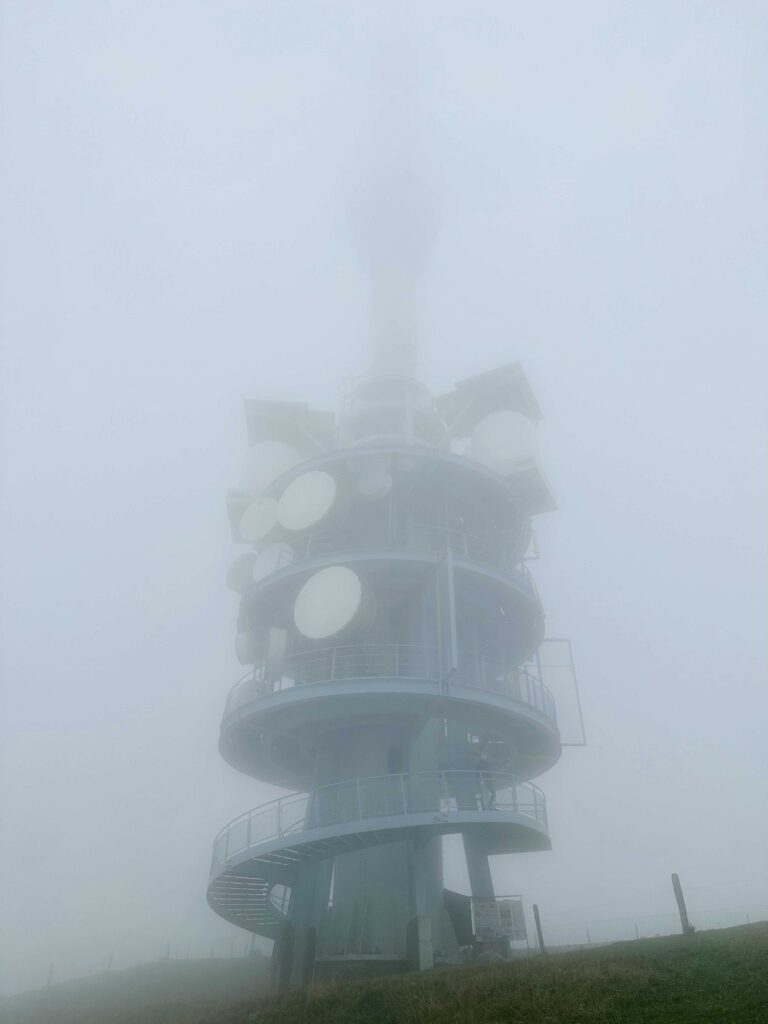
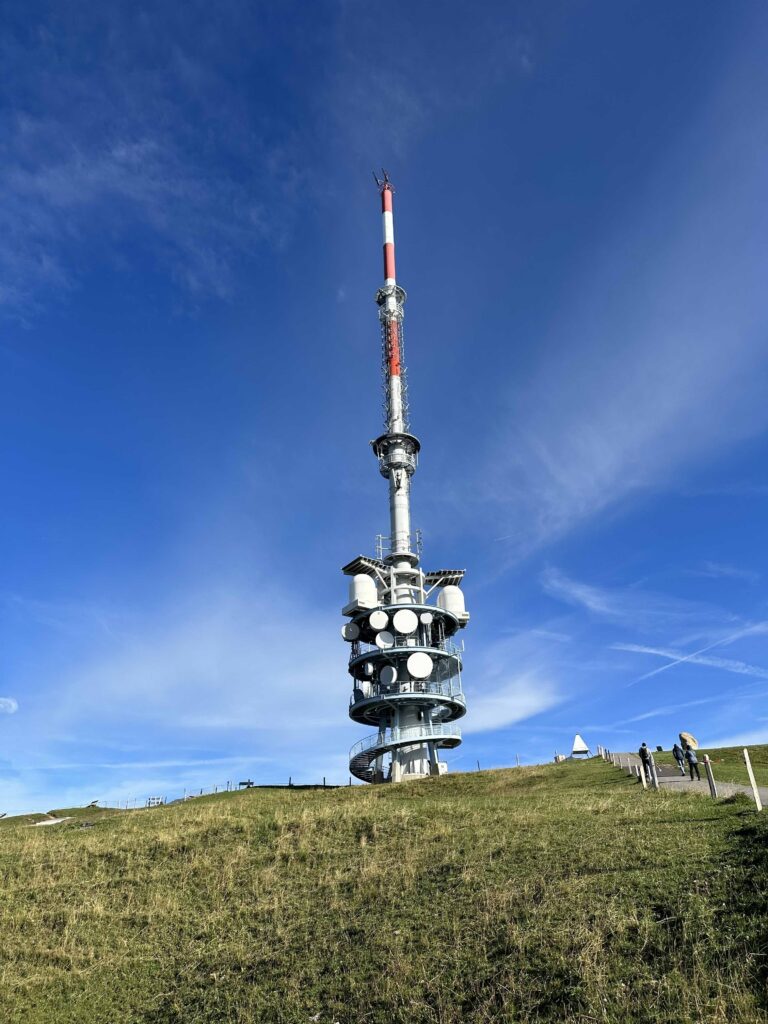
    Mountain top’s welcome committee? A thick fog. Hello, mystical obscurity! The spire emerged like a magic act’s finale, while a blanket of white smothered everything else.

    Tower on Rigi Kulm in Mist
    Mount Emei Stone

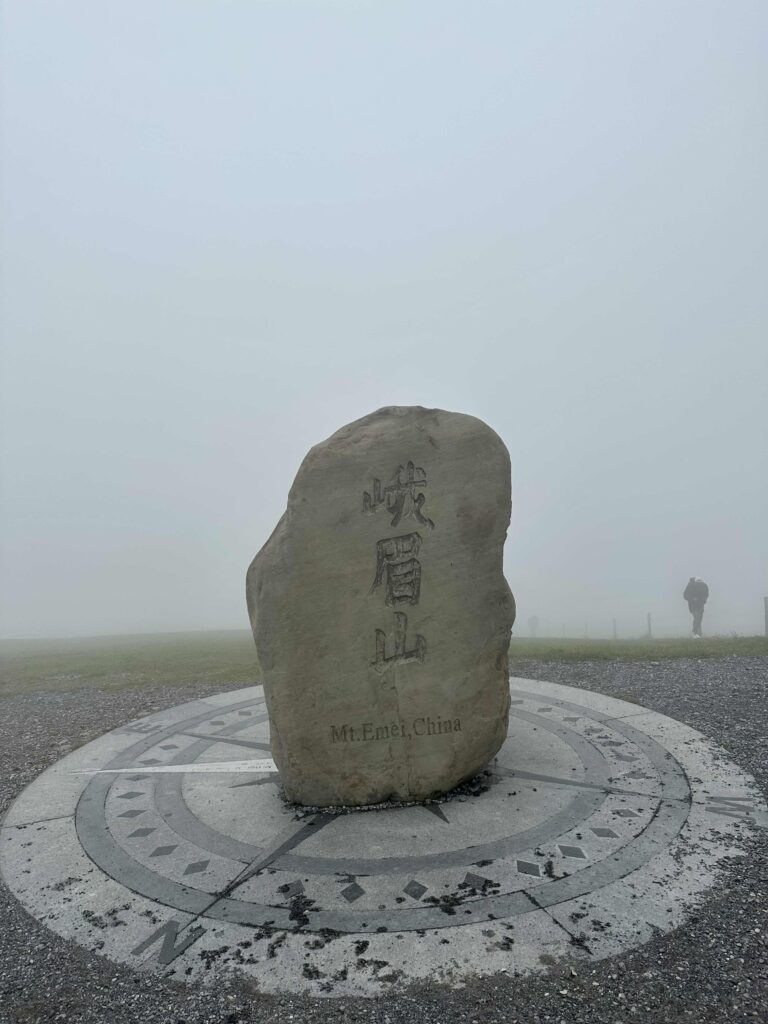
    Next surprise? A rock etched with “Emei Mountain”—a Chinese tourist’s fever dream or twin peaks united, thousands of miles apart? I wondered if there was also a stone inscribed with “Mount Rigi” at Mount Emei?

    Cow House
    Train in Mist

    The walk down the mountain was smooth, and along the way, besides the heavy fog, there were many cows. Without any herdsmen in sight, just the cows, which led me to envy their seemingly carefree life.

    Mount Rigi Lunch

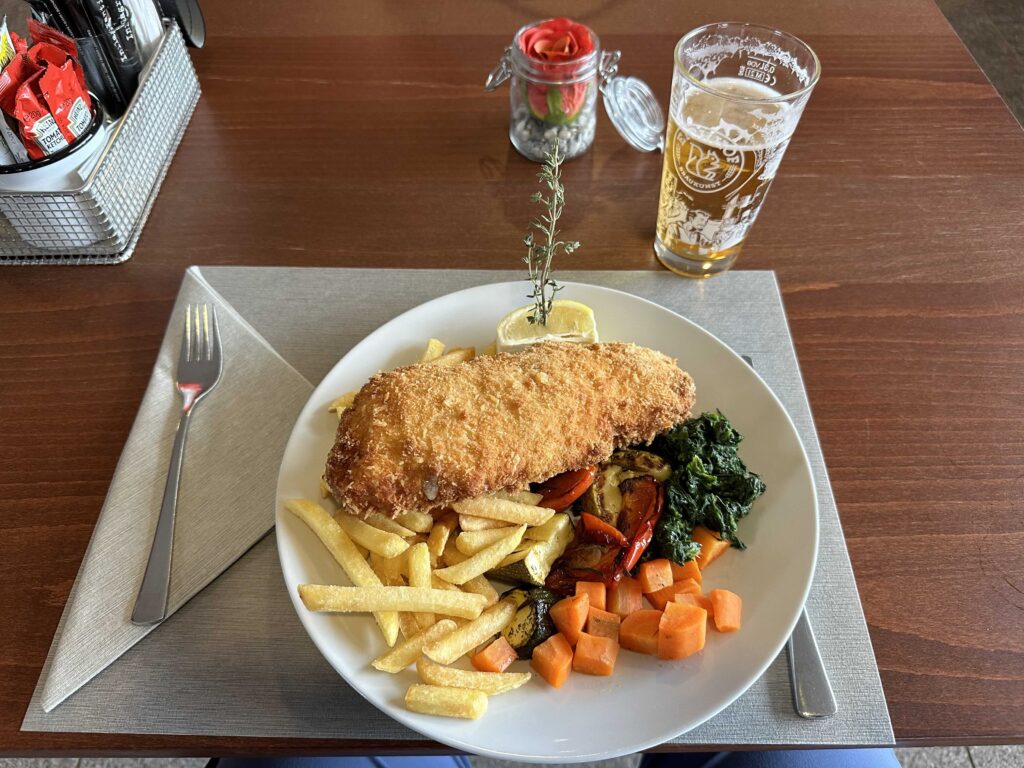
    Hunger struck at a mid-mountain eatery where a Viennese pork schnitzel and I bonded over beer. Swiss dishes come with sides, a novel concept to my American dining encounters where fries fly solo. Kudos to Swiss beer too, bereft of that bitter punch my American taste buds brace themselves for.

    Further down, a combo station: trains to Vitznau, cable cars to Weggis.  The ticket lady, in a twist of Swiss kindness, spotted me a discount even without the expected guest card. Take note, wallet-gouging tourist traps elsewhere!

    As I slid down the cable car wire to Weggis, the fog decided to slack off, gifting me with a view that my camera tried and failed to fully capture. Weggis, a mirror image of Vitznau minus my hotel room, served as a gentle ferry glide back.

    Back at the hotel, I shared pics with my Rigi-conquering pal, eliciting shock at my foggy snapshots. Apparently, he’d visited some parallel-universe Rigi—blue skies, lush greens, and not a whisper of fog. I clearly had been to the wrong mountain or the wrong time; apparently, fog skips early risers.

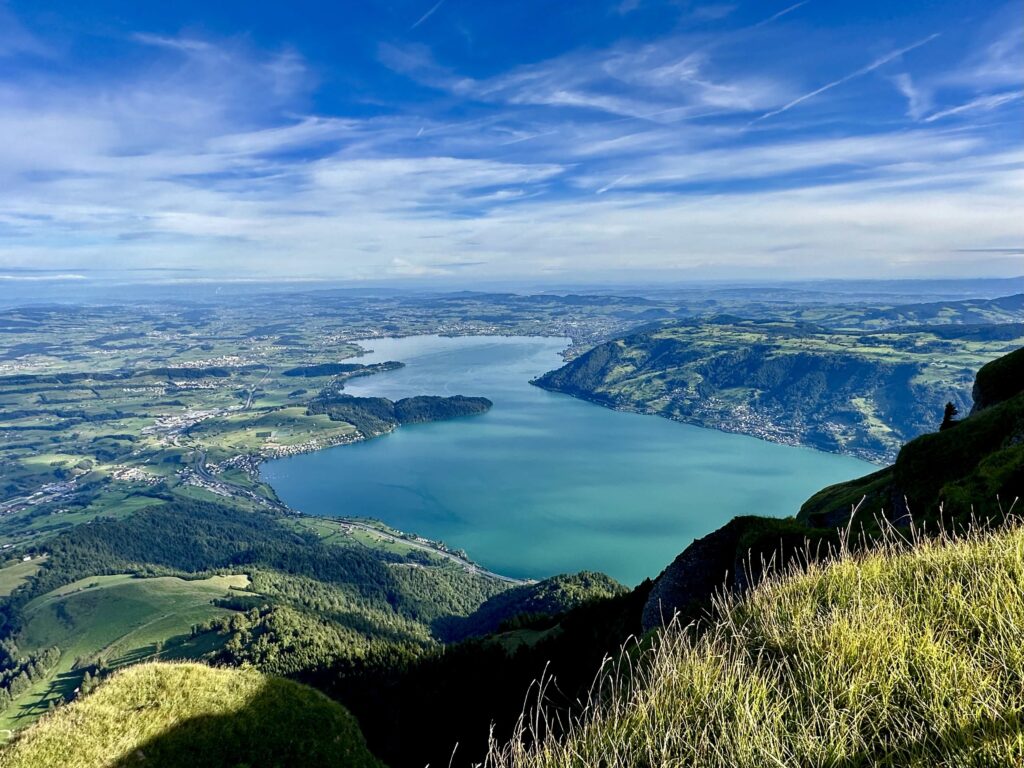
    The next dawn, bleary-eyed yet determined, I set off to greet the peak in HD clarity. The proverbial worm was caught, and the views, no longer shrouded, were spectacularly unveiled. What two hours could do for a landscape was sheer alchemy!

    Tower on Rigi Kulm on Clear Day
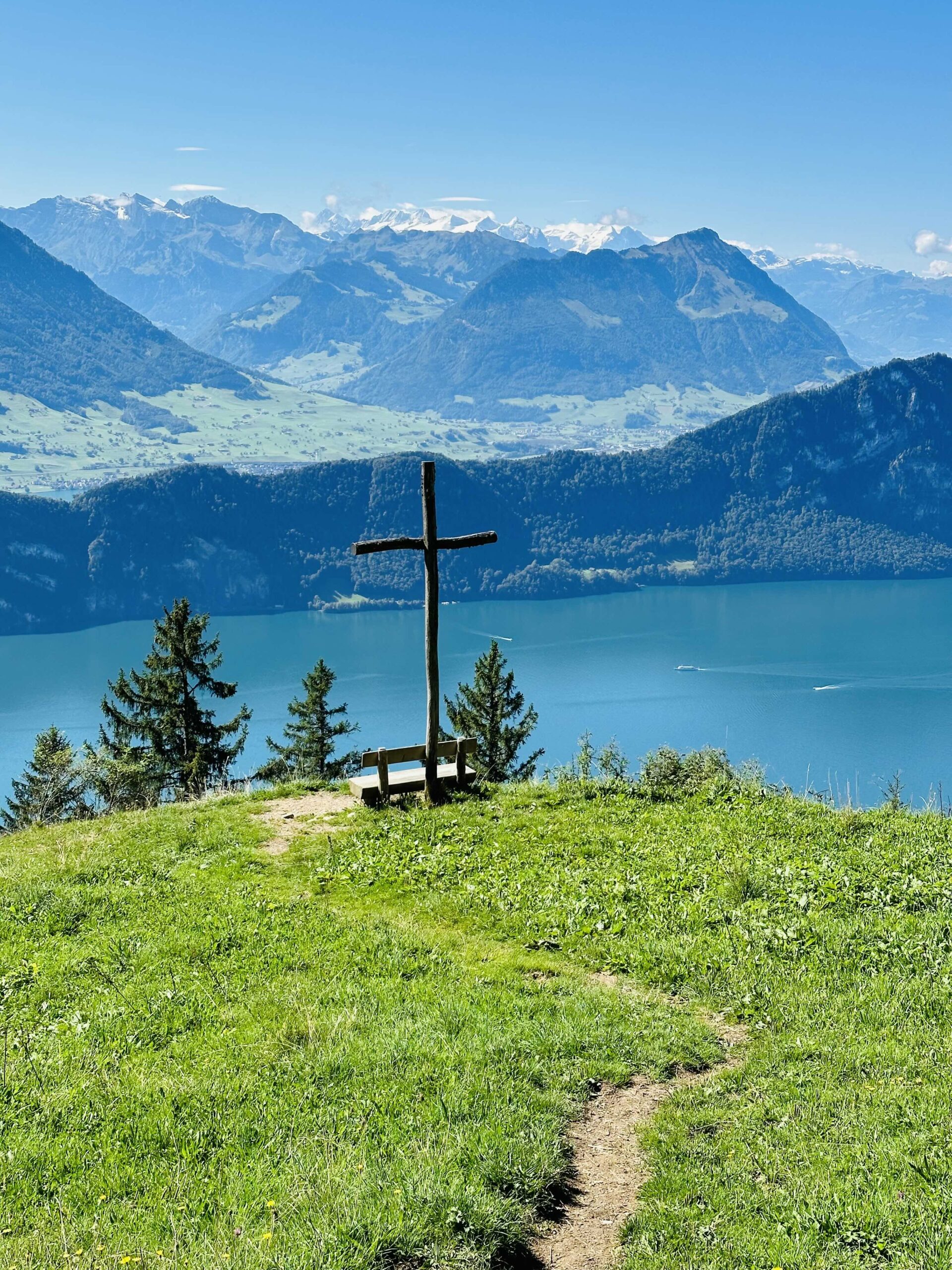
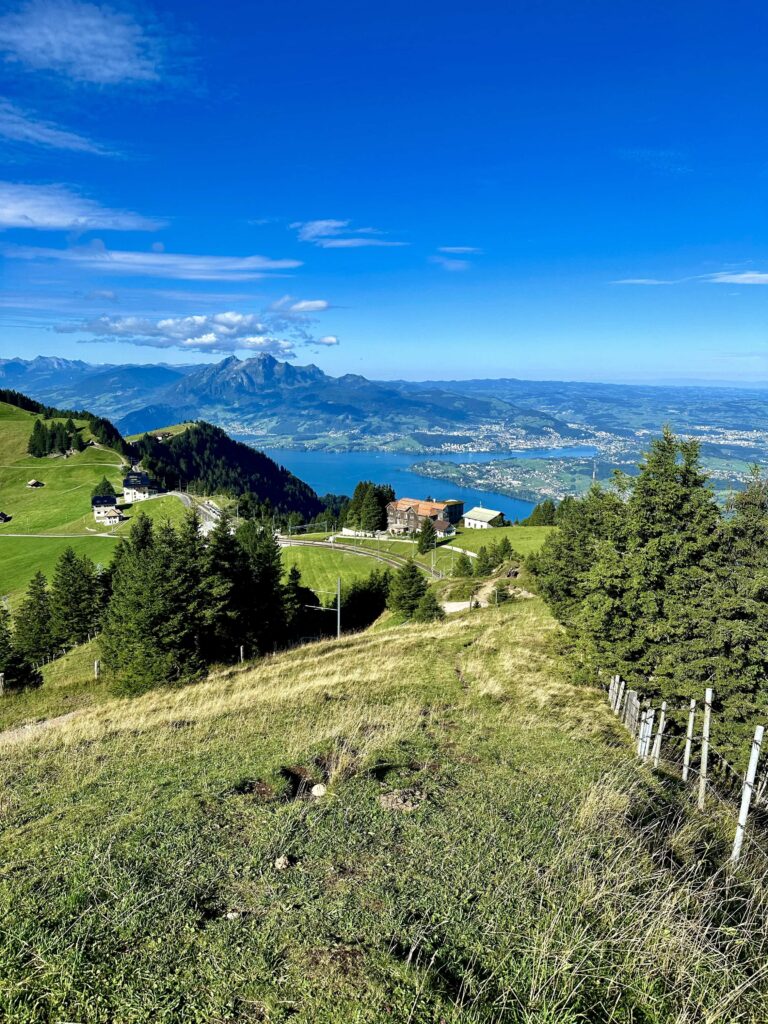
    Rigi Kulm looking down at Lake Lucerne

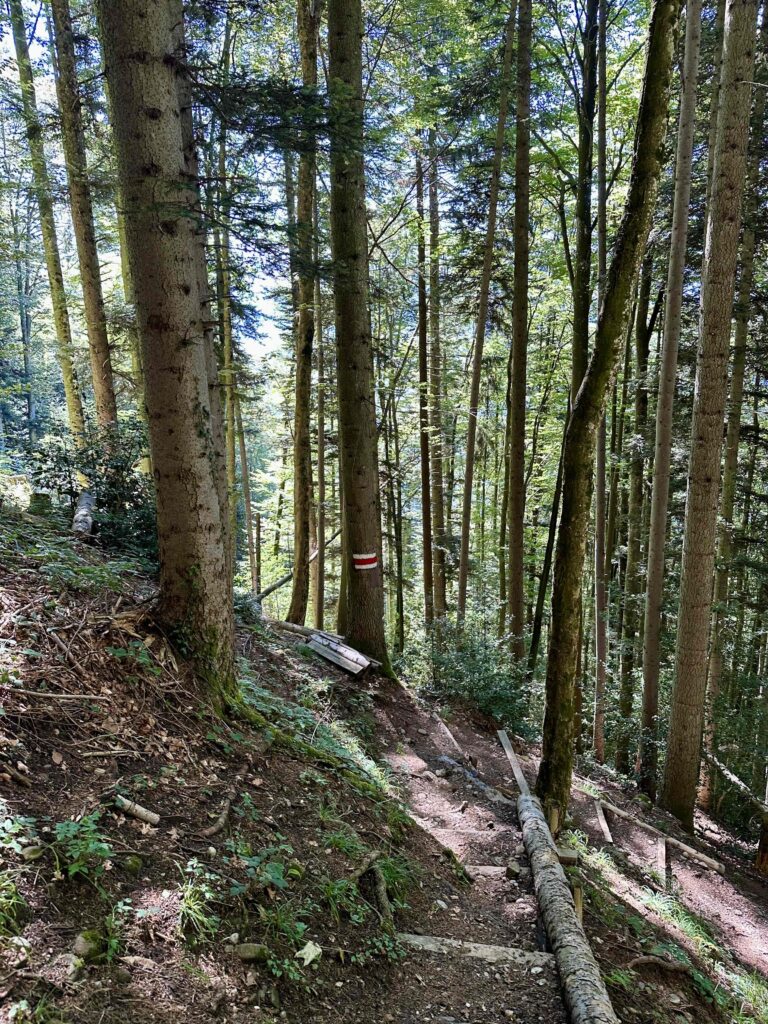
    My descent—take two—was a rerun, but with new hours came new inconveniences, meaning no repeat lunch at the schnitzel sanctuary. The path turned sneakier and steeper, leading me through a cow barn escapade and a game of follow-the-leader over cattle grids. Note to self: down-mountain hikes are tougher on the knees than Swiss bank vaults.

    Cow
    A Trail going to Weggis

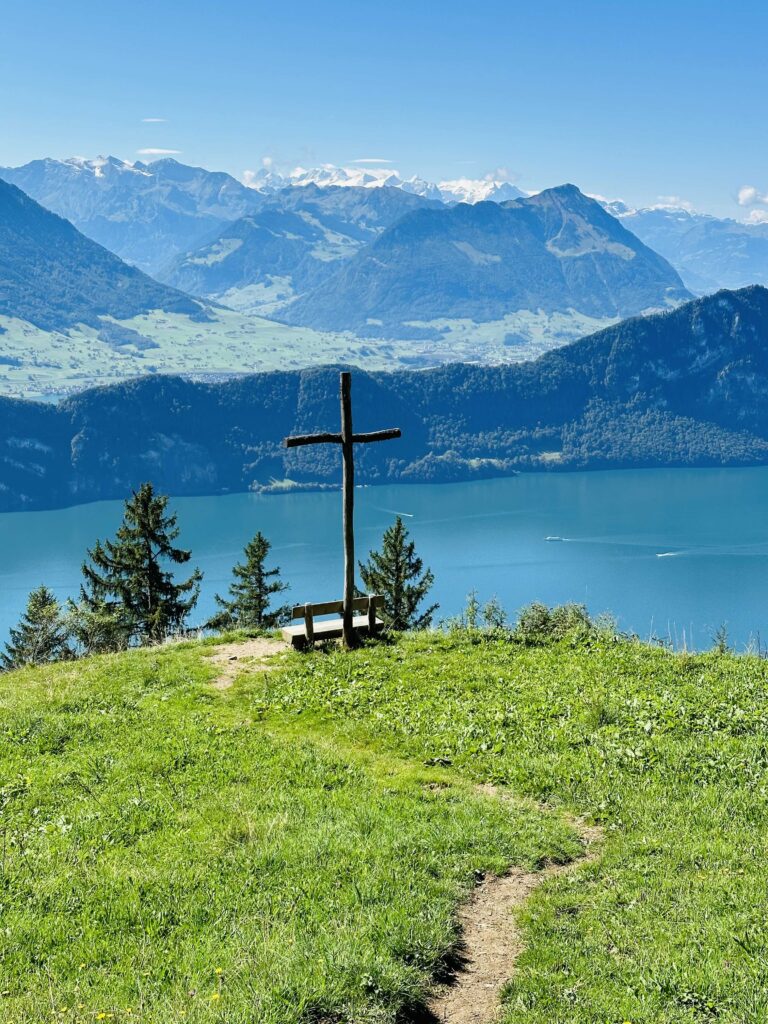
    However, the payoff was the solitary enjoyment of panoramic Swiss beauty, an exclusive love affair with the setting that wedged itself into my memory bank.

    On Mount Rigi Looking at Lake Lucerne
    Mount Rigi Overview

    Back home, my quest to align with Twain’s prose led to an Amazonian venture for “A Tramp Abroad.” Twain’s Rigi adventure, peppered with missed sunrises and foggy misadventures, made my excursion seem rather, well, pedestrian. His gift of transforming a commonplace hike into an odyssey was a testament to enduring literary magic.

    If fate leads me back to Rigi, promise to myself: I too shall witness a sunrise atop this legendary pinnacle.

  • Liechtenstein: A Tranquil One-Day Escape

    Liechtenstein: A Tranquil One-Day Escape

    Liechtenstein, a diminutive country just a two-hour train and bus ride from Zurich, offers an easy one-day visit. Its capital, Vaduz, serves as the gateway to this charming land. The journey takes you to Sargans at the border, where a seamless transfer to the number 11 bus awaits.

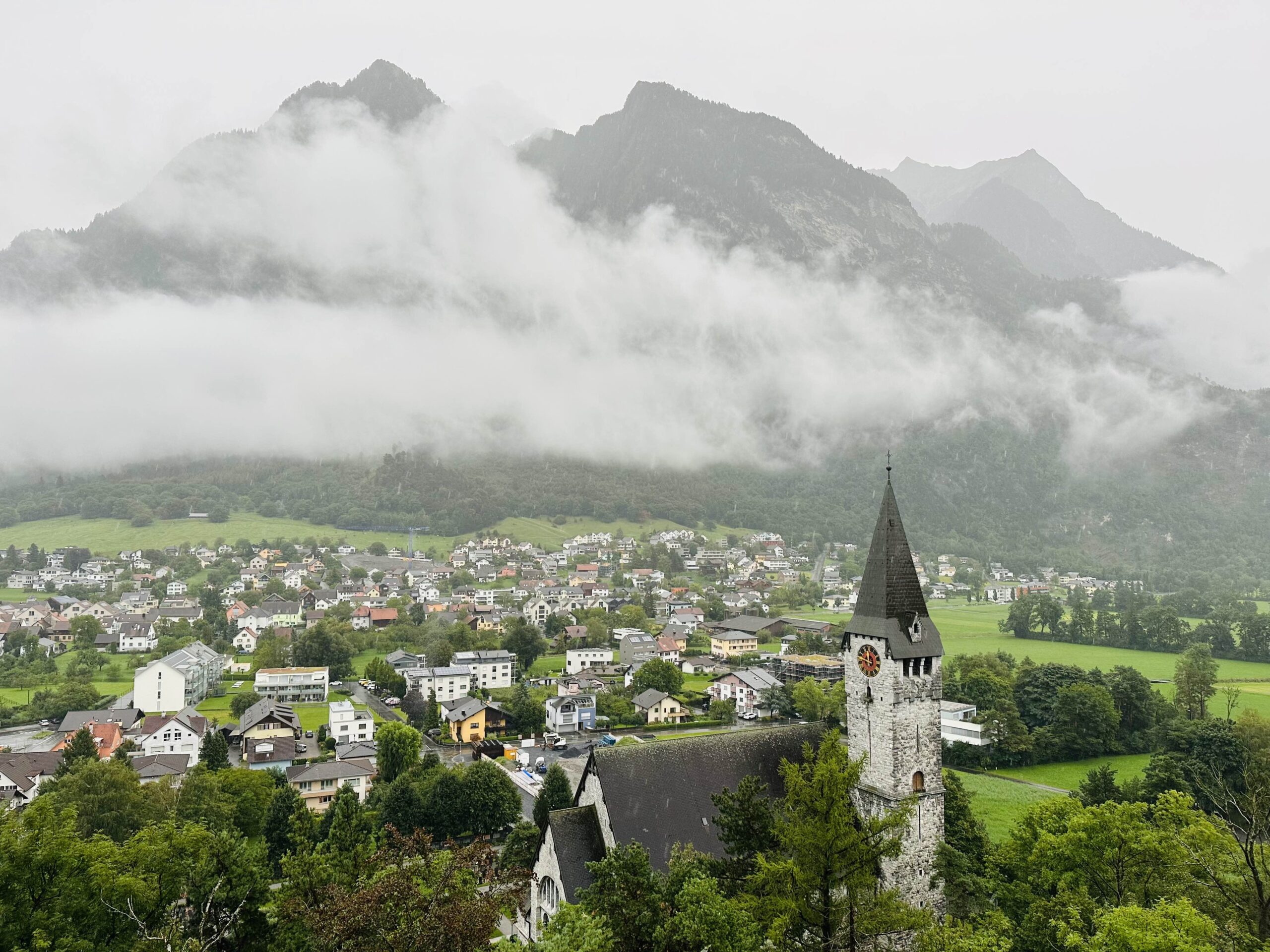
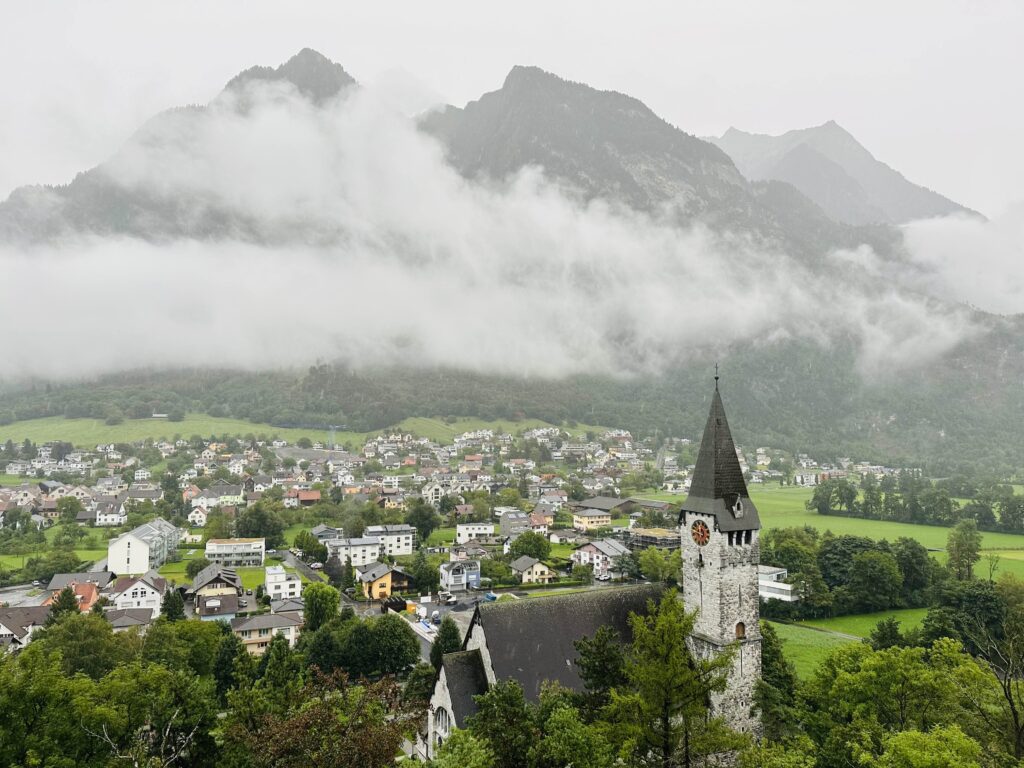
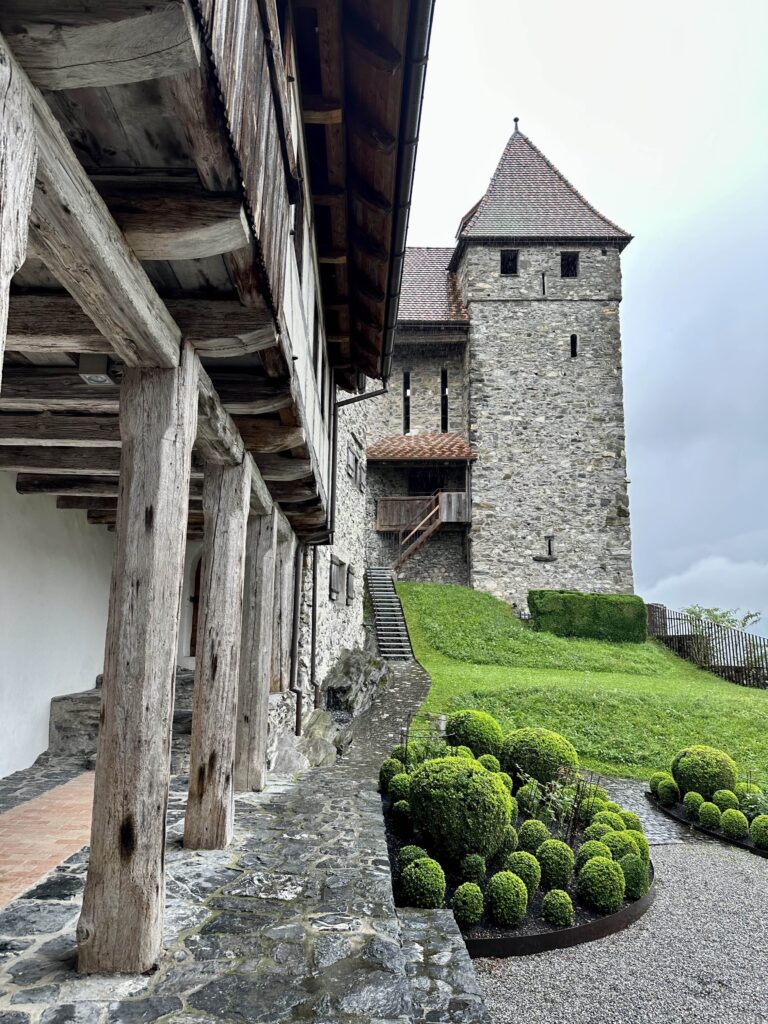
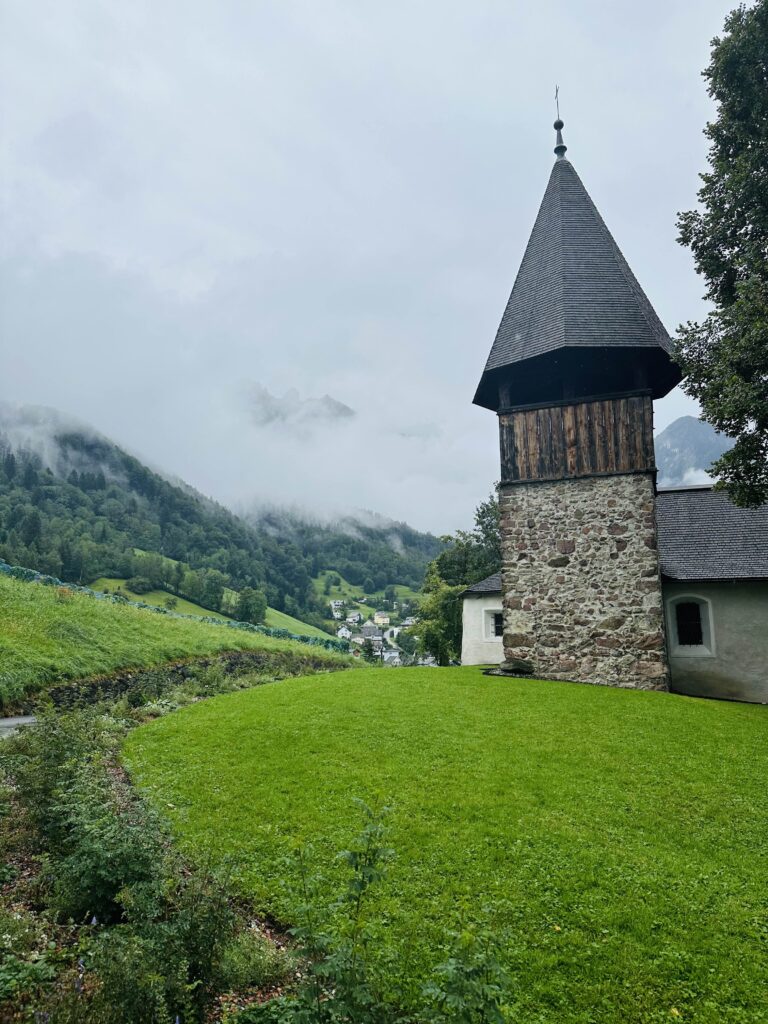
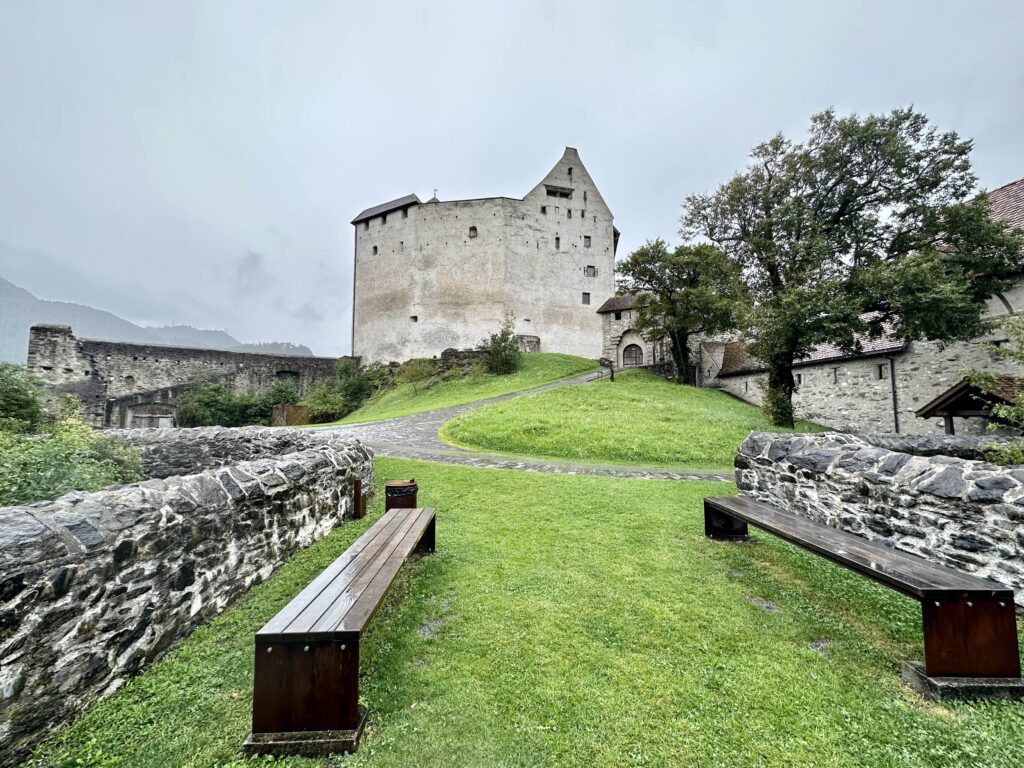
    During my brief visit, I couldn’t resist a stop at Balzers. The quiet countryside, especially under the gentle rain, felt like a serene haven. There were scarcely any fellow travelers on the route to the castle, and the view was truly enchanting. The misty mountains in the backdrop, combined with the quaint buildings and lush greenery, evoked memories of Shirakawa-go in Japan.

    Balzers overview by the castle
    Balzers overview with the clock

    The weather was similar – rainy, but not too heavy, adding a misty feel to the scene. Balzers was more quiet, though. No shops, restaurants, or businesses were seen on my way from the bus stop to the castle. The castle itself welcomed visitors without selling tickets, which added to the sense of solitude. While the castle drew tourists, locals were conspicuously absent.

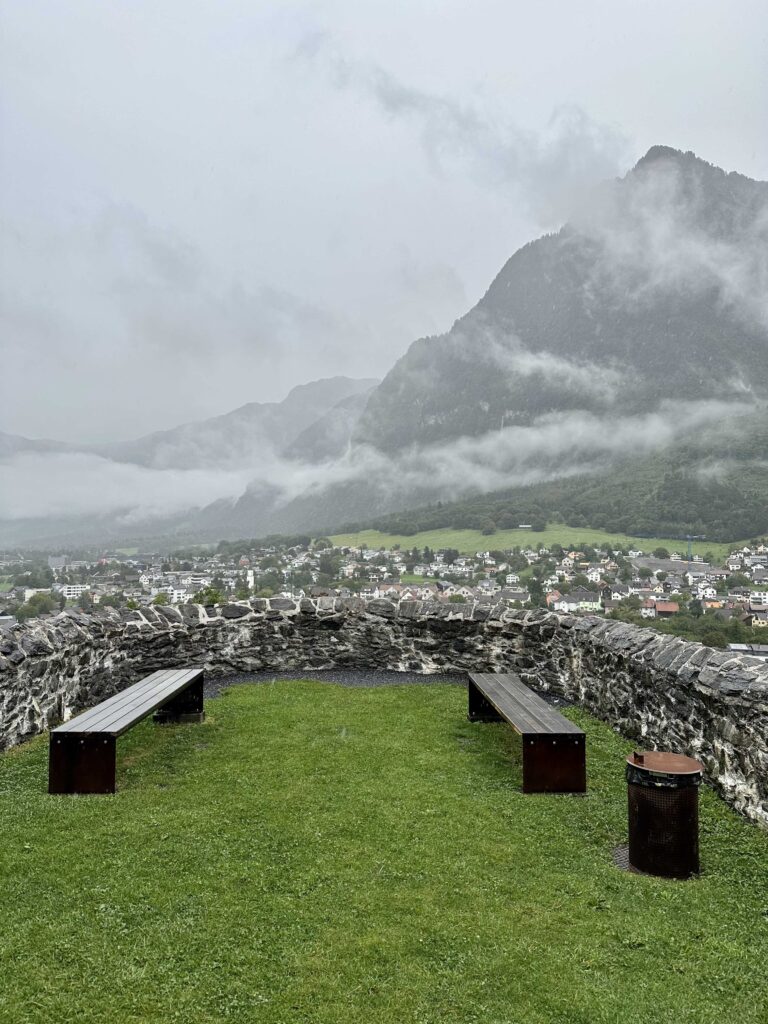
    Inside Balzers Castle
    Balzers Castle

    The bus ran every half an hour. And I was the only one waiting at the bus stop, with only houses and mountains within sight. The rain was light but wouldn’t stop. I stopped under the eaves of a house alone nearby the bus stop. Not even a car passed by. A true escape from the crowd for twenty minutes.

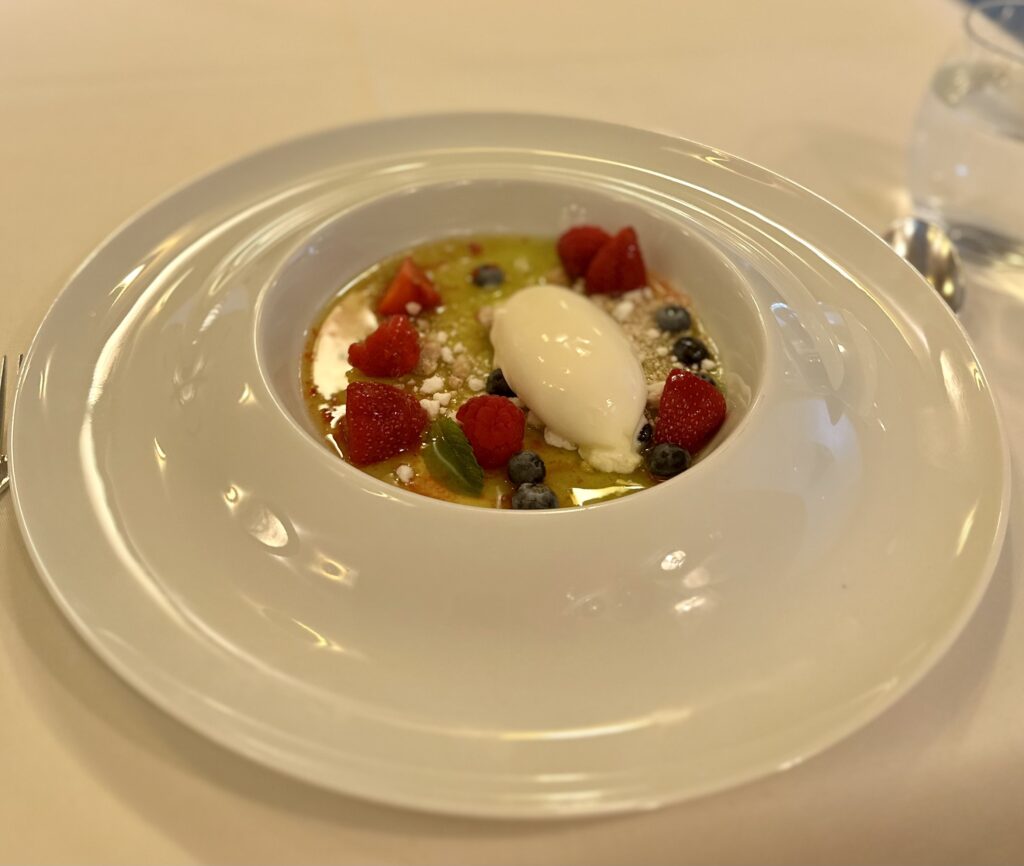
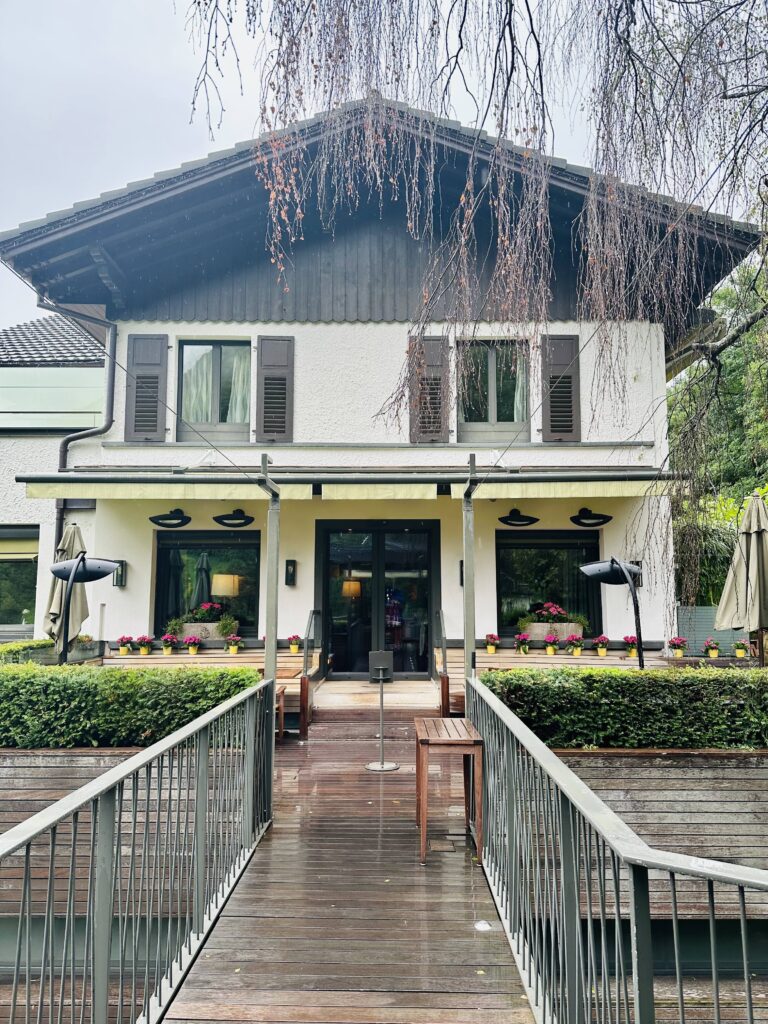
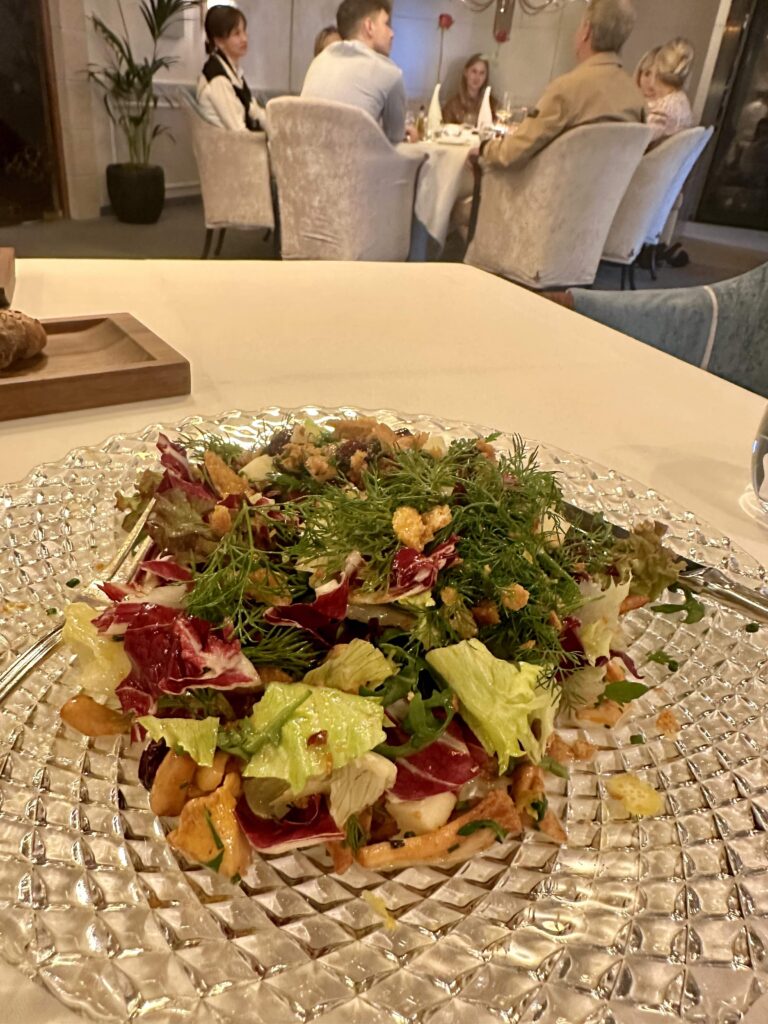
    Back in Vaduz, I noted the town’s small size, dwarfed by many U.S. and Chinese towns. It was lunch time when I arrived. And it was a Sunday. The restaurant with Michelin Star was close. Lucky, I did find an equally high end restaurant listed on Michelin Guide opened not far a walk away on the waist of the mountain called Marée. The food was impressive, from appetizer to dessert, more impressive than the restaurant I found on Michelin Guide in Zurich a day ago.

    Maree salad
    Maree main dish
    Maree dessert
    Maree Restaurant

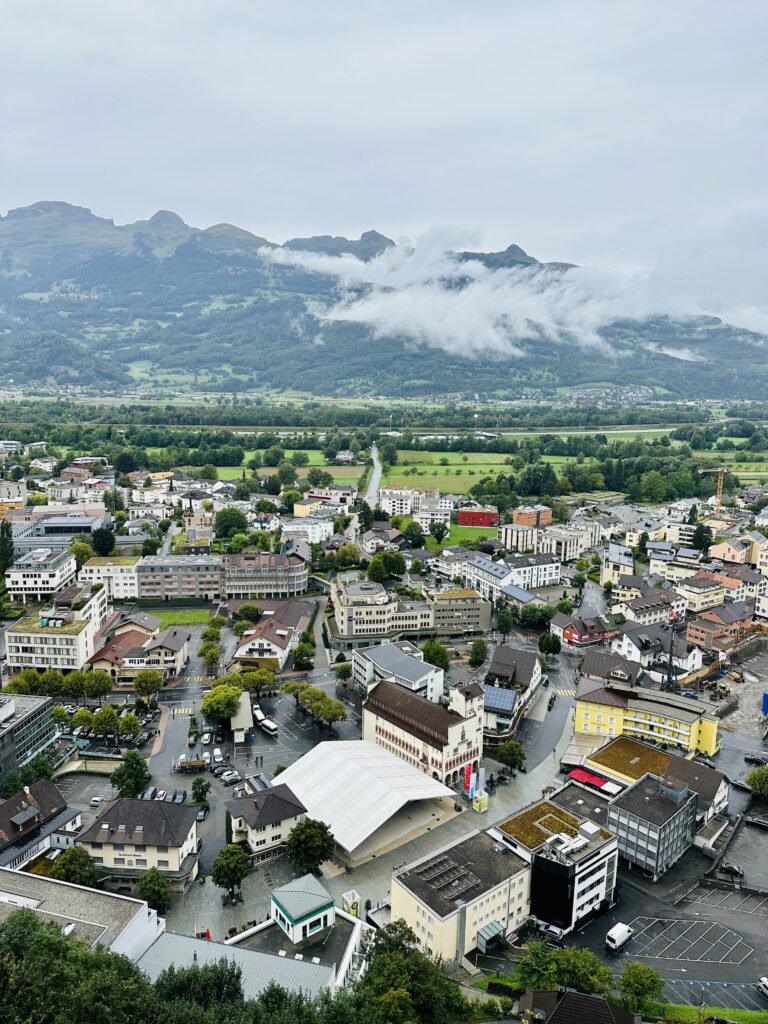
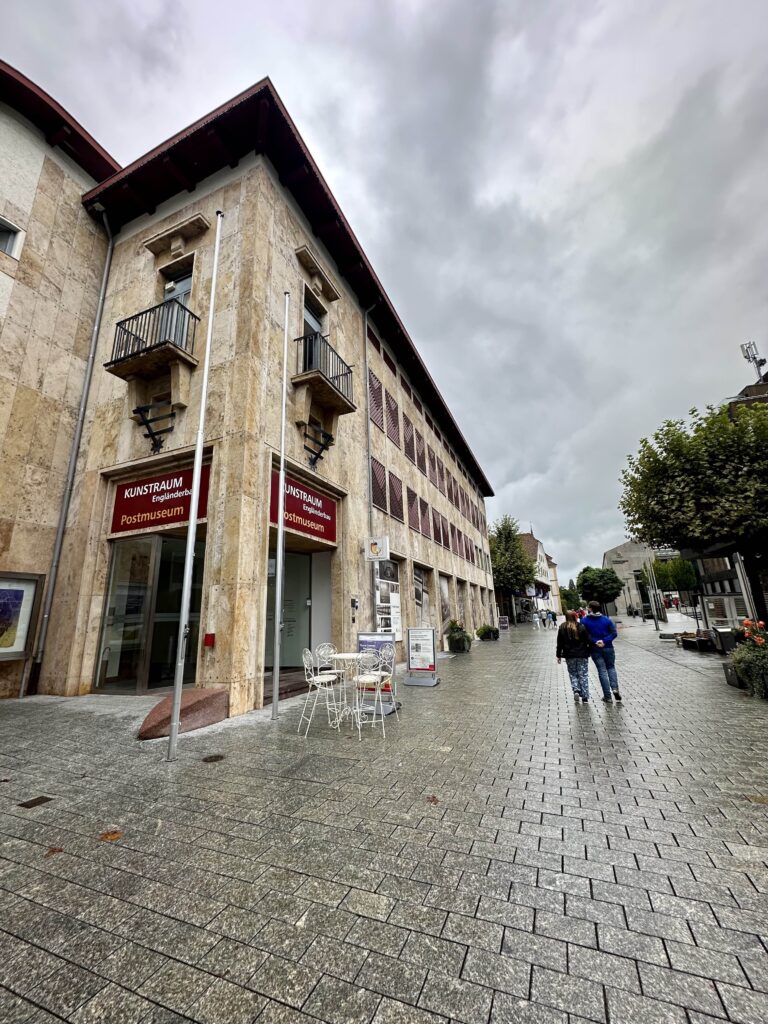
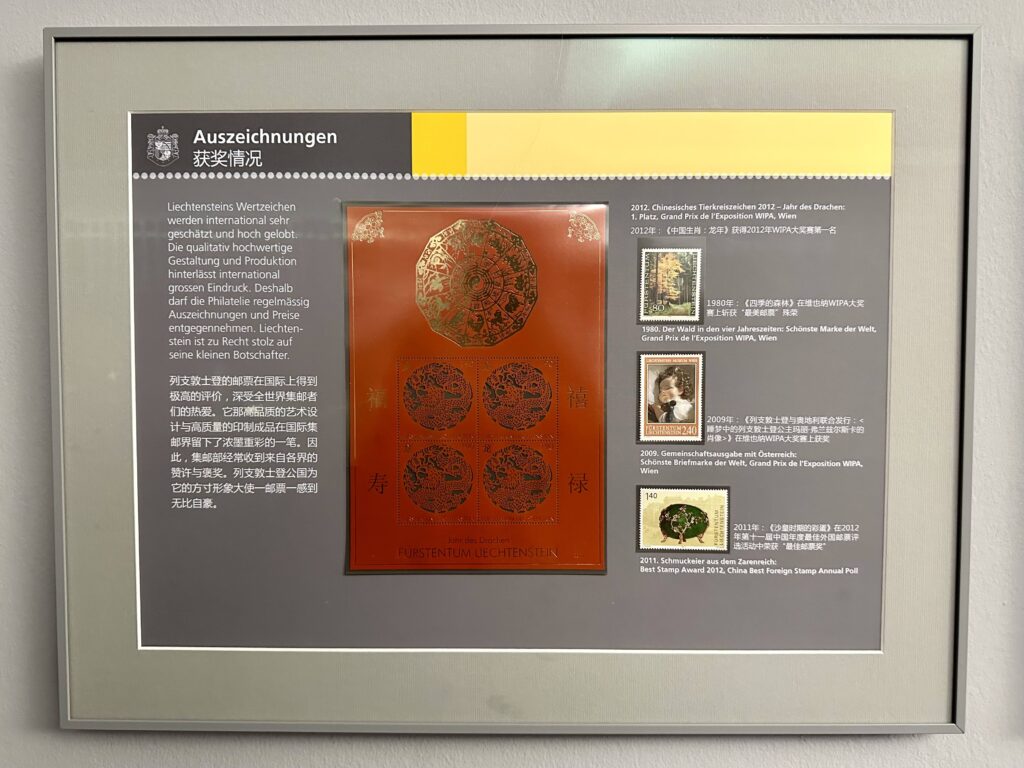
    After lunch and a short walk from waist of the mountain, I arrived at the center of Vaduz after 3pm. With museums closing at 5pm, I opted for the Post Museum, a delightful find, especially for its exquisite Chinese-style stamps. Their delicate beauty made it seem improbable that anyone would use them for postage.

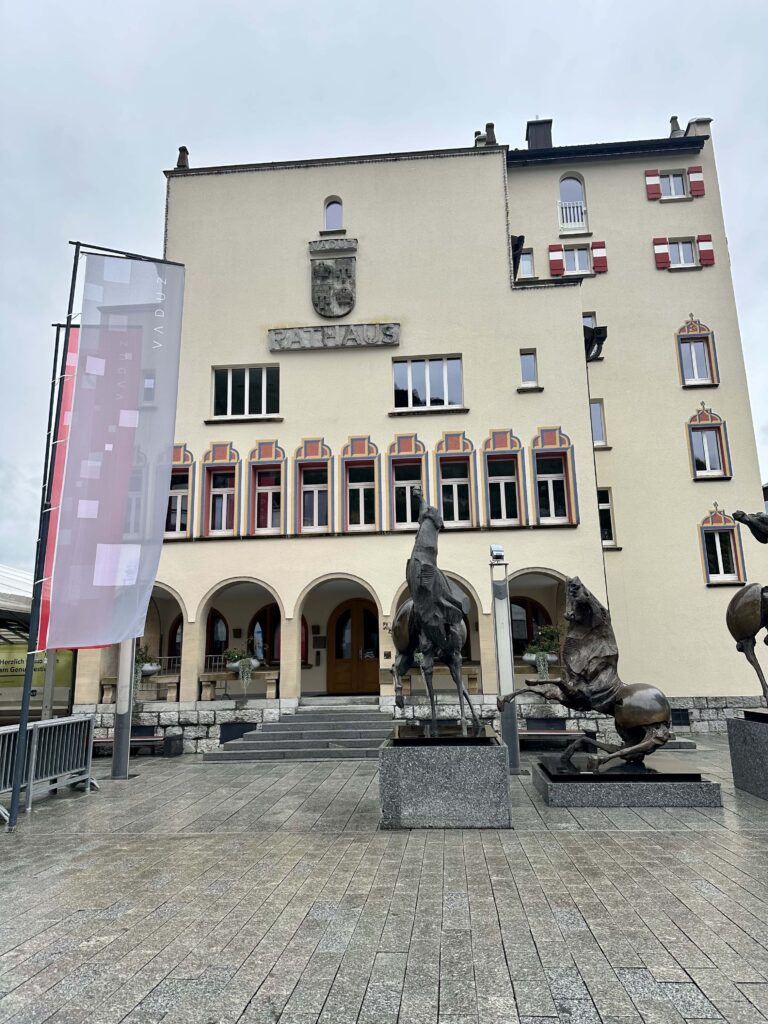
    Vaduz Overview
    Vaduz Town Hall

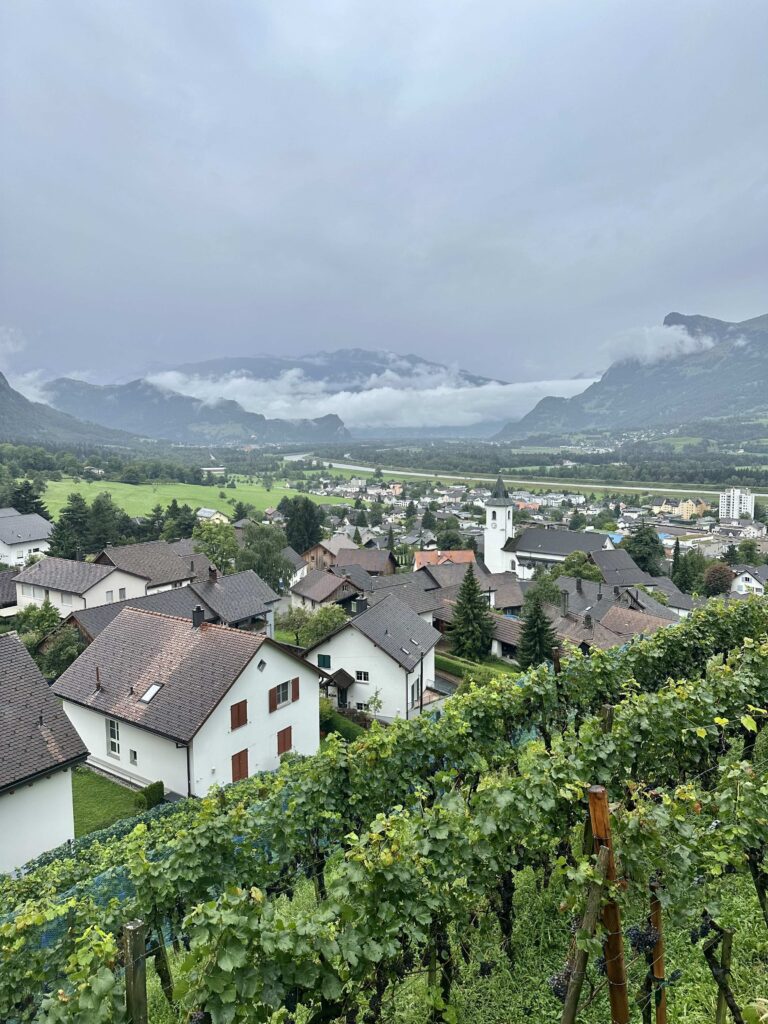
    I couldn’t explore another museum but discovered the St. Mamerta Kapelle in nearby Triesen. This village, like Balzers, offered breathtaking views but lacked the bustle of tourists or even locals. The question arose: Could tourism help this country’s economy when these quiet villages did not even have business like restaurants or stores opened?

    Post Museum
    Chinese Style Stamp

    Liechtenstein is indeed an appealing one-day destination, but its limitations are evident. It’s perfect for a quick escape, but the lack of stores and restaurants in some areas might deter longer stays without a car. As I reflect on this visit, I’m not sure if I’ll return to Liechtenstein anytime soon, but it certainly left a lasting impression of tranquil beauty.

    Triesen
    St Mamerta Kapelle
  • Van Gogh’s Cypresses – MET Museum

    Van Gogh’s Cypresses – MET Museum

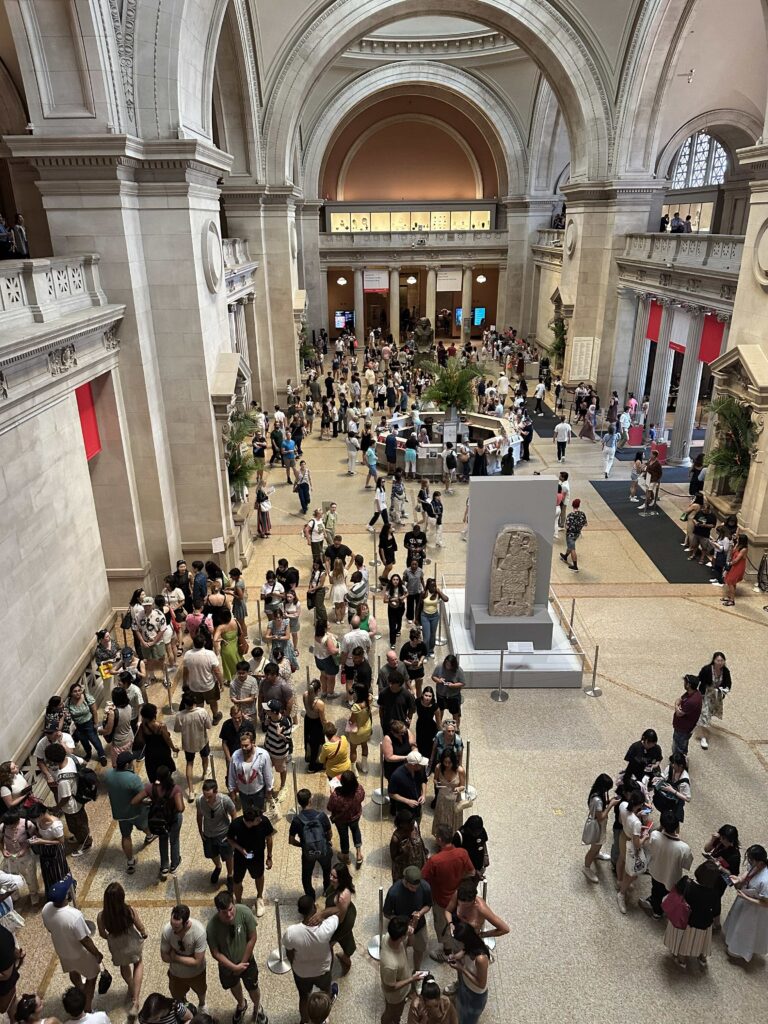
    The heat wave has persisted in New York for a few weeks now, but I couldn’t bear staying home any longer. So, despite the weather, I decided to visit the MET museum. The line outside wasn’t obvious, but as soon as I entered, I was met with a bustling crowd inside.

    To get tickets, there was ticket machines for regular visitors, but for New York residents who wanted to pay as they wish, we had to wait in the human line. That was about 15 minute’s wait. The real challenge began when I needed to scan a QR code to join the Van Gogh’s Cypresses exhibition line.

    Initially, the webpage showed the exhibition was full, and there was no option for a waitlist. That was a real disappointment, as the Van Gogh exhibition was my main reason to get outdoor in an overheated day. After staring at the grey button for a while, it turned green. I thought my luck changed, but the webpage said that the waitlist was full again after I filled up all the necessary information and clicked “submit”. This led to a frustrating half-hour of retrying, refilling the information, refreshing the page, and hoping for success.

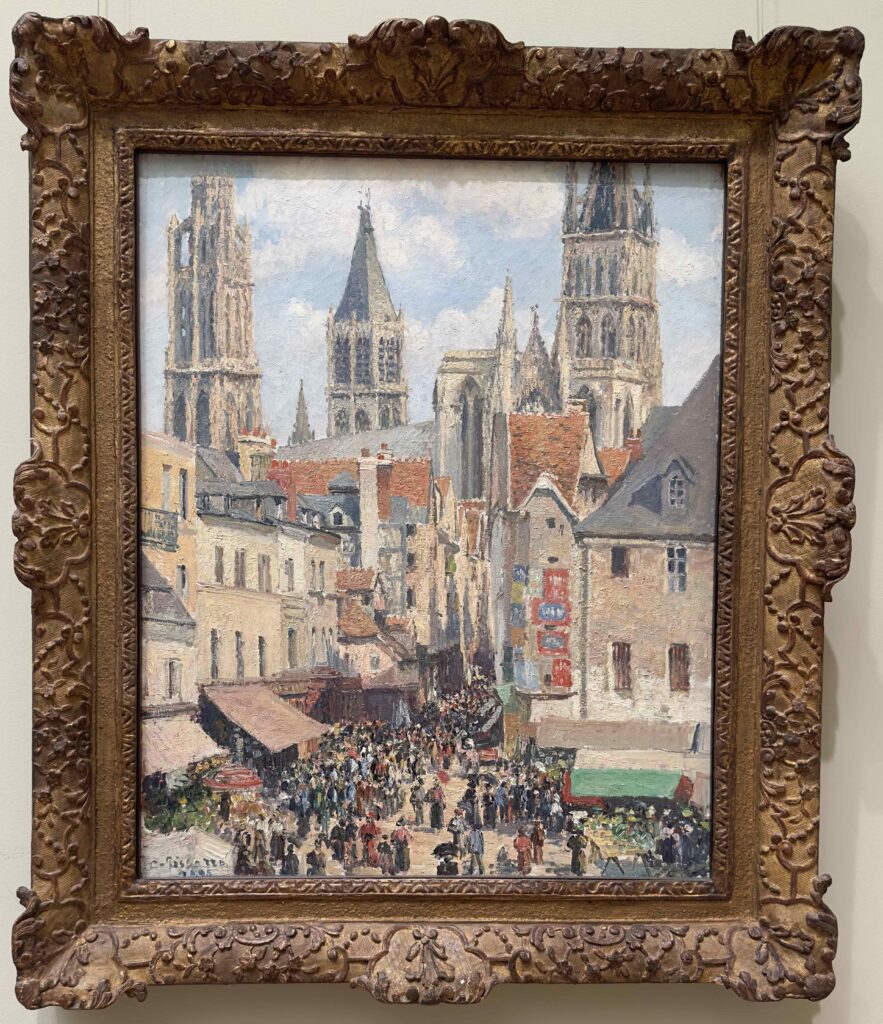
    Thankfully, after persisting, I finally secured a spot on the waitlist, with a waiting time of approximately 2 hours. Luckily, the MET had plenty to offer to keep me occupied during the wait. Even though I had been there multiple times before, I still found their exhibition interesting and entertaining, with oil paintings from the Impressionist era remaining my favorite.

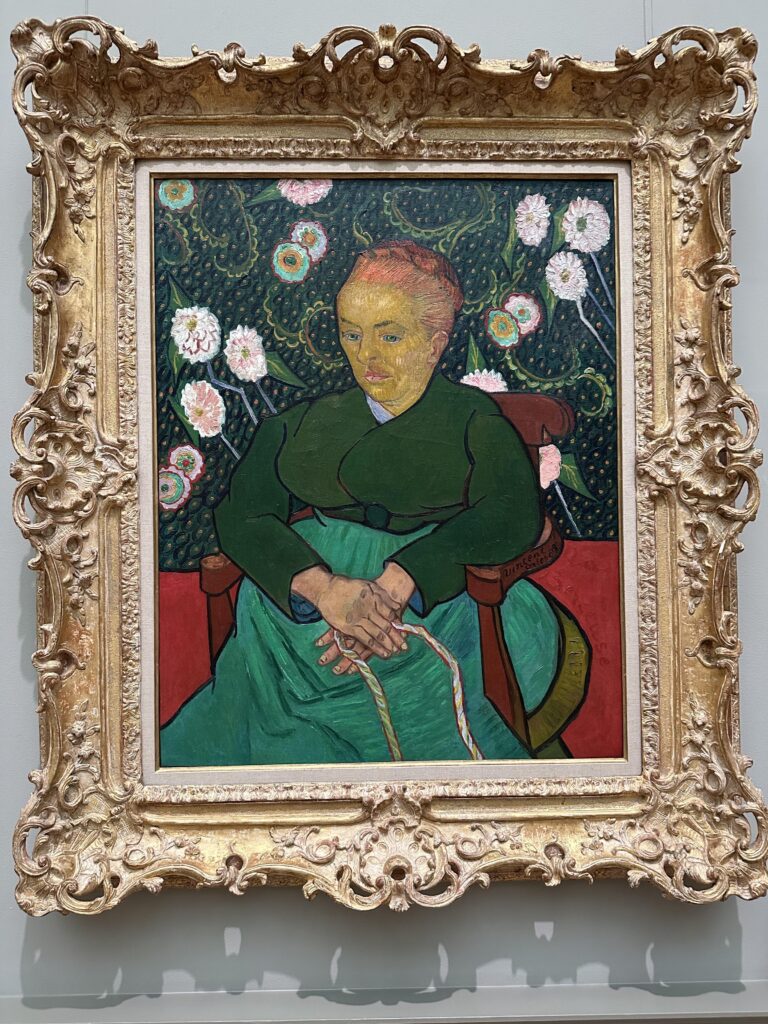
    Woman Rocking a Cradle

    Vincent van Gogh

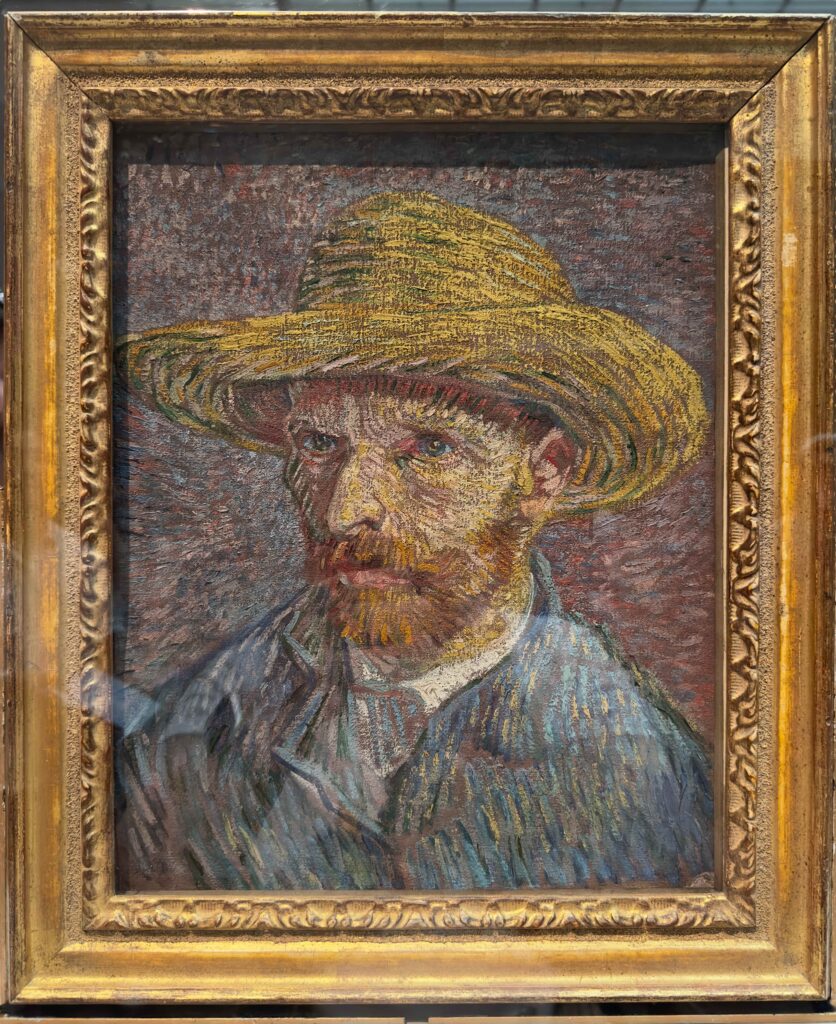
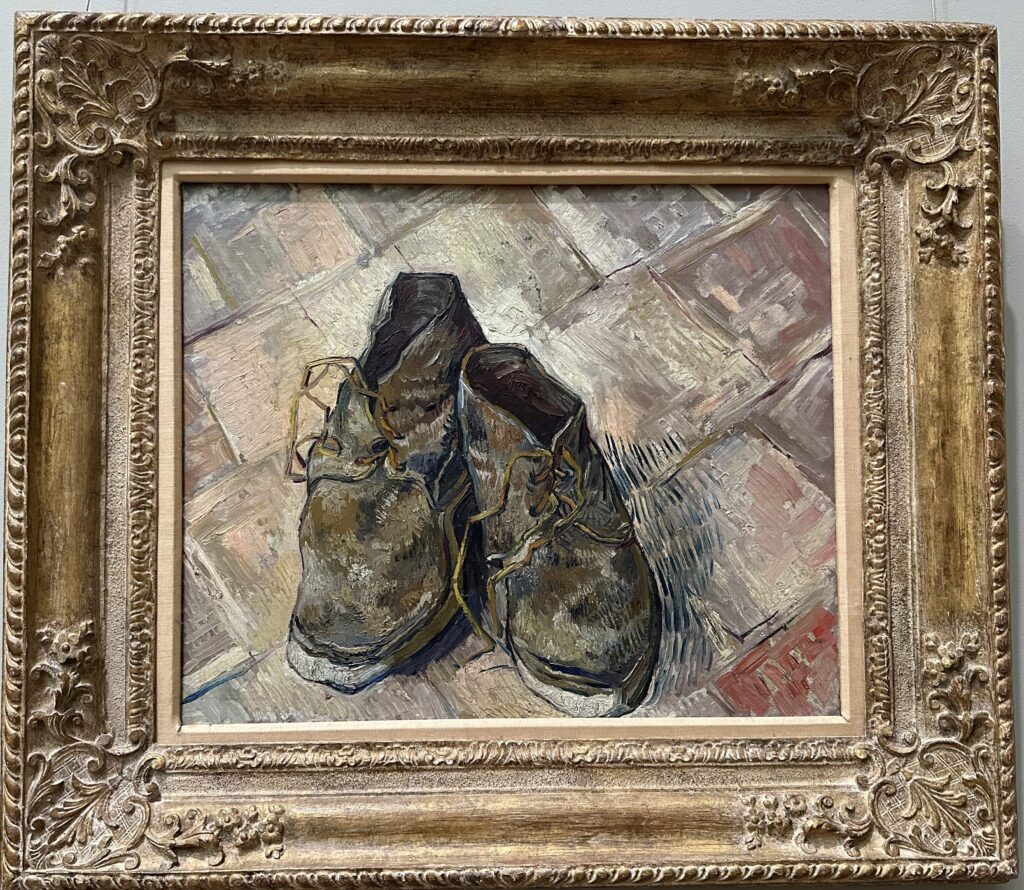
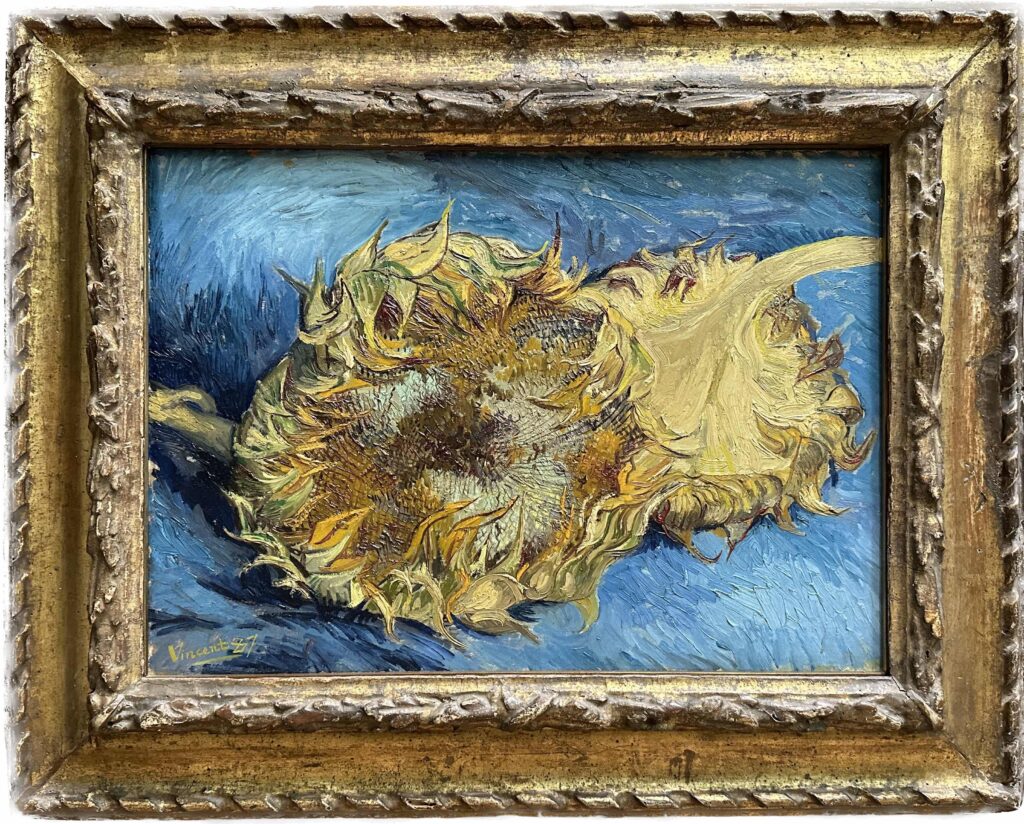
    MET had a large collection of Van Gogh’s paintings that displayed regularly. They were not part of the Special Exhibition, but not less impressive, including the Self-Portrait with a Straw Hat, the Shoes, the Woman Rocking a Cradle, the Sunflowers, and more.

    Shoes

    Vincent van Gogh

    Sunflowers

    Vincent van Gogh

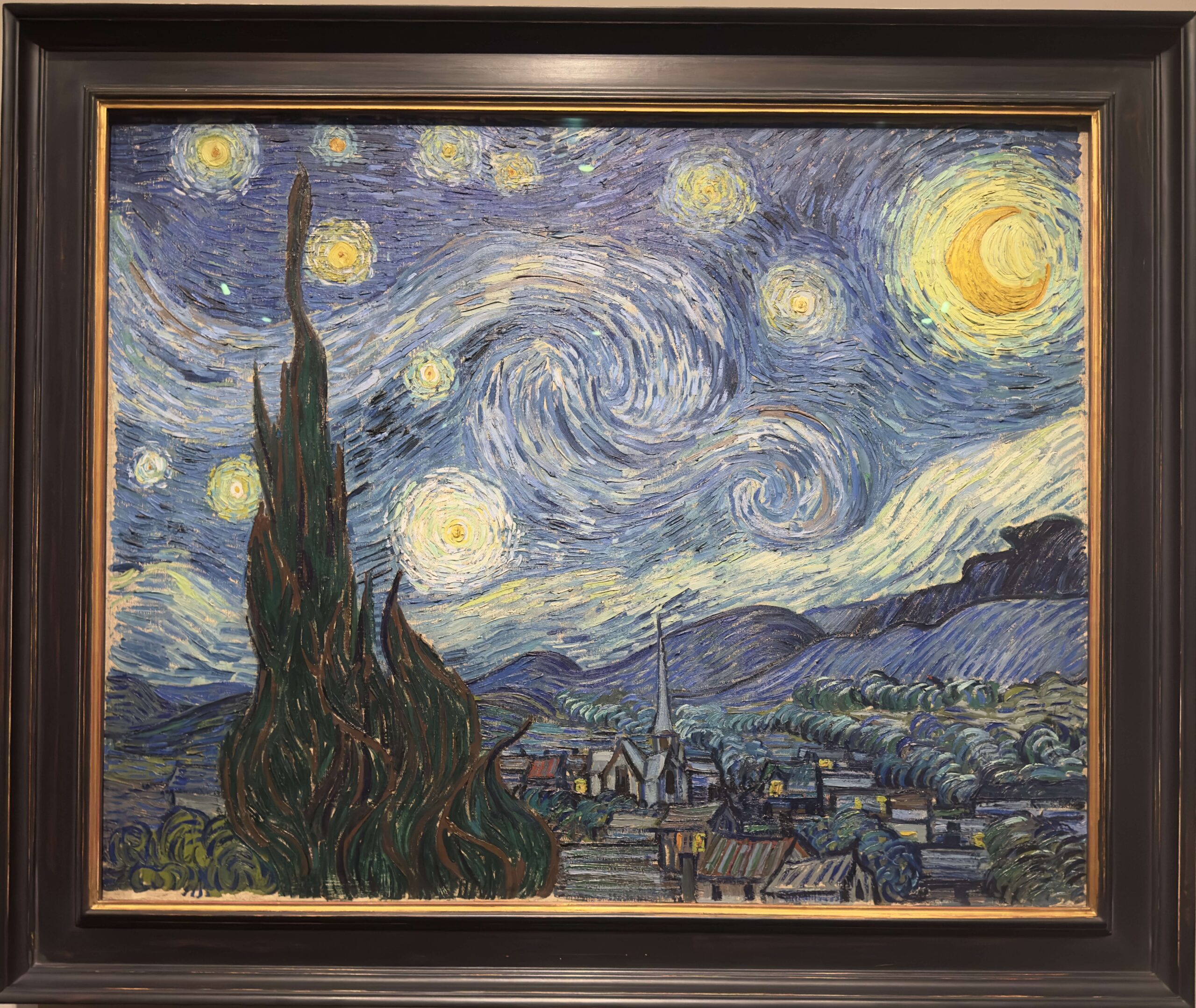
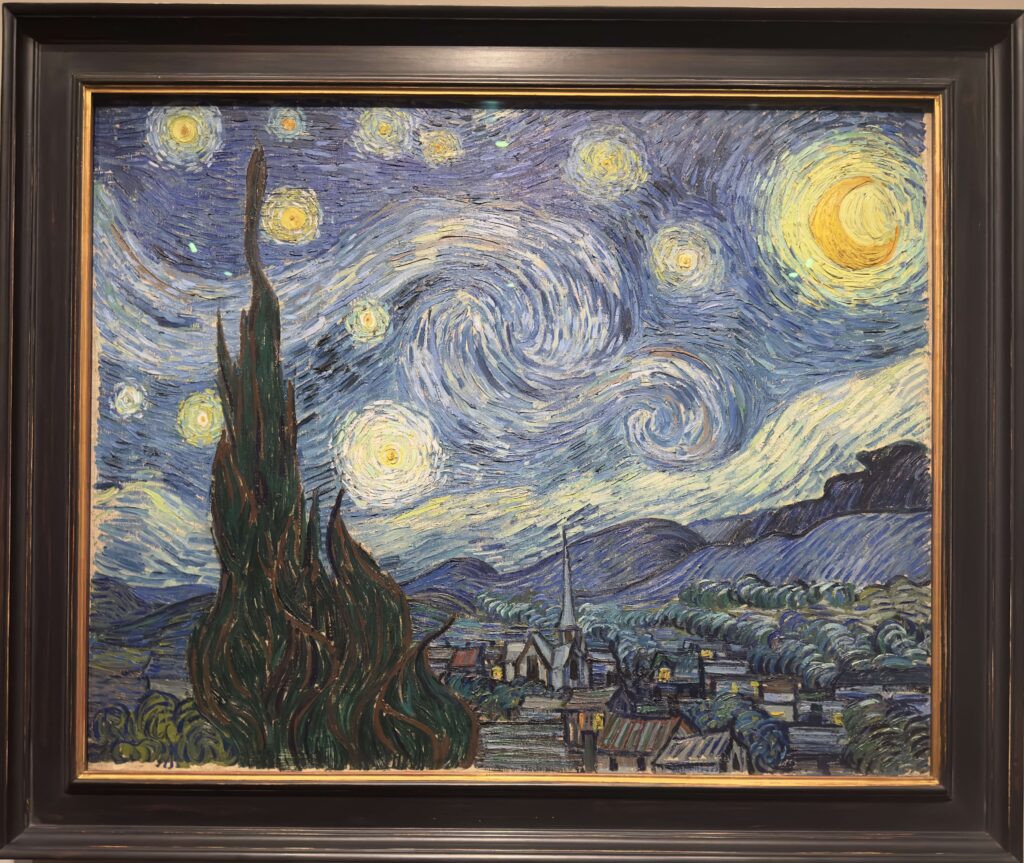
    Van Gogh’s Cypresses focused on the trees, but the Starry Night, one that had trees but with the sky as the main interest, was the most popular in the exhibition. I was puzzled whether the famous Starry Night painting was an original or a copy from MoMA. Staring at the painting for a while, I couldn’t tell a difference. And of course, I should’ve looked at the tag beside the painting to confirm, but I forgot. Lucky, some of my friends who had been there before were smart enough to look at the tag and confirmed with me later that the Starry Night was the one and unique borrowed from MOMA.

    They told me that it was common practice that museums borrow collections from each other. Thinking back, I realized I must have seen some other paintings in other museums, possibly in Philadelphia or France. 

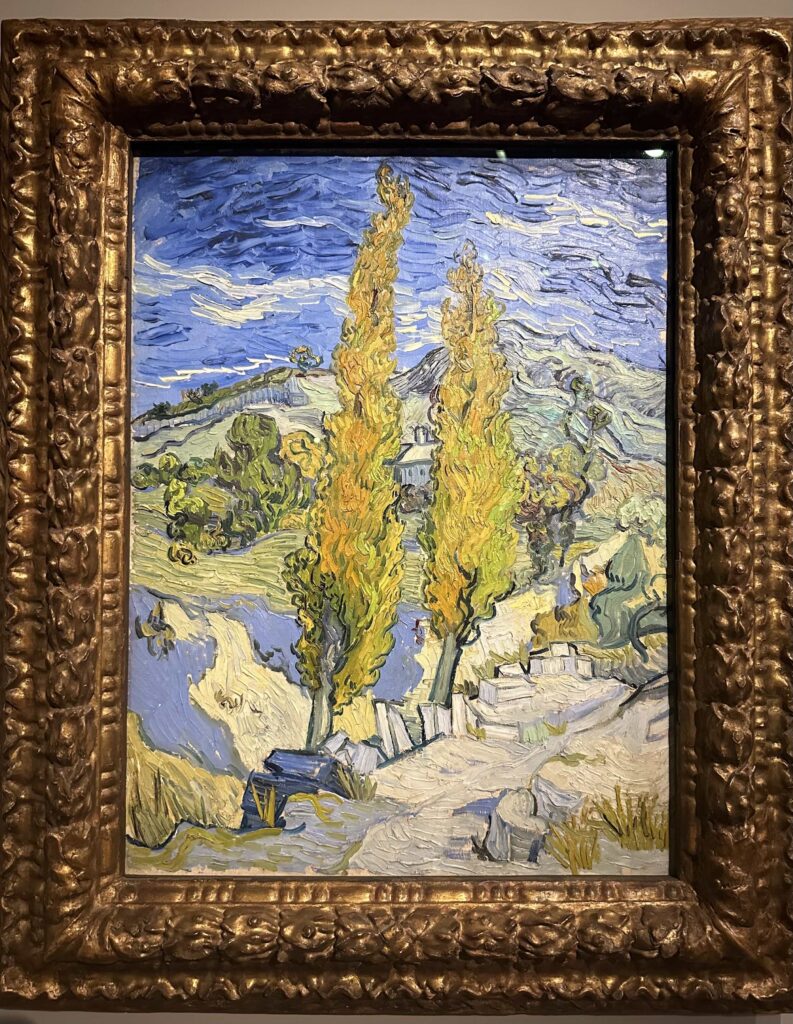
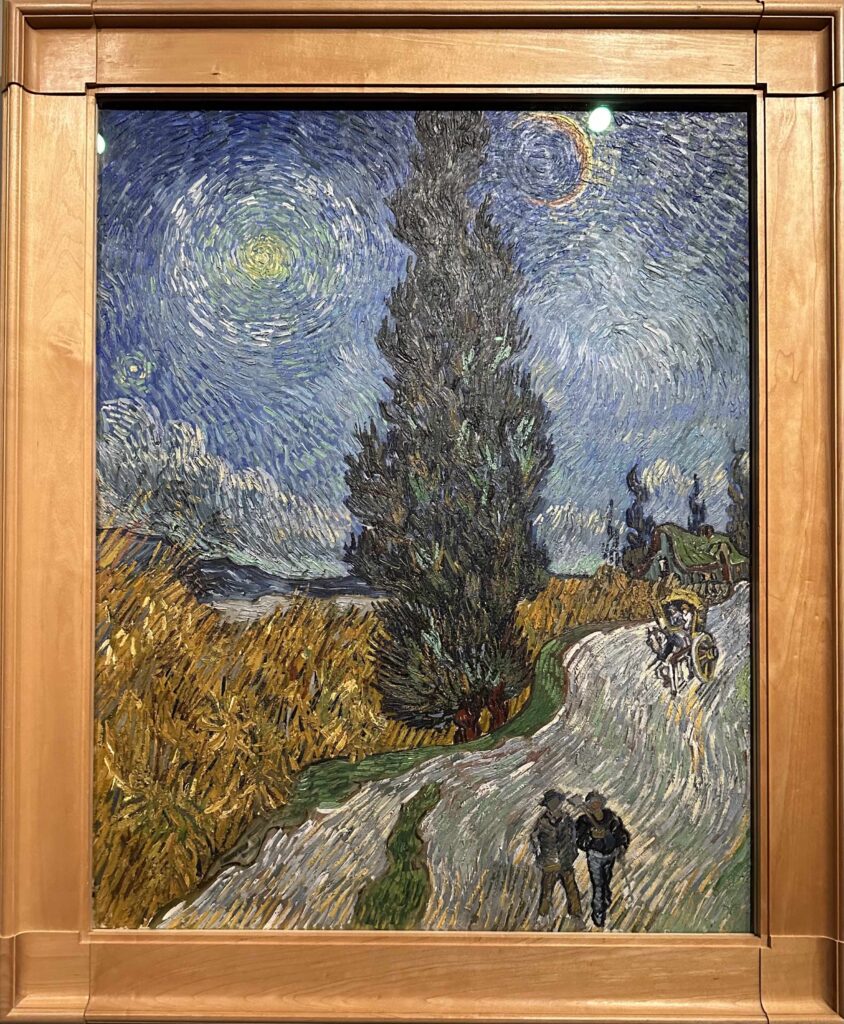
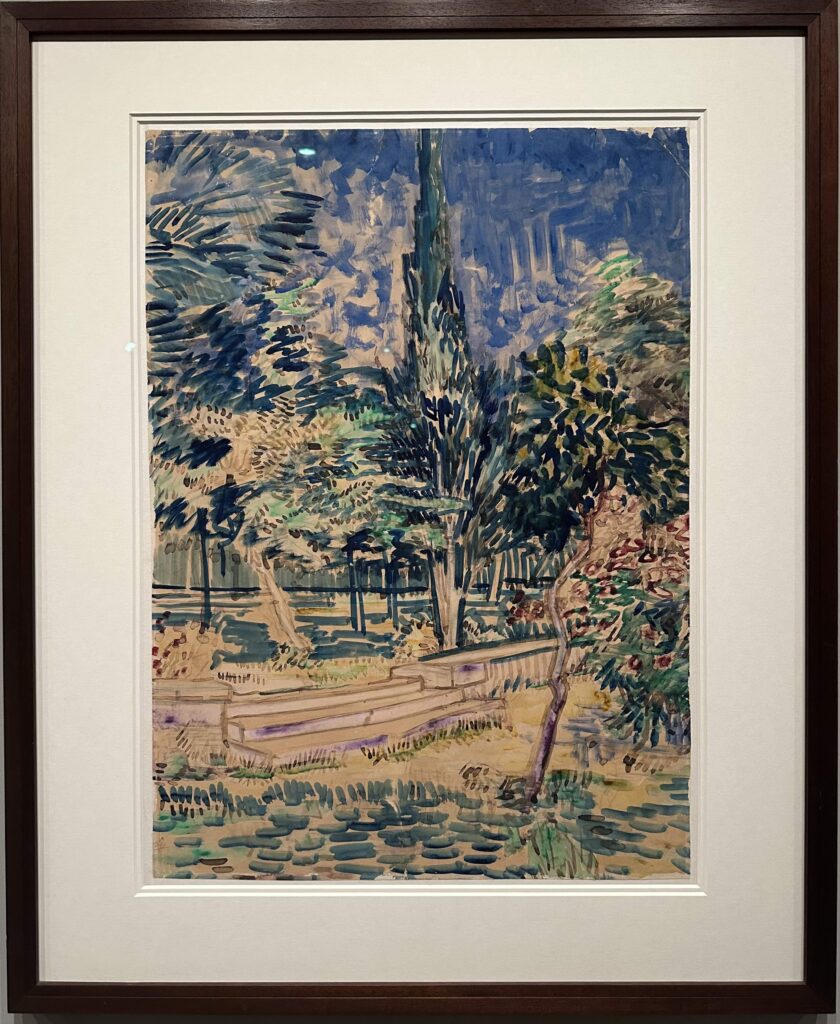
    Of course, it was the paintings I had never encountered before that excited me the most. I found a striking piece resembling Starry Night but with its own unique charm, another one with beautiful tree and river scenes, and a couple of intriguing watercolor paintings.

    Though I appreciate Van Gogh’s experimentation with watercolors, I couldn’t help but notice they lacked the layered texture I admire in his oil paintings. In my view, watercolors should embrace more abstraction with the help of water, which lacked in these paintings. Nevertheless, it was a delightful surprise to discover Van Gogh’s venture into watercolors.

    In conclusion, the special exhibition proved to be an enjoyable experience, showcasing Van Gogh’s artistic journey and captivating works.