
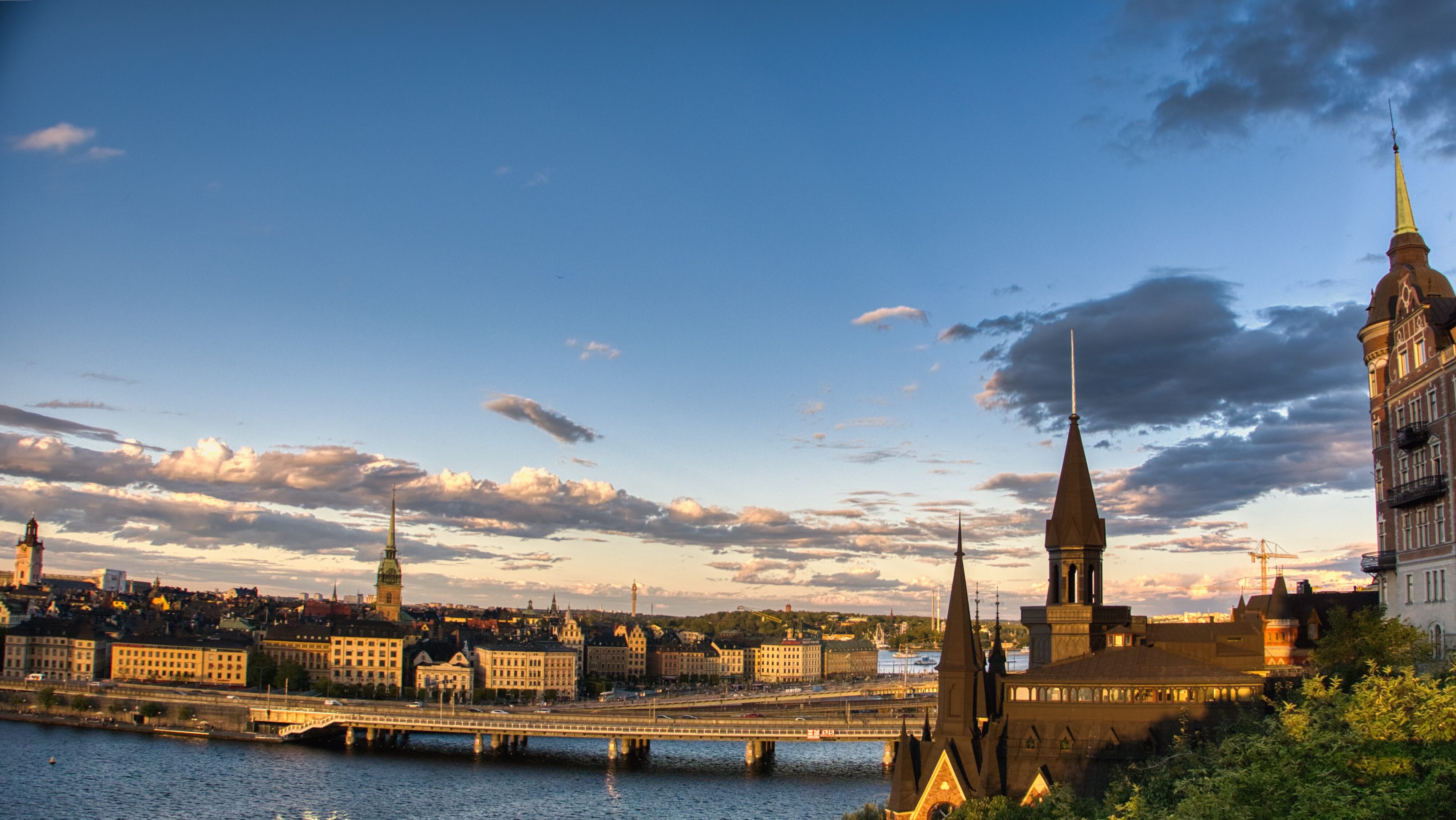
Somewhere over the Atlantic, around hour five of a flight where I slept for zero of them, I made myself one promise: the moment I landed, I’d find a bed and become one with it.
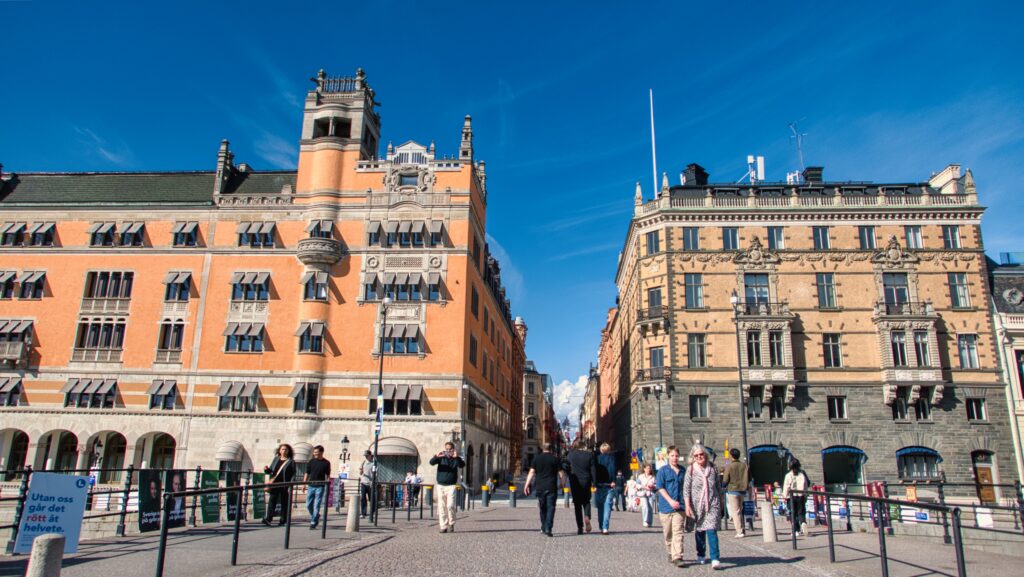
Stockholm had other plans. We touched down at 8:30 AM local time, which my body, still on New York hours, insisted was 2:30 AM. Check-in wasn’t until the afternoon. So: no room, no bed, and a full day I hadn’t asked for, to be survived on airplane coffee and spite.
The hotel that didn’t exist
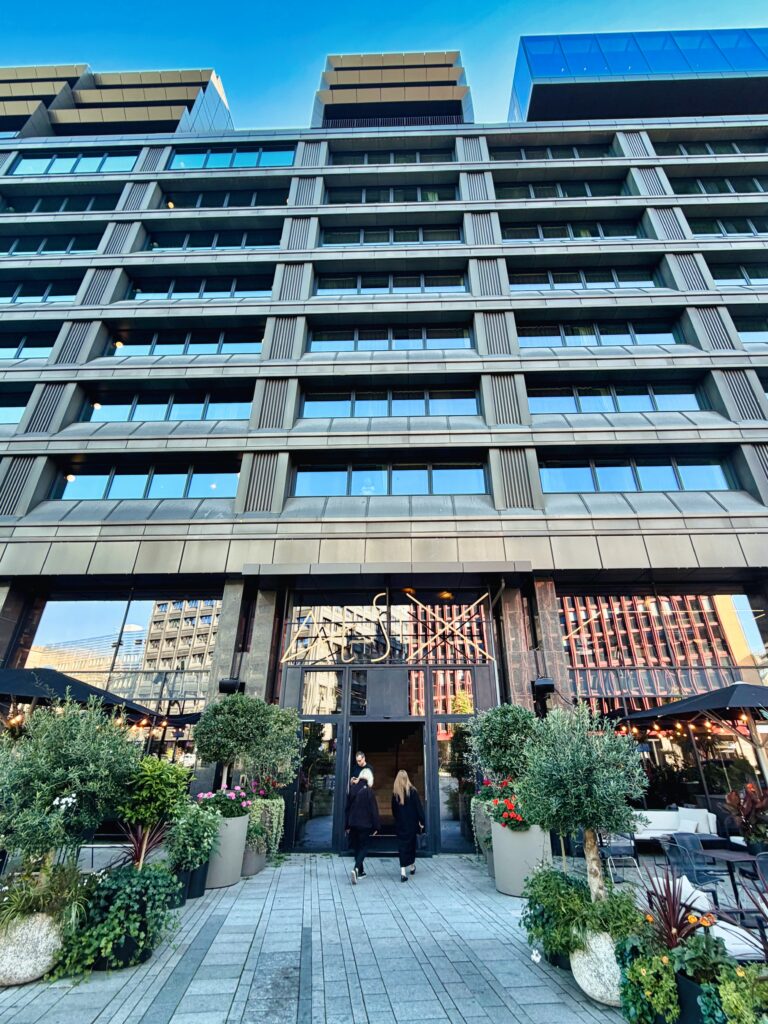
The plan was simple. Drop the bags at Hotel At Six, then go sightseeing. Instead I got the trip’s first real challenge. Google Maps guided me to the address and announced, with great conviction, you have arrived.
I had arrived inside a shopping mall.
No hotel entrance. No front desk. Nothing resembling a lobby. Just me and my suitcase, standing between a clothing store and a juice bar, questioning my life choices. I circled the block twice before I cracked the code: this part of the city is built on two levels. The hotel lobby sits on the mall’s fourth floor, which is also the ground floor of the street above. The map wasn’t wrong. I was wrong for assuming a city only has one floor plan. Rookie mistake.
Gamla Stan, briefly and under protest
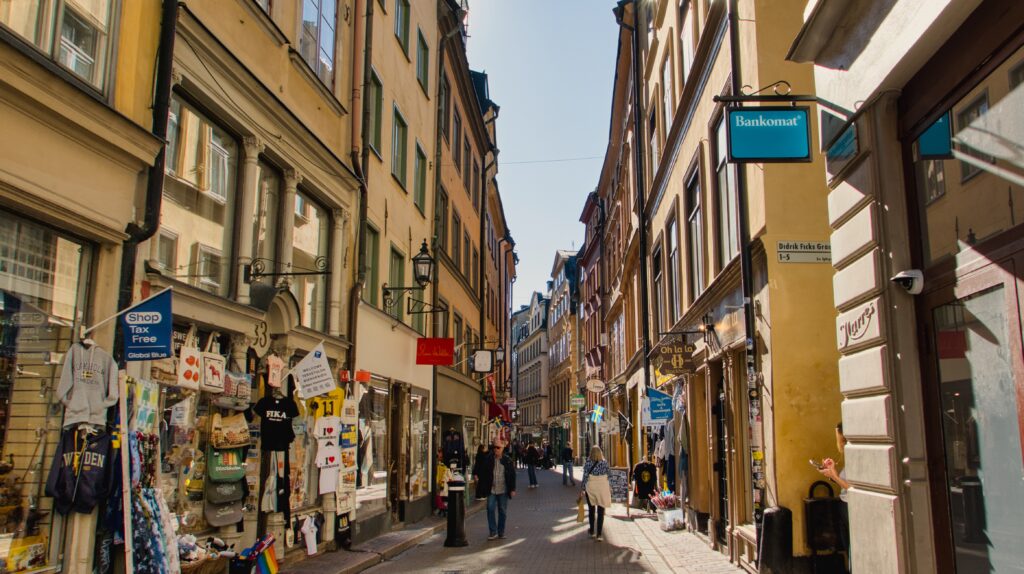
The old town was a ten-minute walk away: cobblestones, narrow alleys, and the row of red-and-yellow houses on Stortorget that is legally required to appear in every YouTube video about Stockholm. I photographed them. I was there. It would have been dishonest not to.
The square looks like a gingerbread postcard now, but in 1520 it hosted the Stockholm Bloodbath, when the Danish king Christian II had dozens of Swedish nobles executed on the spot. It has lightened up considerably since.
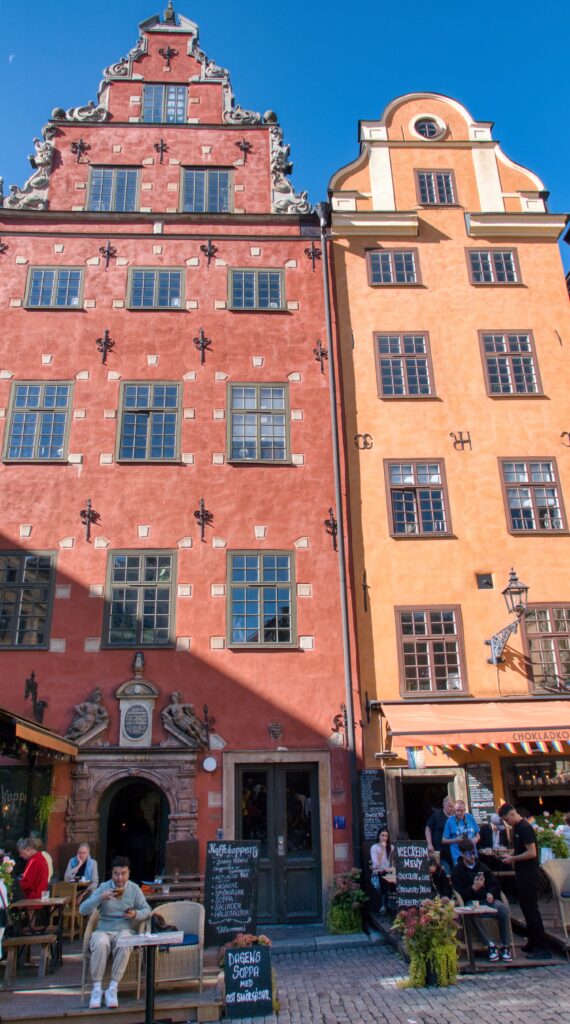
My body had already vetoed any leisurely exploring. When the Nobel Prize Museum came into view, my first thought was not “Alfred Nobel.” It was “that building has a café.”
A museum, but mostly a chair
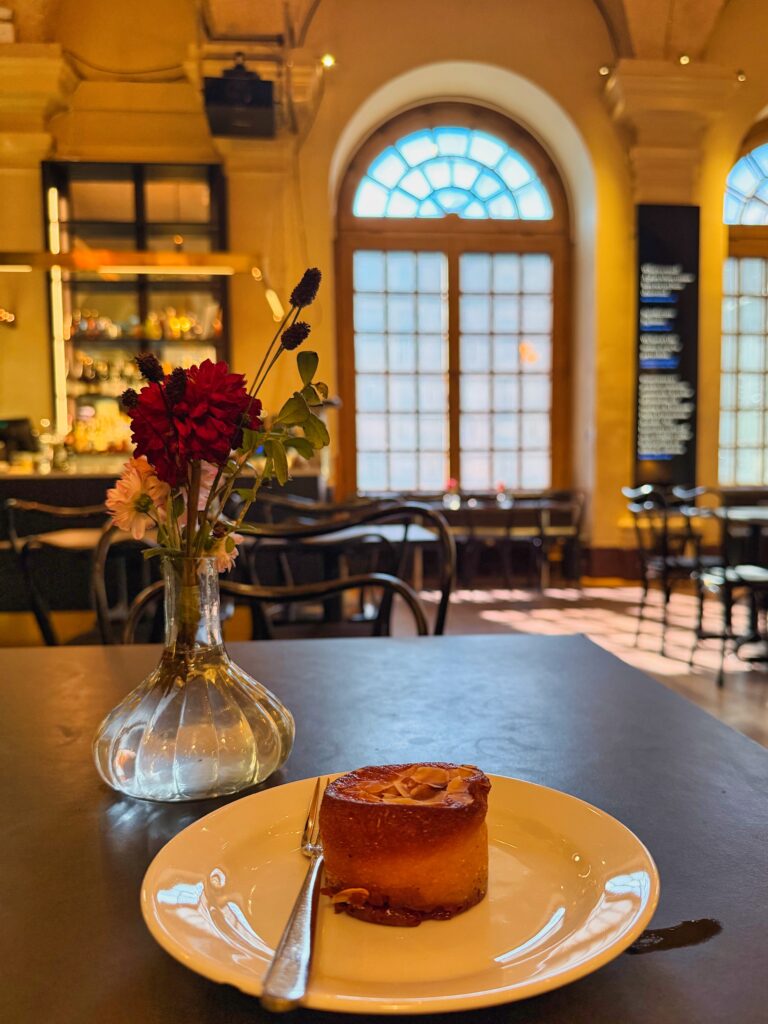
Travel guides rate the Nobel Museum poorly, and I’d be lying if I said the café wasn’t the deciding factor. I ordered a cappuccino and a pastry topped with crushed almonds. To this day I cannot tell you whether it was a cake or a bread. After a red-eye, a lost-hotel incident, and mandatory tourist photography, it did its most important job, which was to sit me down. The Swedes have a word for this, fika, the coffee-and-something-sweet break they treat as close to sacred. I was doing fika out of necessity rather than culture, but I’m counting it.
Tip for your visit: laureates who come through sign the underside of the café chairs, so flip yours over before you sit. (Discreetly. It’s still a museum.)
The museum itself is… informative. Room after room of laureates and their world-changing achievements, which puts your own morning (getting lost inside a mall) into perspective. I retained two facts. The “Nobel Prize in Economics” isn’t one of the original prizes. It’s a 1968 add-on from Sweden’s central bank. And the Peace Prize is awarded in Oslo, not Stockholm, which explains why my memory of Oslo contains so much Nobel.
Before leaving, I ordered the Nobel ice cream. Let me manage your expectations: it’s regular ice cream next to a chocolate shaped like a Nobel medal. It did not deepen my understanding of human civilization. It did let me pretend, for one afternoon, that I too am a laureate. My prize was in the category of Not Napping.
The impossible choice: nap or ceremony
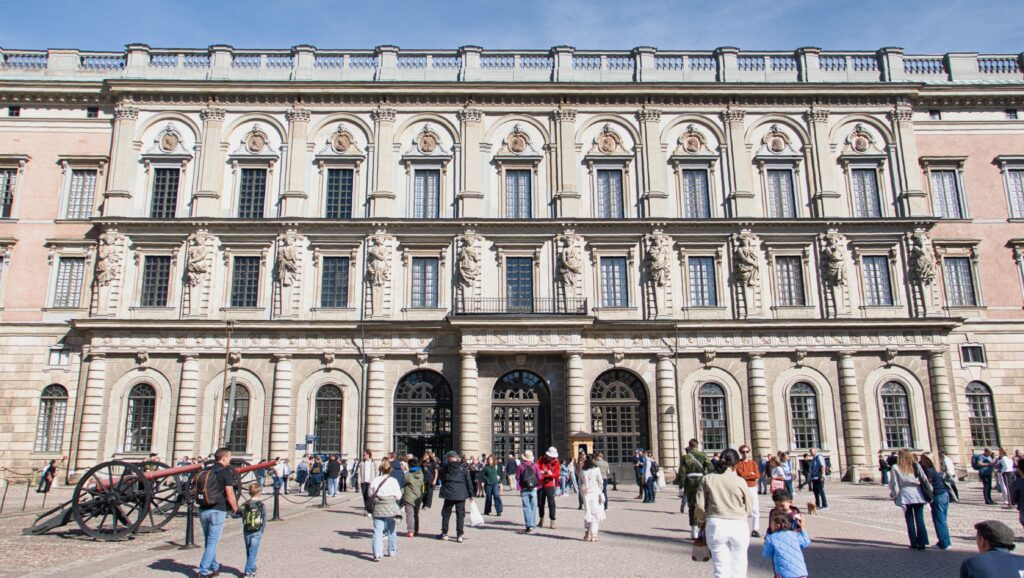
Just as I left the museum, the hotel messaged me. My room was ready early.
This is a dangerous text to receive on zero sleep. Every cell in my body voted to go horizontal. But I’d timed the changing of the guard at the Royal Palace, and it was about to start. So I did what any rational person would do. I bought sugar and used it as an anesthetic.
I’d assumed it wasn’t peak season and showed up fifteen minutes early. The square was already packed wall to wall with people who’d had the same idea. I squeezed into a passable photo spot just as the guards marched in.
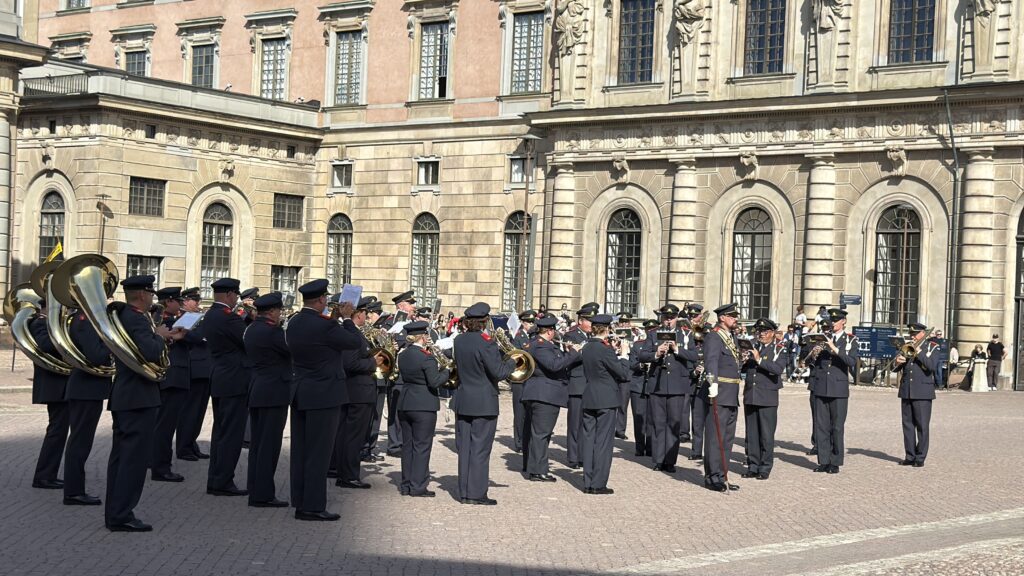
I expected the ceremony to be underwhelming. If you’ve grown up watching Chinese military parades, other countries’ marching formations tend to register as “pleasantly casual.” The marching band surprised me. They played well, really well. I know this because a bilingual announcer introduced each piece in Swedish and English, and I retained absolutely none of the titles or composers.
What mesmerized me was the sheet music. These musicians were marching, playing, and turning pages at the same time. How does thin paper stay attached to an instrument in a Baltic wind? I watched for thirty minutes and never solved it. (For anyone else losing sleep over this: a small clamp called a lyre holds a flip folder of music cards. Mystery solved, magic only slightly ruined.)
I left having attended, essentially, a free outdoor military concert. Worth it. My legs disagreed.
The sunset that made it all worthwhile
By 2:30 PM I was finally horizontal, for a nap that restored only the minimum functions required for personhood. The day wasn’t over, though. I’d checked the forecast before the trip, and today was the only guaranteed sunny day. Museums can wait for rain. Sunsets can’t.
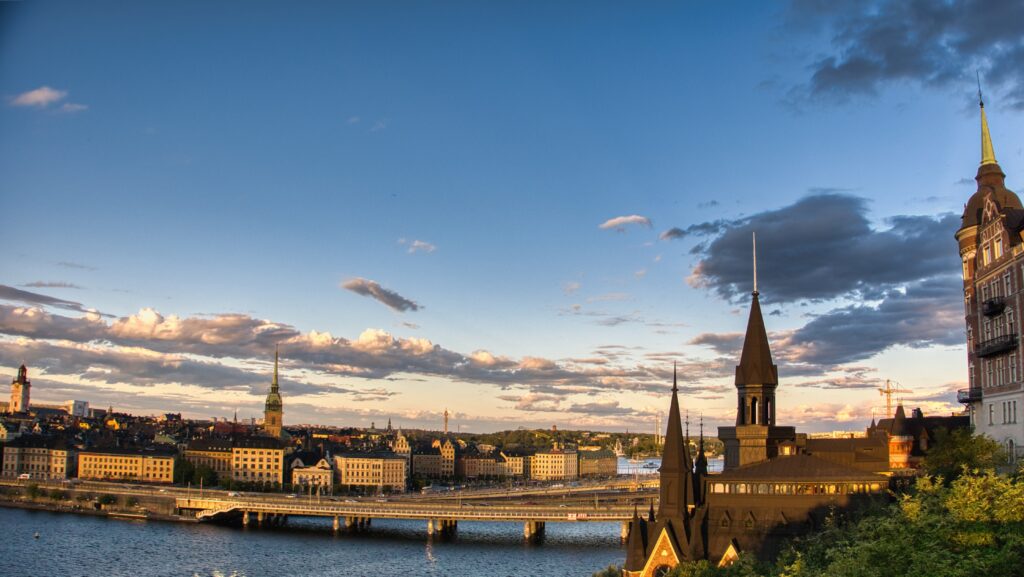
So out I went again: one metro stop and a climb up to Monteliusvägen, a cliffside path on Södermalm. Coming out of the station, I saw golden light on the water and thought, this is it. It wasn’t. It was the trailer. The real viewpoint was higher up, and when the path opened onto the cliff edge I understood immediately why people put this city on postcards.
I arrived around 7 PM, half an hour before the posted 7:30 sunset, and that timing was the best decision I made all day.
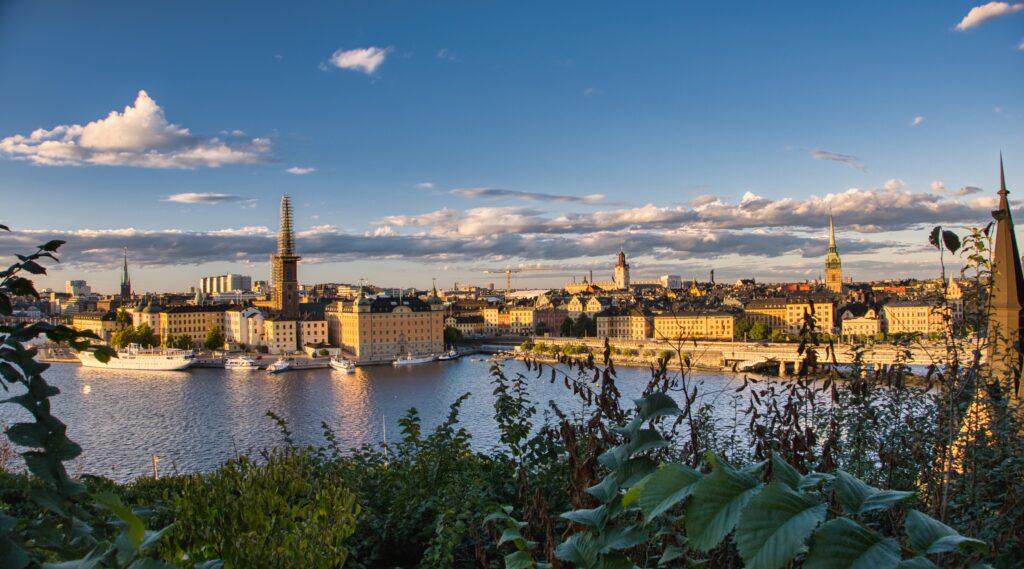
The whole city went orange-gold. Rooftops, church spires, the islands, the water threading between them, and the bridges stitching everything back together. Layered clouds stacked up in cold blues with lit edges. Stockholm is built on fourteen islands, and from up there you can finally see it: a capital pieced together from islands, waterways, and bridges, all dipped in honey-colored light.
By 7:30 the sun had technically set, and the gold was already gone. Lesson learned, handed to you free of charge: show up thirty minutes before sunset. The golden half hour is the show. The sunset itself is the encore.
The verdict
One day in Stockholm: one red-eye survived, one hotel found through spatial reasoning, one Nobel Prize (chocolate, self-awarded), one free military concert, and one sunset I earned the hard way.
I was completely, comprehensively exhausted.
Worth it.
If you go
- Hotel At Six: if Maps drops you in a mall, don’t panic. The lobby is up on the street level above, so either ride up to the mall’s fourth floor or approach from the square on top.
- Changing of the guard: fifteen minutes early wasn’t enough for me even off-season. Aim for thirty, and check the Royal Palace’s schedule, since it changes by season.
- Nobel Prize Museum: go for the café, stay for the chairs.
- Monteliusvägen: Slussen and Mariatorget metro stations are both a short walk away. Get there half an hour before sunset, and save it for your clearest day.
Leave a Reply